
Yes, most healthy horses can safely eat grass after rain. The water sitting on the blades is not harmful.
The real concerns are what rain does to the pasture and the ground around it. Rain can trigger a burst of new growth, change the sugar content of the grass, create mud, and give parasites and weeds a boost.
Some horses face more risk than others. Here is what to watch for and how to graze safely.
The Short Answer
Wet grass is not poisonous. A horse that grazes right after a shower is not eating anything dangerous because of the water itself.
Waiting for the grass to dry will not protect a horse from the risks below. Those risks come from the plant, the soil, and the weather pattern, not from the moisture on the surface.
Healthy, easy to manage horses usually do well on rain fed pasture when grazing is managed sensibly. Horses with metabolic problems need much more care.
Why Rain Changes the Pasture
Grass slows down during dry spells. It can go nearly dormant to protect its roots.
When rain returns, especially after a drought, the grass can push out a flush of new growth that looks a lot like spring. Extension and veterinary sources note that this stressed plant can hold on to sugar, and the flush that follows can raise risk again for horses prone to laminitis, even late in the season.
Rain is not the only factor. Sugar content depends on weather, plant stress, grass species, plant maturity, time of day, and time of year. That is why no single rule works for every pasture.
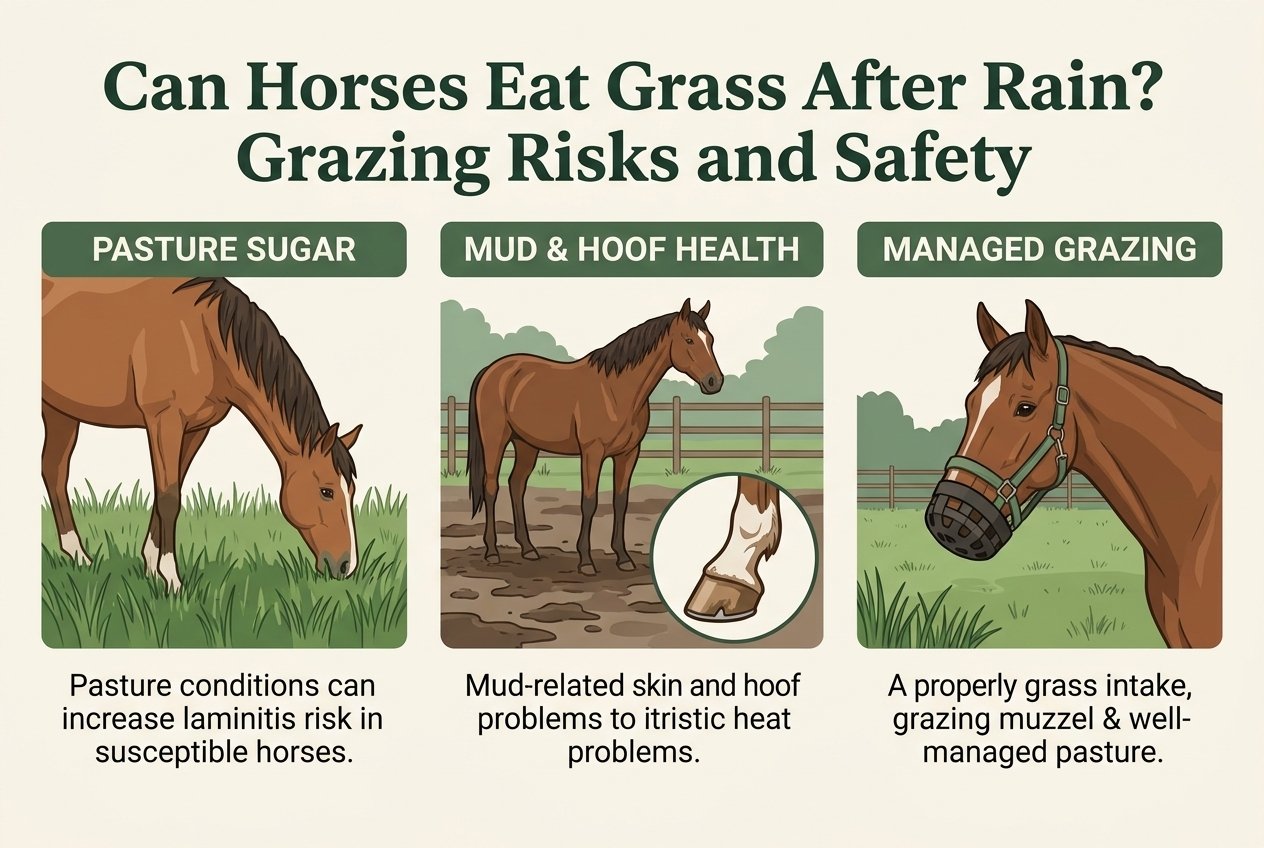
Laminitis: The Biggest Risk for Some Horses
Laminitis is the main health concern with grazing after rain.
Pasture associated laminitis can be triggered when a susceptible horse eats high amounts of sugar or fructans, the storage sugars found in many pasture grasses. Fructan levels tend to rise when grass is stressed or growth is arrested. A flush of growth after rain, followed by cooler nights, can set up exactly those conditions.
Horses at higher risk include:
- Overweight horses and easy keepers
- Ponies
- Horses with equine metabolic syndrome or insulin resistance
- Horses with PPID (equine Cushing’s disease)
- Horses that have had laminitis before
A few details are worth knowing. Grass tends to build up sugar on cold, sunny days. Short, stressed grass usually carries more sugar than taller grass, because plants store sugar at the base. Cool nights, roughly below 40 degrees Fahrenheit, are a particular warning sign for susceptible horses.
Quantity matters too. Horses with open access to forage can eat a full day’s ration in only a few hours, so a short turnout on rich grass can still be too much.
Signs of laminitis
Pasture associated laminitis can come on slowly. Owners often mistake early signs for soreness on hard ground or general stiffness.
Watch for:
- Heat in the feet
- Bounding digital pulses
- Reluctance to move or turn
- Walking as if the front feet are sore
If you see any of these, call your veterinarian right away. Early treatment makes a real difference.
Mud, Wet Ground, and Skin and Hoof Problems
Grazing is only part of the picture. Horses that spend long hours on wet ground face other issues.
Mud holds bacteria, fungi, and parasites. Mud fever, also called scratches, is a common condition of the lower legs, and the bacteria behind it thrive in wet, muddy conditions. Rain scald (rain rot) can develop when moisture sits against the skin. Wet conditions also soften the hoof and sole, which can lead to cracking and stone bruising, and muddy hooves raise the risk of thrush.
Horses standing in wet pasture also damage it. Continuous grazing and trampling churn the soil, compact it, and create more mud, which leaves room for weeds.
If the ground is soaked, consider a sacrifice area or a well drained paddock instead of full turnout.
Parasites and Insects
Moist conditions let many pasture parasite larvae survive longer, which can increase a horse’s exposure. Horses that graze close to the ground on previously grazed areas risk swallowing larvae found in manure and at the base of grass plants.
Overgrazed pastures make this worse, because horses reinfest themselves and pass parasites to herd mates.
Wet weather also favors insects. Mud and manure are breeding grounds for flies, and a very wet summer can raise the insect burden horses have to deal with.
Talk with your veterinarian about a parasite control plan based on fecal egg counts rather than guessing.
Toxic Plants and Weeds
When pasture is grazed short or damaged, weeds move in, and some are toxic to horses. Horses are browsers by nature and may start eating plants they would normally ignore.
Heavy rain and flooding can also bring up or move plants that are dangerous to horses. Walk your pasture after storms and remove anything you cannot identify as safe. Clear debris, trash, and fallen branches too.
Your local extension office can help you identify problem plants in your region.
How to Graze Safely After Rain
- Know your horse. If your horse is overweight, insulin resistant, or has foundered before, plan on restricted grazing, a grazing muzzle, or a dry lot.
- Limit the hours. Early morning turnout for a few hours is a common approach, because sugar levels are naturally lower then. Avoid turnout after a frost.
- Choose taller grass. Closely grazed grass can hold more sugar. Do not turn at risk horses out on short, stressed pasture.
- Use a muzzle. A grazing muzzle on a breakaway halter limits intake while the horse still moves and socializes with the herd.
- Offer low sugar forage. For horses off pasture, hay with a nonstructural carbohydrate (NSC) level under 10 percent, fed at about 1 to 1.2 percent of body weight daily, is a common recommendation for weight control. Ask your veterinarian what is right for your horse.
- Introduce grazing gradually. A sudden switch to rich grass is hard on the digestive system.
- Keep feet dry. Give horses a dry place to stand, and pick out hooves daily in wet weather.
- Rotate and rest pastures. This protects the grass and reduces parasite pressure.
- Walk the field. Look for toxic weeds, debris, and standing water after heavy rain.
No single time of day or weather condition guarantees low sugar. These steps lower risk, but they do not remove it.
When to Call Your Veterinarian
Contact your vet promptly if your horse shows any of the following after grazing on wet or lush pasture:
- Heat in the hooves, strong pulses, or reluctance to walk or turn
- Signs of colic, such as pawing, rolling, or looking at the flanks
- Loose manure that does not settle
- Scabs, crusts, or swelling on the lower legs
- Any suspicion your horse ate an unknown plant
When in doubt, call. A quick conversation costs far less than a late diagnosis.
FAQs
Is wet grass bad for horses?
The water itself is not. The concerns are sugar changes in the plant, mud, parasites, and weeds that come with wet weather.
Should I wait for the grass to dry before turning my horse out?
Waiting for dry grass does not reduce the sugar content or the laminitis risk. Management choices, such as limiting hours and using a muzzle, matter far more.
Does rain make grass higher in sugar?
Not always. Rain after a drought can trigger a growth flush, and cool nights afterward can push fructan levels up. The effect depends on the weather, the plant, and the time of year.
Can wet grass cause colic?
A sudden change to rich, fast growing grass can upset the digestive system and contribute to colic in some horses. Introduce lush pasture gradually.
Is it safe for all horses to graze after rain?
Healthy, lean horses usually can with sensible management. Horses prone to laminitis need restricted grazing, and your veterinarian can help you set limits. The Bottom Line Rain does not make grass unsafe to eat. It changes the conditions around it. For most horses, a little planning is enough. For easy keepers, ponies, and metabolic horses, rainy weather is a time to tighten grazing control and watch the feet closely. When you are unsure, ask your veterinarian. Every horse and every pasture is different.