
Grass is the most natural feed a horse can have. For many horses, it is also too much of a good thing.
A grazing muzzle lets a horse stay out on pasture while limiting how much grass it can eat. Used well, it can be a practical tool for weight control and for protecting horses that are prone to laminitis. Used poorly, it can cause rubbing, stress, or a false sense of security.
This guide explains how grazing muzzles work, which horses may benefit, and when a muzzle is not the right answer.
What Is a Grazing Muzzle?
A grazing muzzle is a basket that fits over a horse’s nose and mouth and attaches to a halter. The bottom of the basket has a small opening. The horse can push its lips through that opening and nibble grass, but it cannot take big mouthfuls.
Most muzzles are made from rubber, plastic, or a mix of both. They come in different sizes, from miniature horses to drafts, and in several designs that vary in how much grass gets through.
How a Grazing Muzzle Works
The muzzle does not stop a horse from grazing. It slows the rate of intake by making each bite smaller and harder to take.
Research on ponies has reported that muzzles can reduce pasture intake substantially. Reported reductions vary widely, from roughly 30 percent to more than 80 percent, depending on the muzzle design, the grass, and the length of turnout. Results in your own horse will depend on the same factors.
There is one important caveat. Some horses learn to eat faster when the muzzle comes off, which can make up for part of what they missed. A muzzle works best as one piece of a larger management plan, not as a stand alone fix.
What a 50 Percent Reduction Really Means
You will often see a single figure quoted for muzzles, such as “cuts grass intake in half.” That number is an average. It does not describe every horse.
Here is a simple illustration. These numbers are made up to show the idea and are not from a study. Say three ponies are tested, and their intake drops by 75, 40, and 35 percent. The group average is 50 percent. Yet one pony ate far less than half of its normal amount, while the other two ate well over half.
Four things drive that spread:
- The horse. Some horses are skilled at working grass through the opening, tipping the muzzle, or grazing very short grass.
- The pasture. Tall, thick grass is easier to grab through the opening than short or sparse grass.
- The muzzle. Opening size, basket shape, and fit all change how much grass gets through.
- The observation period. A test of a few hours may not match a full day or a full season. Horses can adapt over days or weeks, and some make up for lost grass during unmuzzled hours.
Treat any published figure as a rough guide, not a promise. To learn what your own horse is getting, track the results. Use a weight tape and a body condition score every two weeks, and write the numbers down. If weight is not moving in the right direction, change something: the muzzle model, the length of turnout, or the pasture.
When to Use a Grazing Muzzle:
A muzzle may be worth discussing with your veterinarian if your horse fits one of these descriptions.
- Overweight or an easy keeper. Some horses gain weight on very little feed. A muzzle can let them enjoy turnout and company without taking in excess calories.
- Insulin dysregulation or equine metabolic syndrome. Horses with these conditions are at higher risk of laminitis. Sugar and starch in grass (called nonstructural carbohydrates) can be a trigger, so controlling pasture intake matters.
- History of laminitis. A horse that has had laminitis before is at higher risk of another episode. Your veterinarian may recommend strict limits on grass.
- PPID (Cushing’s disease). Horses with PPID can also be prone to laminitis and weight changes. Pasture management is often part of the plan.
- Lush pasture seasons. Spring and early fall grass can be rich in sugar. Even a healthy horse that does well the rest of the year may need limits during these times.
When a Muzzle Is Not the Right Choice
A muzzle is not a good fit for every horse or every situation.
- Horses that are thin or in hard work. These horses usually need more calories, not fewer.
- Horses at very high risk of laminitis. Even a muzzled horse can take in meaningful amounts of sugar from lush or stressed grass. Many veterinarians recommend a dry lot or a grass free area for these horses, with a muzzle used only when advised.
- Horses that panic or fight the muzzle. Some horses become anxious or frustrated. If a horse will not settle after a proper introduction, another approach is kinder and safer.
- Poor fit or unsafe turnout. A muzzle that rubs, slips, or catches on fencing is a hazard. If you cannot supervise the fit and the turnout area, reconsider.
How to Choose and Fit a Muzzle
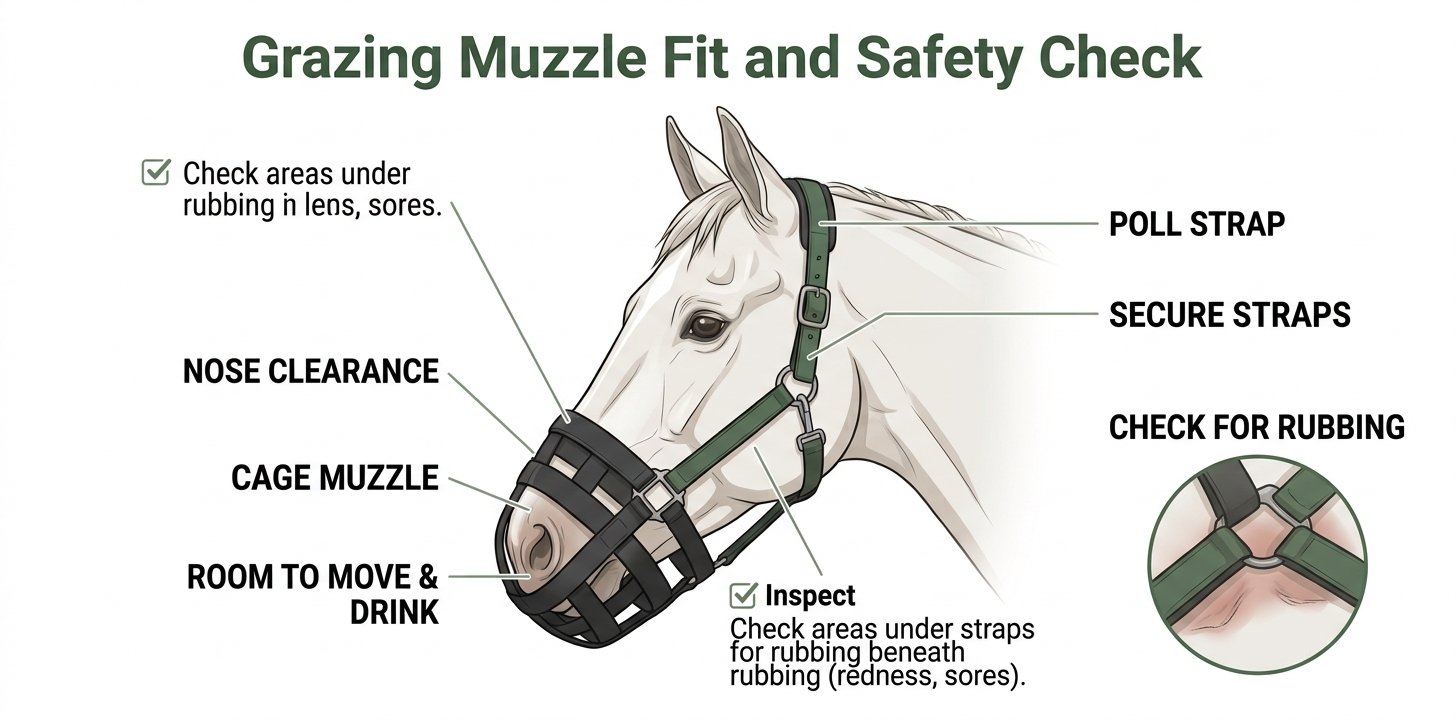
- Fit matters more than brand. A good fit should look like this:
- The horse can open its mouth, drink, and breathe freely.
- The basket sits a finger width or two away from the nostrils and does not press on the nose.
- The noseband and crown piece do not rub the face, jaw, or poll.
- The muzzle stays in place when the horse lowers its head and shakes.
Choose a muzzle with a breakaway feature, or attach it to a breakaway halter, so the horse can free itself if it gets caught. Never use a muzzle with a leather halter that will not break under pressure.
Soft padding around the noseband and under the chin can help prevent rubbing, especially for horses that wear a muzzle for many hours.
Introducing a Muzzle
Go slowly. Let the horse sniff the muzzle first. Fit it in a stall or small paddock with a little hay or a few treats inside so the horse learns it can still eat.
Start with short sessions and build up. Watch for signs of stress, such as pawing, head tossing, or refusing to move. Most horses adjust within a few days.
A Fit Check Checklist for Every Turnout
Run through this routine every time, not only when something looks wrong.
Before turnout
- Inspect the muzzle for cracks, split rubber, sharp edges, and a worn or frayed strap.
- Clear the opening of dirt, dried grass, and mud.
- Confirm the breakaway strap or crown piece is intact and will release under pressure.
- With the muzzle on, slide two fingers under the noseband and crown piece. They should fit without force.
- Make sure the basket sits clear of the nostrils and does not touch the nose.
- Check that the horse can open its mouth wide, move its lips, and lower its head freely.
- Look at the skin from the last turnout. Do not put the muzzle on over rubbed hair, heat, or a raw spot.
- Scan the turnout area for anything the muzzle could catch, such as loose wire, hooks, low branches, or gate latches.
- Watch the horse take a drink with the muzzle on, at least the first few times and whenever you change muzzles.
After turnout, before you take it off
- Check the position. The muzzle should not be twisted, slipped sideways, or hanging loose.
- Check where the noseband and crown piece now sit. They should not have slid onto the soft part of the nose or up toward the eyes.
- Look for grass, mud, or hay packed into the opening.
- Note the horse’s behavior. A calm, relaxed horse is a good sign. Sweating, pawing, or restlessness is a reason to review the fit.
When removing the muzzle
- Unbuckle it and lift it off slowly. Do not drag it over the face.
- Run your hand over the bridge of the nose, chin groove, jaw, cheeks, and poll. Look for rubbed hair, heat, swelling, or sores.
- Check the lips and the corners of the mouth for rubs or small cuts from the edge of the opening.
- Wipe off sweat and grit, then rinse the muzzle and noseband and let them dry fully so mold does not build up.
- If you find any rubbing, stop use until the skin heals, then adjust the fit or add padding before the next turnout.
Remove the muzzle for rest, and any time you cannot supervise the horse.
Muzzles Compared With Other Ways to Manage Grass
A muzzle is one tool among several, not the main solution for every horse. The right choice depends on your horse’s health, body condition, and your facilities.
| Option | How it works | May suit | Main limits |
|---|---|---|---|
| Grazing muzzle | Slows intake while the horse stays on pasture | Easy keepers and mildly overweight horses that need turnout and herd time | Intake still varies by horse. Poor fit causes rubbing. Not enough alone for horses at high risk of laminitis |
| Restricted turnout | Cuts the hours on grass, with the rest of the day in a stall, small paddock, or dry lot | Horses that stay in good condition on a few hours of grass, or any horse during lush growth seasons | Some horses eat faster to make up for lost time. Less movement and social time |
| Dry lot | No pasture at all. Forage comes from hay | Horses with insulin dysregulation, equine metabolic syndrome, PPID, or a history of laminitis, as advised by a veterinarian | Needs space and good drainage. The horse needs enough hay, movement, and company to avoid boredom |
| Controlled forage feeding | Measured hay in slow feeders, tested or soaked when advised | Any horse that needs calorie control. Pairs well with the other options | Needs a weighed ration and often a hay analysis. Forage should not be cut drastically without veterinary guidance |
Many horses do best with a combination. One example is a dry lot with slow fed hay most of the day, plus short supervised turnout in a muzzle. Another is restricted turnout paired with weighed hay.
The higher a horse’s risk of laminitis, the less a muzzle should be relied on alone. Ask your veterinarian where your horse falls on that scale, and review the plan as seasons change.
Whichever approach you use, a few habits help:
- Weigh your horse with a weight tape and score body condition every two weeks.
- Turn out in the early morning when you can, since grass sugar tends to be lower then. Cold nights and drought can change this.
- Keep exercise regular.
- Ask your veterinarian about testing if your horse has metabolic concerns.
Common Mistakes
The most common mistake is assuming the muzzle makes any pasture safe. It does not. A horse with a history of laminitis can still be at risk on lush grass.
Other mistakes include leaving a muzzle on around the clock without checking the skin, buying the wrong size, and skipping the introduction period.
FAQs
Can a horse drink with a grazing muzzle on?
In most cases, yes. Water can pass through the opening, but the horse should be observed the first few times.
How many hours a day can a horse wear a muzzle?
There is no single answer. Many horses wear one for the length of their turnout. Check the skin daily and ask your veterinarian what is appropriate for your horse.
Will a muzzle help my horse lose weight?
It can, as part of a plan that includes diet and exercise. Studies in ponies have shown weight loss with muzzle use, but results vary.
Is a muzzle cruel?
A properly fitted muzzle, introduced gently, allows a horse to stay outside with its herd while protecting its health. Fit, comfort, and monitoring are what make the difference.
The Bottom Line
A grazing muzzle is a useful tool, not a cure. It can help overweight horses and horses prone to laminitis enjoy turnout with fewer calories and less sugar. It works best when it is fitted correctly, introduced patiently, and combined with good feeding and exercise.
If your horse has been diagnosed with a metabolic condition or has had laminitis, talk with your veterinarian before relying on a muzzle.