
Key Takeaways
- Pigeon fever is caused by Corynebacterium pseudotuberculosis. The bacteria usually enter through small breaks in the skin after environmental exposure.
- Most cases involve external abscesses. These often respond well to proper veterinary management, although healing can take time.
- Not every swelling is pigeon fever. Other infections, injuries, and inflammatory conditions can appear similar, making diagnosis important.
- The form of disease matters. External abscesses, internal infections, and ulcerative lymphangitis require different levels of monitoring and treatment.
- Treatment depends on the individual horse. Some cases focus on drainage and wound care, while others require additional medical management.
- Fly control and wound care remain important. These steps help reduce opportunities for bacteria to spread and enter the body.
- Recovery should be monitored rather than rushed. A draining abscess is only one stage of healing, and horses should be watched for ongoing or returning signs.
A new swelling on a horse can raise many questions, especially when it appears on the chest, lower abdomen, or along the limbs. While some swellings are minor injuries that resolve with time, others may signal an infection requiring veterinary attention. Pigeon fever, also known as dryland distemper or false strangles, is one such condition, often beginning as a small lump before developing into a larger abscess.
This guide explains what pigeon fever is, how it develops, the signs owners commonly notice, how veterinarians diagnose and treat the infection, what recovery involves, and the steps that can help reduce the risk of future cases.
What Is Pigeon Fever in Horses?
Pigeon fever is a bacterial disease of horses caused by Corynebacterium pseudotuberculosis. The bacteria usually enter the body through small cuts, insect bites, or other breaks in the skin. Once inside, the horse’s immune system attempts to contain the infection by surrounding it with inflammatory tissue, forming an abscess.
Although the disease is best known for causing abscesses beneath the skin, the infection does not always remain localized. Veterinarians classify pigeon fever into three clinical forms based on where the bacteria establish infection.
External Abscess Form
This is the most common form of pigeon fever. The bacteria remain in the tissues beneath the skin, where they produce one or more abscesses. These typically develop on the chest and lower abdomen but may also occur on the shoulder, neck, sheath, udder, or other soft tissue areas.
External abscesses can occur in several soft tissue locations, including the chest, abdomen, shoulder, and mammary region of mares. In areas where pigeon fever is common, Corynebacterium pseudotuberculosis is recognized as a potential cause of mammary abscesses in horses.
Internal Pigeon Fever
This is the most common form of pigeon fever. The bacteria remain in the tissues beneath the skin, where they produce one or more abscesses. These typically develop on the chest and lower abdomen but may also occur on the shoulder, neck, sheath, udder, or other soft tissue areas.
In rare cases, Corynebacterium pseudotuberculosis infection can involve tissues beyond typical abscess locations and lead to serious internal complications. A case report published in the Journal of the American Veterinary Medical Association described pericarditis (inflammation and infection of the sac surrounding the heart) and pleuritis associated with Corynebacterium pseudotuberculosis in a horse, demonstrating that pigeon fever can occasionally affect deeper body structures.
Ulcerative Lymphangitis
The third form affects the lymphatic vessels, most often in a limb. Instead of remaining confined to a single abscess, the infection spreads along the lymphatic system, resulting in inflammation of the affected tissues.
Understanding these three forms is important because they differ in their diagnostic approach, treatment, and expected outcome. Identifying which form is present helps veterinarians develop the most appropriate management plan.
What Causes Pigeon Fever and How Do Horses Become Infected?
Pigeon fever develops when Corynebacterium pseudotuberculosis enters a horse’s body and establishes an infection. The bacteria are found in the environment, including soil and areas contaminated by infected material. For disease to occur, the bacteria usually need a pathway into the body, most commonly through a small break in the skin.
That opening may be obvious, such as a wound or scrape, but many entry points are minor enough that owners never notice them. Small abrasions, insect bites, scratches from fencing, or irritated skin can provide an opportunity for bacteria to move into deeper tissues.
Once inside the body, the immune system responds by trying to contain the infection. In many horses, this leads to the formation of a localized abscess. The swelling that owners see is the result of the body’s attempt to isolate the bacteria rather than allowing the infection to spread freely.
The Role of the Environment
Unlike diseases that depend mainly on horse-to-horse contact, pigeon fever is strongly associated with environmental exposure. The bacteria can survive outside the horse, allowing contaminated areas to become a source of infection. Exposure can occur when bacteria from infected material contaminate:
- Soil
- Bedding
- Stall areas
- Pasture surfaces
- Equipment used around affected horses
This is why pigeon fever can appear on a property even when no direct contact between horses has occurred. Research evaluating risk factors for Corynebacterium pseudotuberculosis infection in horses has found that management and environmental factors may influence disease occurrence. A case-control study examining risk factors associated with Corynebacterium pseudotuberculosis infection in horses identified associations between infection and factors such as summer pasture access, contact with other horses, and insect-control practices, suggesting that reducing environmental exposure and improving management may help lower risk.
The Role of Flies
Flies are an important part of how pigeon fever moves through the environment. When flies contact drainage from an infected abscess, they may carry bacteria to another horse. If those bacteria reach damaged skin, infection can develop.
This possibility is supported by experimental research conducted by researchers at Auburn University and published in the Journal of Veterinary Internal Medicine, which found that house flies (Musca domestica) can act as mechanical vectors of Corynebacterium pseudotuberculosis and transmit the bacteria to horses. In the study, ponies exposed to bacteria-carrying flies developed local infections, while those exposed to non-infected flies did not.
This relationship helps explain why cases are often seen more frequently during warmer months when fly activity increases.
Exposure to the bacteria does not mean every horse will become sick. Several factors influence whether infection develops, including:
- Whether bacteria reach a vulnerable area of skin
- The amount of exposure
- Environmental conditions
- The horse’s individual response to infection
A horse may share a property with an affected animal and never show signs, while another horse develops an obvious abscess.
Researchers have also investigated whether differences between bacterial strains explain why some horses develop different forms of pigeon fever. A comparative genomic study of Corynebacterium pseudotuberculosis strains found that the bacteria show genetic variation, but no clear genetic differences were identified that could explain why some infections result in external abscesses, internal disease, or ulcerative lymphangitis. This suggests that the outcome of infection is likely influenced by multiple factors, including the bacterial strain, the horse’s immune response, and environmental conditions.
Understanding how infection occurs helps owners focus on practical risk reduction rather than trying to eliminate every possible exposure. The bacteria exist in the environment, but infection usually requires the right combination of exposure and an opportunity for the organism to enter the body.
What Does Pigeon Fever Look Like in Horses? (Symptoms and Signs)
The symptoms of pigeon fever vary depending on whether the infection remains beneath the skin or spreads internally. While many horses develop the characteristic chest abscess that gives the disease its common name, others may initially show only general signs of illness before a swelling becomes apparent. Common symptoms of pigeon fever in horses include:
- Firm swelling beneath the skin, especially on the chest or lower abdomen
- Warmth, tenderness, or discomfort around the swelling
- Abscess formation that may eventually rupture and drain thick pus
- Fever
- Reduced appetite
- Lethargy or decreased performance
- Weight loss in horses with internal infection
- Limb swelling and drainage in horses with ulcerative lymphangitis
The appearance of pigeon fever depends on which form of the disease develops. The classic sign most owners recognize is a swelling on the chest, but the infection can appear in other locations and may not always produce an obvious external lump.
The first noticeable change is often a new area of swelling. How that swelling develops over time can provide important clues about what is happening beneath the skin.
The pictures below illustrate several common forms of pigeon fever in horses. While the classic chest abscess is the appearance most owners recognize, the disease can also cause swelling near the head, affect the limbs, or develop as internal abscesses that cannot be seen externally. Comparing these clinical images with your horse’s signs may help you recognize when veterinary evaluation is needed.
External Abscesses: The Most Common Form
Most horses with pigeon fever develop abscesses beneath the skin. These commonly appear on the chest and lower abdomen but can occur in other areas as well. Owners may notice:
- A firm lump that gradually enlarges
- Warmth or sensitivity around the swelling
- Skin stretched over the affected area
- Thick drainage when the abscess opens
- Temporary discomfort from pressure or movement
An abscess does not always look the same throughout its development. Early in the process, it may feel firm because the infection is still organizing beneath the skin. As fluid accumulates, the center often becomes softer, indicating that the abscess is maturing.
The horse’s attitude can vary. Some horses remain bright, eating normally, and acting comfortable despite a large abscess. Others may become uncomfortable, especially if the swelling interferes with movement, grooming, or the placement of tack.
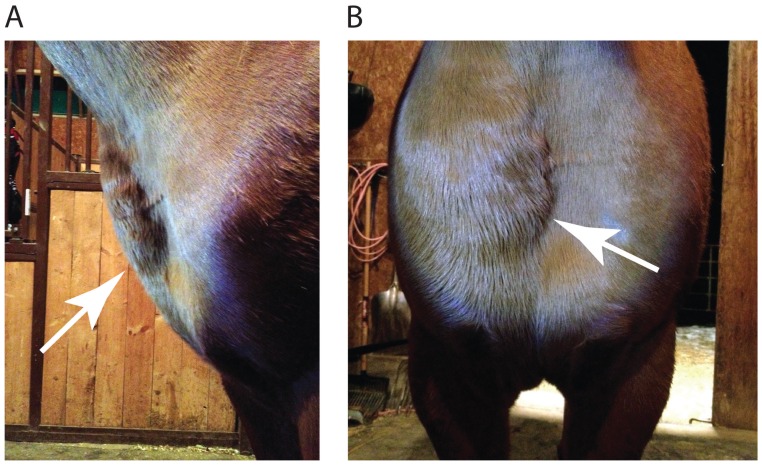
Pictures of pigeon fever in horses showing swelling of the parotid region. The lateral (A) and frontal (B) views illustrate how external abscesses can develop around the head in horses infected with Corynebacterium pseudotuberculosis. (source: ncbi.nlm.nih.gov)
Internal Pigeon Fever
Internal disease can be harder for owners to recognize because there may be no visible swelling. Instead, signs may include:
- Gradual weight loss
- Reduced stamina
- Poor performance
- Recurring fever
- Loss of appetite
- A general decline in condition
These signs are not specific to pigeon fever and can occur with many other health problems. This is why internal infection often requires a more detailed veterinary evaluation.
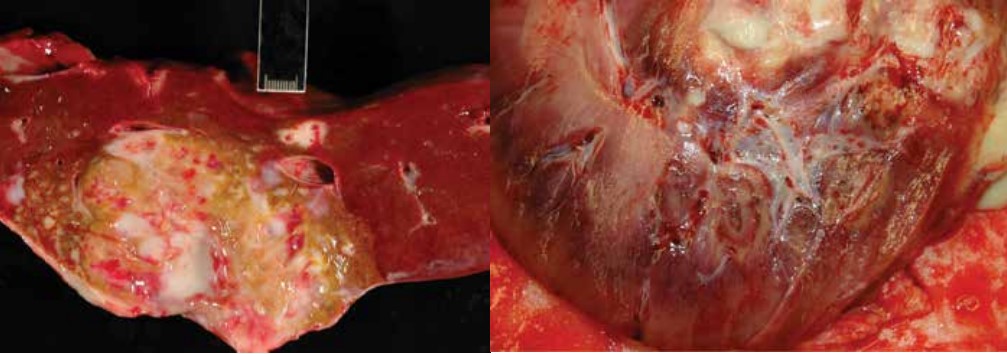
Pictures showing internal pigeon fever in horses. The liver (left) and kidney (right) contain internal abscesses caused by Corynebacterium pseudotuberculosis. These lesions are not visible externally and require veterinary diagnosis. (image:vetmed.ucdavis.edu)
Ulcerative Lymphangitis
When pigeon fever affects the lymphatic vessels, the infection may involve a limb.Possible signs include:
- Significant swelling of a leg
- Pain or stiffness
- Areas of drainage along the limb
- Thickened or irritated skin
This form can take longer to resolve because inflammation within the lymphatic system can interfere with normal fluid movement through the limb.
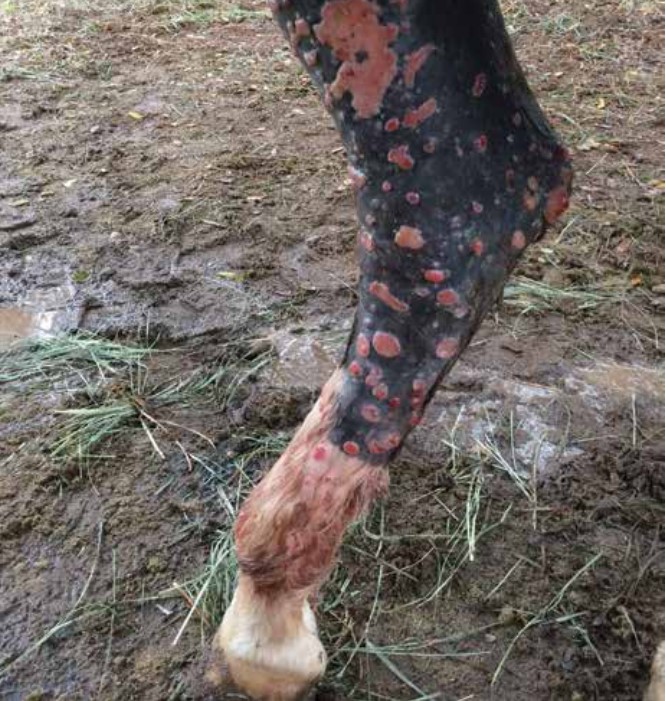
Picture of ulcerative lymphangitis caused by pigeon fever in a horse. This form affects the lymphatic vessels of the limb and may cause marked swelling, pain, and draining tracts. (image: Dr. Diane Rhodes)
Not every horse develops the classic chest swelling associated with pigeon fever. The location and appearance of the infection vary depending on whether it remains beneath the skin, involves the lymphatic system, or spreads internally.
A large swelling can look serious but still represent a localized infection that responds well to appropriate management. Conversely, a horse with a deeper infection may show only subtle changes. Veterinarians consider more than the size of a lump. They look at:
- Where the swelling is located
- How quickly it appeared
- How it changes over time
- Whether the horse has fever or other illness signs
For owners, the most useful habit is noticing changes early. A new unexplained swelling, especially one that grows, becomes painful, drains, or occurs with changes in appetite or behavior, deserves veterinary attention.
When Should a Horse With a Swelling Be Examined?
Not every lump on a horse is pigeon fever, and not every swelling requires the same level of urgency. The challenge for owners is that many different conditions can look similar at first. A new swelling may be caused by an infection, an injury, an injection reaction, or another inflammatory process.
The decision to call a veterinarian depends on how the swelling behaves and how the horse feels overall.
Changes That Should Prompt Veterinary Evaluation
A swelling deserves closer attention when it:
- Continues increasing in size
- Becomes warm, painful, or sensitive
- Is associated with fever
- Causes changes in movement
- Produces drainage
- Appears in multiple locations
- Occurs with weight loss, poor appetite, or reduced performance
A horse that remains bright and comfortable with a small, stable swelling may be approached differently from a horse with a rapidly enlarging, painful area or signs of illness.
The size of a swelling does not always indicate how serious the problem is. A relatively small swelling accompanied by fever, appetite loss, dullness, or rapid progression may require more urgent attention than a large, mature abscess in a horse that remains bright and comfortable.
Why the Timing of Examination Matters
Abscesses change as they develop. An early abscess may feel firm because the body is still containing the infection. Later, as fluid collects, the swelling may soften and become easier to drain.
This difference matters because attempting to treat a swelling before it has matured can sometimes make management more difficult. Veterinarians evaluate whether there is a defined pocket of infection, where it is located, and whether intervention is likely to help.
Location Can Change the Level of Concern
The location of a swelling provides useful information, but it does not confirm the diagnosis by itself. A swelling in a typical pigeon fever location, such as the chest or lower abdomen, may raise suspicion. However, swellings near joints, tendons, the eye, or other sensitive structures require careful evaluation because complications can be more significant.
What Owners Should Monitor Before the Appointment
If veterinary evaluation is not immediately required, owners can gather useful information by monitoring:
- When the swelling first appeared
- Whether it is growing or changing texture
- The horse’s temperature if possible
- Appetite and attitude
- Any drainage or changes in the skin
Photos taken over several days can also help show how the area is progressing. A swelling is a visible sign, but it does not reveal the entire problem underneath. Veterinary assessment helps determine whether the horse has a localized issue that can be managed conservatively or whether additional testing and treatment are needed.
How Veterinarians Diagnose Pigeon Fever in Horses
A swelling that looks like pigeon fever does not always confirm the diagnosis. Several conditions can produce similar signs, and treatment decisions depend on understanding what is happening beneath the surface.
Veterinarians combine the horse’s history, physical examination findings, and diagnostic testing when needed to determine whether Corynebacterium pseudotuberculosis is involved and whether the infection is limited to one area or affecting deeper tissues.
Physical Examination
The examination begins with the details surrounding the problem. A veterinarian will consider:
- When the swelling appeared
- How quickly it has changed
- Whether the horse has had fever or other illness signs
- Recent wounds, insect exposure, injections, or travel
- Whether other horses on the property have developed similar problems
The swelling itself is carefully evaluated. Its location, size, firmness, warmth, and sensitivity can provide clues about the stage of infection. For example, a firm swelling may indicate an abscess that is still developing, while a softer area may contain fluid that could be ready for drainage.
Ultrasound Examination
Ultrasound is one of the most useful tools when evaluating suspected pigeon fever. It allows the veterinarian to look beneath the skin and determine:
- Whether the swelling contains fluid
- The size and depth of an abscess
- Whether the infection extends into surrounding tissues
- Where drainage may be most appropriate
This information is valuable because not every swelling should be opened immediately. An immature abscess may not drain effectively, while a mature abscess with a well-defined fluid pocket may be easier to manage.
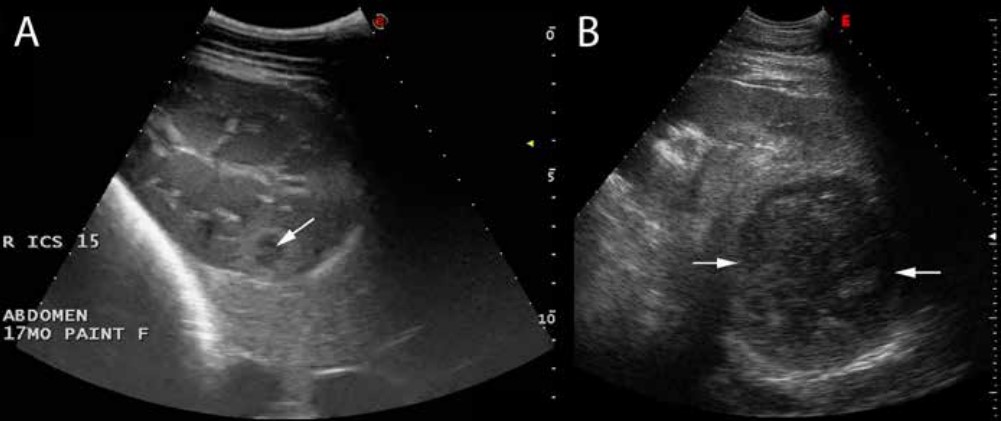
Renal abscessation in equine pigeon fever: Horse A showing a small kidney abscess (left) and Horse B showing a very large abscess in the right kidney (right). (image: vetmed.ucdavis.edu)
Published case reports have shown that ultrasound can play a practical role beyond confirming the diagnosis. In affected horses, it has been used to identify deep abscesses that could not be fully assessed by physical examination, guide drainage procedures, monitor persistent draining tracts during recovery, and distinguish diffuse tissue inflammation from swellings that did not yet contain a drainable abscess. (Corbeil et al., 2016)
Ultrasound can also be useful when internal pigeon fever is suspected because it may help identify abnormalities that cannot be detected from the outside.These findings make it an important tool for both diagnosis and treatment planning.
A visible swelling should not automatically be opened. Ultrasound can help determine whether a drainable fluid pocket has formed, how deep the abscess extends, and whether nearby structures could make drainage more complicated. Timing the procedure correctly may reduce unnecessary tissue damage and improve drainage.
Culture and PCR Testing
When drainage material is available, laboratory testing can help confirm the cause of infection.
Culture
A bacterial culture attempts to grow and identify the organism responsible. It can be useful when:
- The appearance is unusual
- Other bacteria are possible
- The horse is not responding as expected
PCR Testing
PCR detects genetic material from Corynebacterium pseudotuberculosis and can provide confirmation in appropriate cases. These tests are not required for every typical external abscess, but they become more valuable when the diagnosis is uncertain or the infection is more complicated.
Blood Tests and Additional Monitoring
Blood work does not usually diagnose an external abscess by itself, but it can provide information about the horse’s overall health. Horses infected with Corynebacterium pseudotuberculosis develop an immune response that can be measured through antibody testing. Serologic methods for detecting Corynebacterium pseudotuberculosis infection in horses have been studied as a way to identify antibody responses associated with infection. The synergistic hemolysis inhibition (SHI) test may help support diagnosis, particularly when internal disease is suspected. However, antibody results must be interpreted alongside clinical findings because exposure or previous infection can influence test results.
Testing may be considered when a horse has:
- Persistent fever
- Weight loss
- Reduced performance
- Signs of deeper infection
Changes in blood results can help determine whether the problem appears localized or whether further investigation is needed.
Ruling Out Other Conditions
Before confirming pigeon fever, veterinarians may consider other causes of swelling, including:
- Strangles
- Cellulitis
- Injection reactions
- Traumatic injuries
- Abscesses caused by other bacteria
The purpose of diagnosis is not only to identify the disease name. It is to determine what type of infection is present and choose an approach that gives the horse the best chance of recovery.
Treatment for Pigeon Fever in Horses
Treatment for pigeon fever depends on the form of disease, location of infection, and the horse’s overall condition. A single approach does not work for every case. A horse with one external abscess and normal behavior requires a different plan from a horse with fever, weight loss, or evidence of internal infection.
The most common form of pigeon fever involves an abscess beneath the skin. In these cases, treatment is often focused on allowing the infection to drain safely and supporting normal healing.
Managing External Abscesses
External abscesses usually follow a predictable pattern. As the immune system contains the infection, the swelling develops and eventually becomes ready to drain.
Veterinarians consider several factors before deciding how to manage an abscess:
- Whether a fluid pocket has formed
- How deep the abscess is
- Its location
- Whether important structures are nearby
An immature abscess is often firm because the infection has not yet organized into a drainable pocket. Attempting to open it too early may result in poor drainage and unnecessary irritation of the surrounding tissue.
Once an abscess is mature, controlled drainage allows infected material to leave the body and gives the tissue an opportunity to heal. Published case reports illustrate that once an external abscess matures, drainage combined with appropriate local wound care can lead to successful healing in uncomplicated cases (Corbeil et al., 2016).
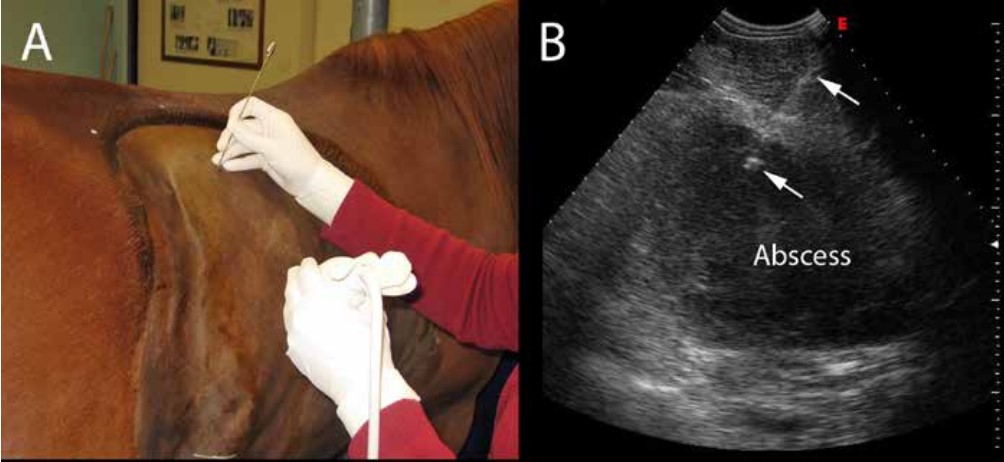
Dr. Whitcomb performing ultrasound-guided aspiration of a suspicious lesion within the right liver lobe of a horse with recurrent fevers. (image: vetmed.ucdavis.edu)
Wound Care After Drainage
After an abscess opens or is drained, ongoing care becomes important. Management may involve:
- Keeping the drainage site clean
- Following veterinary instructions for flushing or cleaning
- Preventing the opening from sealing prematurely
- Protecting the area from flies
- Monitoring changes in discharge and swelling
Large abscesses may take time to heal because the body must gradually replace damaged tissue with healthy tissue.
A common mistake is assuming that drainage means the infection has completely resolved. The wound may appear improved while deeper healing is still taking place.
When Are Antibiotics Used?
Antibiotics are not automatically needed for every external pigeon fever abscess. For many localized abscesses, drainage and wound care are the main parts of treatment because the infection is contained and the body can continue clearing the remaining bacteria. Antibiotics may be considered when:
- The horse has fever or signs of systemic illness
- Internal infection is suspected
- The infection involves deeper tissues
- Ulcerative lymphangitis develops
- The horse is not improving as expected
The decision depends on the individual case rather than simply the presence of an abscess. This individualized approach is reflected in a published Canadian case series, where horses with uncomplicated external abscesses recovered with drainage and local wound care alone, while others with atypical lesion locations or more complex disease received systemic antibiotics (Corbeil et al., 2016).
Antibiotic decisions should be based on the individual horse rather than the appearance of the abscess alone. Fever, systemic illness, deeper tissue involvement, internal infection, and the horse’s response to drainage all influence whether antimicrobial treatment is appropriate.
Treating Internal Pigeon Fever
Internal pigeon fever requires a different approach because the infection is located inside the body. Treatment may involve:
- Longer courses of antibiotics
- Monitoring the horse’s response over time
- Repeat examinations
- Imaging when needed
- Supportive care
Internal abscesses often resolve more slowly than external ones because they cannot simply be drained from the outside. The veterinarian must balance controlling infection with monitoring how the horse responds during recovery.
Pain Management and Supportive Care
Some horses tolerate external abscesses surprisingly well, while others experience significant discomfort depending on the location and size of the swelling. Supportive care may include:
- Anti-inflammatory medication when appropriate
- Maintaining normal nutrition and hydration
- Monitoring appetite and attitude
- Adjusting activity during recovery
A horse that becomes more painful, stops eating, develops fever, or shows worsening signs should be reassessed.
The best outcomes usually come from matching treatment to the specific form of pigeon fever rather than treating every abscess in the same way. Proper diagnosis helps determine when drainage is enough and when additional treatment is necessary.
Recovery From Pigeon Fever: What Horse Owners Should Expect
Recovery from pigeon fever depends largely on the type of infection involved. Horses with a single external abscess often recover well, while horses with internal disease may need a longer period of treatment and monitoring.
For owners, one of the most important things to understand is that healing continues after an abscess drains. The visible swelling may improve quickly, but the tissues underneath still need time to repair.
Healing After an External Abscess
When an external abscess opens, pressure is relieved and many horses become more comfortable. However, the drainage site is still an active wound that requires care. During healing, owners may notice:
- Continued drainage for a period of time
- Gradual reduction in swelling
- Development of healthy tissue within the wound
- Slow closure of the opening
Large abscesses can leave behind a significant cavity under the skin, so complete healing may take weeks rather than days. The appearance of the wound is only one part of recovery. A horse that is eating normally, comfortable, and returning to normal behavior is generally showing positive signs, but continued monitoring remains important. During recovery, it is usually best to avoid introducing unnecessary treats unless your veterinarian recommends otherwise. Keeping the diet consistent helps reduce digestive changes while the horse’s body continues to recover. Recovery time varies depending on the location and severity of infection. In a published Canadian case series, uncomplicated external abscesses resolved within approximately two weeks in one horse, whereas another horse with a deep pectoral abscess required about eight weeks for complete healing (Corbeil et al., 2016).
Returning to Normal Activity
The timing for returning to work depends on the location and severity of the infection. Before increasing exercise, factors to consider include:
- Whether drainage has stopped
- Whether the wound has healed sufficiently
- Whether the horse is free of fever
- Whether movement is comfortable
- Whether there are any signs of ongoing infection
A small abscess in an area that does not interfere with movement may resolve differently from a large chest abscess that affects where tack sits.
Horses recovering from internal pigeon fever usually require a more cautious return because the infection may continue affecting the body even after outward signs improve.
Possible Long-Term Effects
Most horses with external pigeon fever recover without lasting health problems. Some may develop:
- Scarring at the abscess site
- Changes in hair growth over healed areas
- Temporary delays in performance while recovering
Internal infections carry more uncertainty because the disease affects deeper tissues. The outcome depends on factors such as the location of abscesses, the horse’s response to treatment, and how early the condition is identified.
When Recovery Does Not Follow the Expected Pattern
Owners should contact their veterinarian if a recovering horse develops:
- New swellings
- Return of fever
- Reduced appetite
- Weight loss
- Declining energy
- Poor performance after initial improvement
These changes may indicate that the infection has not fully resolved or that another problem is present. Successful recovery from pigeon fever is usually a gradual process. Consistent wound care, appropriate follow-up, and attention to changes in the horse’s condition help ensure that healing continues in the right direction.
Common Mistakes Owners Make During Pigeon Fever Recovery
Most horse owners want to help their horse recover as quickly as possible, but some common approaches can unintentionally slow healing or create additional problems. Pigeon fever is a condition where timing and proper management matter, particularly when dealing with abscesses. Understanding what to avoid can make the recovery process smoother.
Trying to Open an Abscess Too Early
A firm swelling does not always mean there is fluid ready to drain. Early in the infection, the body may still be forming and organizing the abscess. Trying to open a swelling before it has matured may:
- Produce little drainage
- Irritate surrounding tissue
- Make wound management more difficult
Veterinarians often use examination findings and, when needed, ultrasound to determine whether an abscess is ready to be drained.
Assuming Drainage Means the Infection Is Gone
When an abscess opens, it is common for owners to feel that the main problem has passed. However, drainage only removes the material that has reached the surface. The remaining tissue still needs time to heal, and the horse should continue to be monitored for:
- Ongoing swelling
- Continued discomfort
- Fever
- Changes in appetite or behavior
- Using Medications Without Veterinary Guidance
It can be tempting to use leftover antibiotics or medications from previous problems, but pigeon fever cases vary significantly. An external abscess that can be managed through drainage and wound care is different from internal infection or a horse showing signs of systemic illness. Using medication without knowing which situation applies may delay appropriate treatment.
Neglecting Fly Control After an Abscess Drains
A draining abscess can contaminate the surrounding environment and attract flies. Continuing fly management during recovery reduces the chance of bacteria being moved to other horses or back onto contaminated areas. Helpful measures include:
- Cleaning contaminated bedding
- Managing drainage carefully
- Protecting the wound from flies
- Cleaning shared equipment
- Returning to Exercise Too Quickly
A horse may appear comfortable soon after an abscess drains, but the tissues underneath are still healing. Increasing activity too quickly can cause discomfort or delay recovery, especially when the abscess affected areas involved in movement or tack placement.
The return-to-work timeline should consider the location of infection, healing progress, and the horse’s overall condition.
Failing to Reassess Ongoing Problems
Most external cases follow a gradual improvement pattern. A horse that stops improving or develops new signs should be reevaluated. Concerns include:
- A swelling that returns
- Persistent fever
- Loss of weight
- Reduced appetite
- Declining performance
Recovery does not always follow a straight path, and changes during healing provide important information about whether the original treatment approach is working.
A careful recovery plan is usually simple: allow proper drainage, follow veterinary instructions, maintain hygiene and fly control, and pay attention to changes in the horse rather than focusing only on the appearance of the wound.
Can Pigeon Fever Spread Between Horses, Other Animals, or People?
When a horse is diagnosed with pigeon fever, many owners immediately worry about the risk to other horses on the property. Pigeon fever can involve environmental contamination, but it does not spread in the same way as highly contagious respiratory diseases.
The main concern is not casual contact between horses. It is exposure to Corynebacterium pseudotuberculosis in contaminated material and the opportunity for the bacteria to enter another animal through damaged skin.
Spread Between Horses
Direct horse-to-horse transmission appears to be less important than environmental exposure. A horse is not expected to become infected simply by sharing a pasture or standing near an affected horse. However, a horse with a draining abscess can release bacteria into the environment. Drainage may contaminate:
- Bedding
- Soil
- Equipment
- Shared areas
For this reason, basic hygiene practices are still important when caring for an affected horse.
The Role of Flies
Flies are considered an important factor in the movement of pigeon fever bacteria. A fly that contacts infected drainage may carry bacteria to another horse. If those bacteria reach a wound, insect bite, or damaged area of skin, infection can develop.
This is one reason cases are often more common during warmer months when fly activity increases.
Can Other Animals Be Affected?
Corynebacterium pseudotuberculosis can infect several animal species, including livestock such as cattle, sheep, and goats. The disease may appear differently depending on the species.
Pigeon fever is primarily recognized as an equine disease, and infections in dogs and cats are uncommon. Normal hygiene practices are appropriate when any animal is around infected material.
Can Humans Catch Pigeon Fever?
Human infection is rare, but exposure is possible if bacteria enter through broken skin. People caring for an affected horse should:
- Wear gloves when handling drainage
- Wash hands after wound care
- Cover cuts or scratches before handling infected material
- Avoid direct contact with abscess discharge
If a person develops a skin infection after handling an affected horse, they should inform their healthcare provider about the animal exposure.
Managing an Affected Horse Around Other Horses
Complete isolation is not always necessary in the same way it is for diseases that spread easily between horses. However, responsible management reduces environmental contamination. Useful steps include:
- Keeping drainage contained
- Cleaning equipment used on the affected horse
- Removing contaminated bedding
- Maintaining fly control
- Monitoring other horses for unusual swellings
The focus should be on reducing environmental exposure rather than treating pigeon fever as a highly contagious disease. With appropriate hygiene and monitoring, many farms manage individual cases without widespread problems.
Conditions That Can Look Like Pigeon Fever
A swelling or draining area on a horse does not always mean pigeon fever. Several conditions can produce similar signs, and veterinarians consider the location, progression, and overall health of the horse before making a diagnosis.
Identifying the correct cause matters because the treatment approach can be very different depending on what is happening beneath the skin.
| Condition | How it may differ from pigeon fever |
|---|---|
| Strangles | Strangles is caused by Streptococcus equi and more commonly affects lymph nodes around the throat and jaw. Horses often develop fever, nasal discharge, and difficulty swallowing. It is also more contagious between horses than pigeon fever. |
| Cellulitis | Cellulitis causes inflammation and infection of deeper skin tissues. It often produces rapid, diffuse swelling, heat, pain, and sometimes lameness rather than a single developing abscess. |
| Injection-site reaction | Swelling after an injection may be related to local inflammation or, in some cases, infection. The timing, location, and progression help distinguish it from other causes. |
| Trauma or hematoma | A kick, fall, or impact can cause blood to collect under the skin. These swellings may appear suddenly and contain blood rather than infected material. |
| Other bacterial abscesses | Bacteria other than Corynebacterium pseudotuberculosis can also cause abscesses. The appearance alone may not identify the organism responsible. |
| Snake bites | In areas where venomous snakes are present, bites can cause rapid swelling, pain, and tissue damage that may initially resemble an infection. |
Why Diagnosis Matters
Many swellings look similar from the outside, but what is happening underneath determines the best approach. A veterinarian may need to determine:
- Whether the swelling contains an abscess
- Whether the infection is superficial or deeper
- Whether drainage is appropriate
- Whether testing is needed
- Whether another disease is more likely
In some cases, the difference between conditions is clear from the examination. In others, ultrasound, sampling, or laboratory testing helps provide a more accurate answer.
For owners, the most useful step is not trying to identify every possible cause of a lump at home, but recognizing when a change is unusual and getting guidance before the problem progresses.
FAQs About Pigeon Fever in Horses
Is pigeon fever contagious between horses?
Pigeon fever is not considered highly contagious between horses. Most infections occur when Corynebacterium pseudotuberculosis from the environment enters the body through a wound or damaged skin. However, drainage from an abscess can contaminate the environment, equipment, or bedding, creating opportunities for exposure. Good hygiene, fly control, and careful management of infected material help reduce the risk to other horses.
How long does pigeon fever last in horses?
The duration varies depending on the form of disease. External abscesses often require several weeks to drain and heal completely. Internal infections usually take longer because they involve deeper tissues and may require extended treatment and monitoring. Recovery time depends on the location of infection, the horse’s response to treatment, and whether complications develop.
Can horses get pigeon fever more than once?
Yes. A horse can develop pigeon fever again after recovering from a previous infection. Past exposure does not guarantee complete protection. Horses living in areas where the bacteria are present may still encounter the organism, which is why continued attention to fly control, wound care, and general management remains important.
Is there a vaccine for pigeon fever?
There is no widely available commercial vaccine specifically for preventing pigeon fever in horses. Prevention relies mainly on reducing risk factors, including controlling flies, managing wounds promptly, maintaining sanitation, and limiting exposure to infected drainage material.
Can dogs get pigeon fever?
Dogs are rarely affected by Corynebacterium pseudotuberculosis, and pigeon fever is primarily recognized as a disease of horses. Basic hygiene should still be followed when pets have access to areas contaminated with infected material, particularly around draining abscesses.
Can cattle get pigeon fever?
Corynebacterium pseudotuberculosis can infect other livestock species, including cattle, sheep, and goats. The disease may present differently depending on the animal. Farms with multiple species should discuss appropriate management practices with a veterinarian if this bacterium is identified.
What does pigeon fever look like?
The most recognizable sign is a swelling that develops into an abscess, commonly on the chest or lower abdomen. The area may become firm, enlarge over time, and eventually drain thick material. Some horses develop internal infections without visible swelling, which may appear as weight loss, poor performance, fever, or a general decline in condition.
How does pigeon fever spread?
Pigeon fever is mainly associated with environmental exposure. The bacteria can be present in soil and contaminated material from infected abscesses. Flies may contribute by moving bacteria from infected material to another horse. Direct contact between horses is considered less important than exposure through the environment and opportunities for bacteria to enter damaged skin.
Can humans catch pigeon fever?
Human infection is uncommon, but people can become infected if bacteria enter through cuts or broken skin. Wearing gloves during wound care, washing hands after handling infected material, and avoiding direct contact with abscess drainage are sensible precautions.
Is pigeon fever fatal?
Most horses with external abscesses recover successfully with appropriate care. Internal pigeon fever is more serious because infection occurs inside the body and may involve organs. The outcome depends on the location and severity of infection, the horse’s response to treatment, and how early the disease is identified.
What is the incubation period for pigeon fever?
The exact timing between exposure and the appearance of signs can vary. Infection depends on factors such as where bacteria enter the body, the amount of exposure, and the horse’s individual response. Owners may notice signs weeks after exposure, but the timing is not always predictable.
Does every pigeon fever abscess need antibiotics?
No. Antibiotics are not automatically required for every external abscess. Many localized abscesses are managed primarily through appropriate drainage and wound care. Antibiotics may be considered when the horse has systemic illness, internal infection, deeper involvement, or other complications that require additional treatment. The decision should be based on veterinary evaluation of the individual case.
Is There a Vaccine for Pigeon Fever?
There is currently no widely available commercial vaccine specifically designed to prevent pigeon fever in horses. Because vaccination is not a routine prevention option, management practices remain the primary way to reduce risk. Good prevention does not require creating a sterile environment. Instead, it focuses on practical steps that reduce exposure, protect damaged skin, and limit conditions that allow the bacteria to move between horses and their surroundings.