
Knowing which foods horses should never eat is an important part of keeping them healthy. While many fruits and vegetables can be offered as occasional treats, others can upset the digestive system or contain compounds that are harmful to horses. Because horses cannot vomit, eating the wrong food may have more serious consequences than many owners realize.
Understanding which foods are unsafe and recognizing when accidental ingestion becomes a veterinary concern can help protect your horse from preventable illness.
Foods Horses Should Never Eat at a Glance
Not all unsafe foods pose the same level of risk. Some contain toxins that should never be fed, while others are more likely to cause digestive upset or other health problems if eaten in large amounts. The table below provides a quick overview before each food is discussed in more detail.
| Food | Recommendation |
|---|---|
| Chocolate | Never feed. Contains theobromine and caffeine, which can affect the heart and nervous system. |
| Avocados | Never feed. Associated with potentially serious and potentially fatal toxicity in horses. |
| Alcohol or Beer | Never feed. Ethanol can affect the cardiovascular and nervous systems. |
| Coffee, tea, and caffeine | Never feed. Caffeine can overstimulate the nervous and cardiovascular systems. |
| Moldy hay or spoiled feed | Never feed. May contain harmful molds or mycotoxins. |
| Onions and garlic | Never feed. Can damage red blood cells and cause anemia. |
| Green potatoes and potato plants | Avoid. Can contain higher levels of potentially harmful glycoalkaloids. |
| Green tomatoes and tomato vines | Avoid. Can contain higher levels of potentially harmful glycoalkaloids. |
| Lawn clippings | Avoid. Can be eaten rapidly, increasing the risk of choke and abnormal hindgut fermentation. |
Why Some Human Foods Affect Horses Differently
Horses did not evolve to eat the same foods as people. Their digestive system is designed to process a forage-based diet made up primarily of grasses and hay. Unlike humans, horses are hindgut fermenters, relying on billions of beneficial microbes in the cecum and large colon to break down fiber and produce nutrients.
Foods that are high in starch, sugar, fat, or certain plant compounds can disrupt this delicate digestive system or expose horses to substances they are not adapted to metabolize. When large amounts of starch escape digestion in the small intestine, they enter the hindgut, where they can alter the normal microbial population and fermentation process. This disruption may increase the risk of digestive disturbances, including colic and other gastrointestinal problems.
Unlike many other animals, horses cannot vomit. Harmful foods cannot simply be expelled from the stomach after they are eaten, making accidental ingestion potentially more serious.
As a result, even foods that are harmless for people may cause digestive upset, toxicity, or other health problems in horses. This is why veterinarians recommend keeping a horse’s diet centered on forage and introducing any new treats gradually.
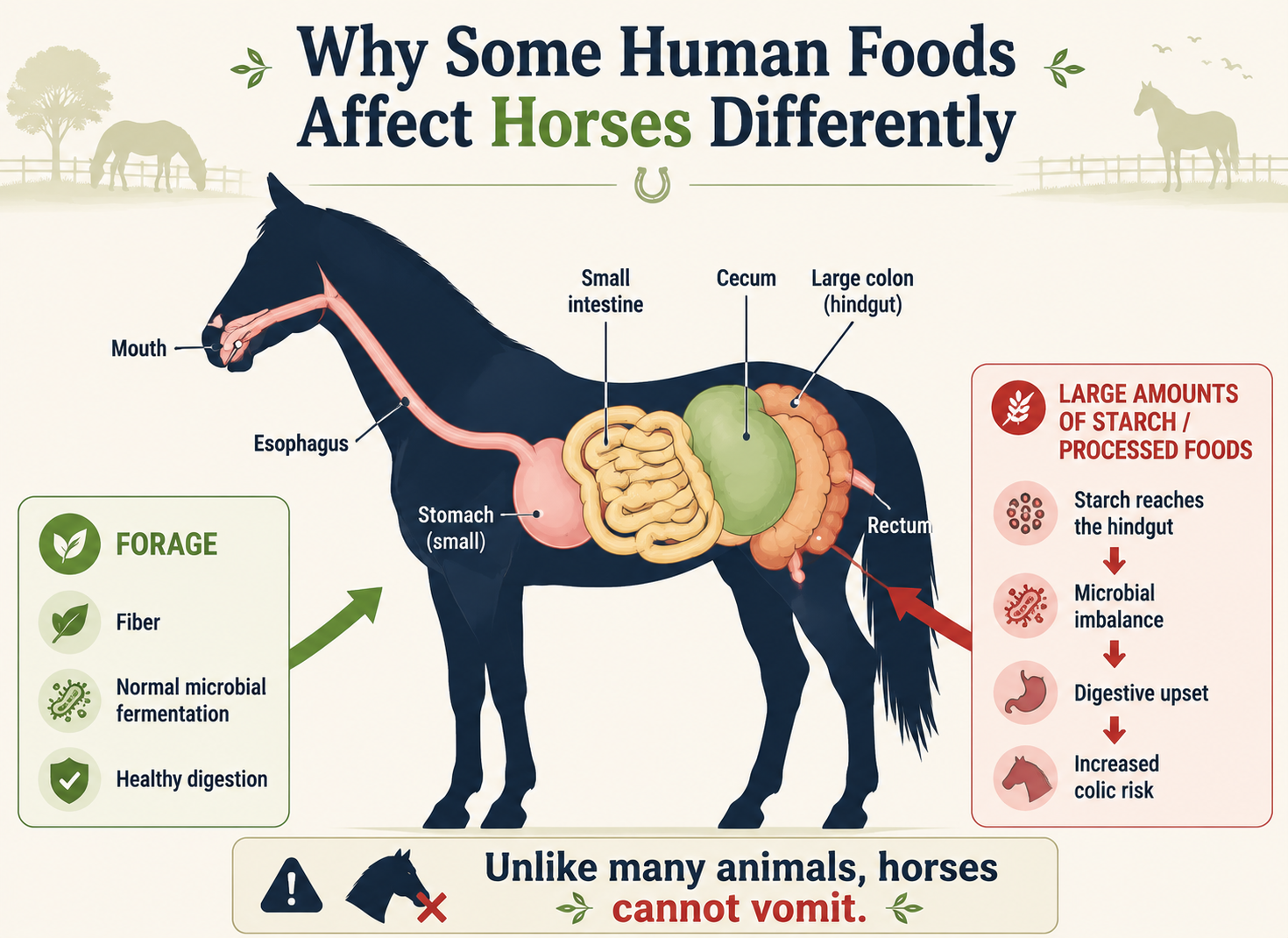
A visual explanation of the horse digestive system showing the difference between healthy forage digestion and the risks of feeding large amounts of starch or processed foods.
Foods That Are Toxic to Horses
Some foods should never be fed to horses because they contain compounds that can damage red blood cells, affect the nervous system, or cause other serious health problems. While the severity depends on the food consumed, the amount eaten, and the individual horse, these foods should always be kept out of a horse’s diet.
Chocolate
Chocolate contains theobromine and caffeine, two stimulants that can affect the heart and nervous system. Although horses are unlikely to seek out chocolate on their own, horses should not eat chocolate as a treat or reward.
Onions and Garlic
Can horses eat onions or garlic? No. Both contain sulfur compounds that can damage red blood cells and cause Heinz body anemia. A study in horses found that prolonged garlic intake caused red blood cell damage and changes consistent with anemia.
Keep both out of the diet. This includes raw, cooked, dried, powdered, or concentrated forms, as well as foods containing onion or garlic.
Avocados
Can horses eat avocados? No. Horses should never eat avocado because exposure has been linked to potentially fatal illness. Reported cases in horses include cardiac problems, respiratory distress, colic, abnormal heart rates, swelling, and neurologic dysfunction, with fatal cases documented. Because a safe amount has not been established, it is best to always avoid avocado, including the fruit, skin, leaves, and pit.
Coffee, Tea, and Other Caffeinated Products
Can horses have caffeine? No. Caffeine can overstimulate the nervous and cardiovascular systems. A study of horses exposed to caffeine-containing coffee husks reported restlessness, muscle tremors, sweating, and increased heart and respiratory rates; researchers concluded that the coffee husks were toxic to horses.
Always avoid caffeine, including coffee, tea, energy drinks, and coffee waste or husks.
Alcohol
Can horses drink beer or any alcohol? No. Horses should never be given beer or other alcoholic drinks because ethanol can affect their cardiovascular and nervous systems. A study in horses found that oral ethanol administration resulted in a significant decrease in heart rate in horses, while confirming that horses absorb and metabolize ethanol.
If you know or suspect your horse has eaten a potentially toxic food, remove any remaining access immediately and contact your veterinarian. Do not wait for clinical signs to develop, as some toxic substances may cause internal damage before obvious symptoms appear.
Foods Horses Should Avoid
Not every unsuitable food is poisonous. Some foods are unlikely to cause toxicity but may still upset a horse’s digestive system, particularly if eaten in large amounts or introduced suddenly. Because horses rely on a stable population of microbes in the hindgut to digest fiber, abrupt dietary changes or excessive treats can increase the risk of digestive upset.
Potatoes
Can horses eat potatoes? It is best to avoid feeding raw potatoes, especially green or sprouted potatoes, as well as potato leaves and stems. These parts can contain higher levels of glycoalkaloids, which may be harmful when consumed in sufficient amounts. Horse poisoning from green potato sprouts has also been reported.
A normal, fully ripe potato has lower glycoalkaloid levels, but there is no established safe serving amount for horses. Penn State Extension recommends staying away from raw potatoes staying away from raw potatoes as a horse treat, so there is little reason to offer them when safer treats are available.
Tomatoes
Can horses eat tomatoes? Tomatoes are best avoided by horses, particularly green, unripe tomatoes and the leaves, stems, and vines. Green tomatoes contain much higher levels of the steroidal glycoalkaloid α-tomatine than red, ripe tomatoes, and research shows these compounds decrease substantially as the fruit ripens.
Though horse-specific toxicity data are limited, that does not mean red tomatoes are proven safe for horses. The practical approach is simple: do not feed tomato plants or unripe green tomatoes, and do not let horses graze around tomato plants or eat garden trimmings.
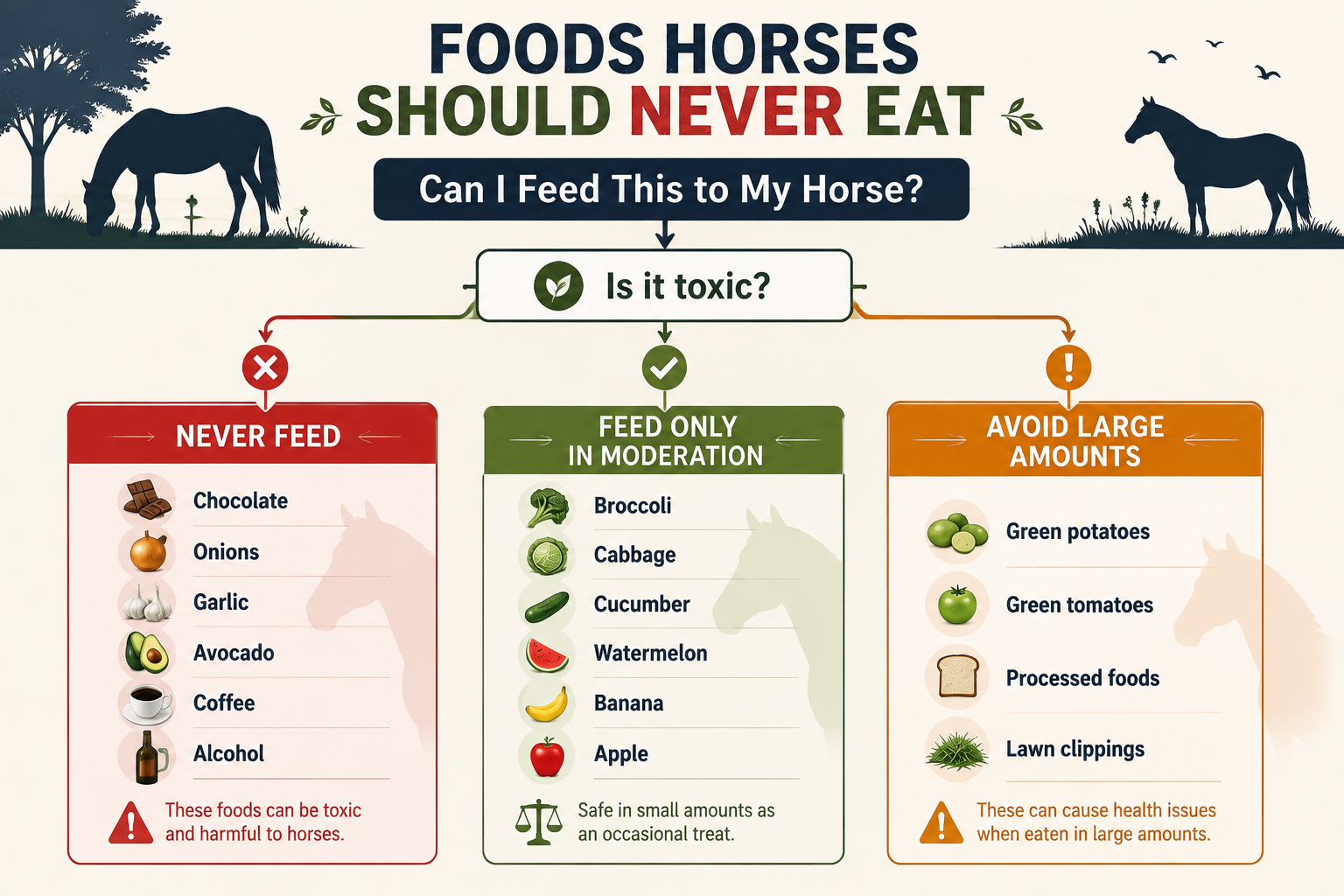
A visual guide showing which foods horses should never eat, which foods are safe only in moderation, and which foods should be avoided in large amounts.
Lawn Clippings
Never feed lawn clippings to horses. A fresh pile can be eaten rapidly, creating a choke risk, while the small particle size and high carbohydrate content can promote rapid hindgut fermentation, potentially leading to acidosis and laminitis. Penn State Extension specifically warns against feeding lawn clippings for these reasons.
For example, clippings from a lawn containing weeds or recently treated with herbicides can expose a horse to substances you may not notice after mowing. Keep horses away while mowing and dispose of clippings where they cannot reach them.
Bread and Other Processed Foods
Can horses eat bread? Plain bread is not considered a specific toxin, but it is a high-starch food and should not be a regular part of a horse’s diet. In horses, higher starch intake increases post-meal glucose and insulin responses, while high-starch diets can alter the hindgut environment and microbial population.
The concern is greater with large portions or frequent feeding, particularly in horses prone to metabolic problems or laminitis. Cakes, cookies, chips, and other processed foods can add concentrated starch, sugar, fat, or salt without providing useful forage-based nutrition.
Horses evolved to eat small amounts of forage throughout the day. Foods that are high in starch, fat, sugar, or heavily processed can disrupt normal hindgut fermentation, even when they are not considered toxic. For this reason, veterinarians recommend keeping treats small and introducing any new food gradually.
Healthier Treat Alternatives for Horses
Not every fruit or vegetable needs to be avoided. Many can be offered as occasional treats when fed in appropriate portions and alongside a forage-based diet.
For a complete guide to safe foods, portions, preparation, and special dietary considerations, see our What Can Horses Eat? guide.
Some better treat alternatives include:
- Apples
- Carrots
- Berries
- Bananas
- Oranges
- Grapes
- Watermelon
- Celery and Cucumbers
Even safe treats should make up only a small part of a horse’s diet. Most of a healthy horse’s daily intake should come from forage, with concentrates added only when needed to meet nutritional requirements.
What Should You Do If Your Horse Eats Something Unsafe?
Finding out your horse has eaten a potentially unsafe food can be worrying, but the best response depends on what was eaten, how much was consumed, when it happened, and whether your horse is showing any clinical signs. Some foods cause only mild digestive upset, while others require prompt veterinary attention even before symptoms develop. Not every accidental exposure becomes an emergency, but potentially toxic foods should always be taken seriously.
If you know or suspect your horse has eaten a food that should not be fed:
- Remove any remaining food to prevent further consumption.
- Estimate what was eaten and approximately how much.
- Monitor your horse for changes such as colic, diarrhea, reduced appetite, depression, or abnormal behavior.
- Contact your veterinarian promptly if the food is known to be toxic or your horse develops any concerning signs.
Because horses cannot vomit, owners should never attempt to make a horse “throw up” after eating something unsafe. Unlike many other species, horses are physically unable to vomit, which is one reason some toxic exposures require prompt veterinary assessment.
| Situation | Recommended action |
|---|---|
| Your horse ate a small amount of a food that may cause digestive upset | Monitor closely and contact your veterinarian if clinical signs develop. |
| Your horse ate a known toxic food | Contact your veterinarian immediately, even if your horse appears normal. |
| Your horse develops colic, diarrhea, weakness, or neurological signs | Seek emergency veterinary care without delay. |
FAQs About Foods Horses Should Never Eat
Can horses eat moldy fruits or vegetables?
No. Moldy fruits, vegetables, hay, or feed should never be given to horses. Mold can produce harmful toxins that may lead to digestive problems or more serious illness.
Can horses eat cooked human food?
Most cooked human foods are not recommended. Many contain added salt, sugar, fat, or seasonings that provide little nutritional value and may upset a horse’s digestive system.
Can horses safely eat kitchen scraps?
No. Kitchen scraps often contain foods that are unsuitable or potentially harmful to horses, and it can be difficult to identify ingredients that may pose a risk.
Can one bite of chocolate harm a horse?
A very small amount is unlikely to cause poisoning in most horses, but chocolate should never be intentionally fed. If a large amount has been eaten, contact your veterinarian for advice.
Are wild plants more dangerous than garden vegetables?
Some wild plants are highly toxic to horses, while many garden vegetables can be fed safely in moderation. If you cannot confidently identify a plant, prevent your horse from eating it until it has been identified.
What is the safest treat for a horse?
Most healthy horses can enjoy small amounts of treats such as apples, carrots, or bananas alongside a forage-based diet. Treats should always be fed in moderation and should not replace hay or pasture.