
Horses can enjoy many fruits and vegetables as occasional treats, but how a food is prepared can affect its choke risk. Large, hard, round, or awkwardly shaped pieces may be difficult for a horse to chew properly before swallowing.
The risk also varies between horses. Fast eaters, horses with dental problems, and horses that have choked before may need extra care when treats are offered.
This guide explains how to slice and prepare fruits and vegetables more safely, with a focus on reducing the risk of esophageal obstruction (choke).
What Is Choke in Horses?
Choke is an obstruction of the esophagus, the tube that carries food from the mouth to the stomach. In horses, food or another material becomes lodged in the esophagus and cannot pass normally into the stomach.
Unlike choking in people, a horse with choke usually still has an open airway. However, it can become a serious problem because saliva and food material can build up and may be inhaled into the lungs.
If you suspect your horse is choking, treat it as a veterinary problem rather than trying to push the obstruction through with food or water.
Why Can Fruits and Vegetables Cause Choke?
Fruits and vegetables are not inherently dangerous for horses, but their size, shape, firmness, and preparation can affect how easily a horse can chew and swallow them. Our guide to foods horses can eat covers which fruits and vegetables are appropriate as occasional treats, while the research on choke in horses highlights several factors that can increase the risk, including:
Large Pieces Can Be Difficult to Chew
Whole or large pieces of food may be harder for a horse to break down before swallowing. Examples include:
- Whole apples
- Large pieces of carrot
- Large chunks of melon
- Other firm fruits or vegetables
Cutting these foods into manageable pieces can make them easier to chew.
Hard or Firm Foods May Form a Solid Bolus
Hard or dense foods require adequate chewing before they can be swallowed comfortably. If a horse swallows a large piece without chewing it sufficiently, the food may become lodged in the esophagus.
Horses That Eat Quickly Have Greater Risk
A horse that bolts treats may swallow pieces before chewing them properly. These horses may need smaller, more manageable pieces and closer attention to how they eat.
Dental Problems Can Affect Chewing
Dental disease or poor dentition can make it harder for a horse to chew food effectively. This is particularly important when offering hard or firm treats.
Choke prevention isn’t about making every treat tiny. It’s about preparing food in a form your individual horse can comfortably chew and swallow.
How to Prepare Fruits and Vegetables to Reduce Choke Risk
There is no single “safe size” that works for every horse or every food. Preparation should take into account the food’s firmness, shape, texture, and your horse’s ability to chew it properly.
| Food | Safer preparation |
|---|---|
| Apples | Cut into manageable pieces rather than offering a whole apple |
| Carrots | Cut into smaller pieces or lengthwise strips rather than feeding large whole carrots |
| Berries | Usually small enough to offer whole, discard spoiled fruit |
| Melon | Cut into manageable pieces, prepare the rind according to the specific melon |
| Celery | Cut into short, manageable pieces rather than long stalks |
| Broccoli | Break into manageable florets |
| Large or firm fruits | Cut into manageable pieces appropriate for the individual horse |
Preparation should also reflect the individual horse. A horse that eats slowly and chews normally may manage a food differently from one that bolts treats or has difficulty chewing.
Foods That Need Extra Attention When Preparing
Some foods deserve more care because their firmness, shape, or texture can make them harder to chew.
Hard or Firm Foods
Apples, carrots, and firm pieces of melon can be difficult to chew when offered in large pieces. Cutting them into manageable portions makes them easier for the horse to break down before swallowing.
Large or Round Pieces
Whole apples and large, round chunks can be awkward to chew and may be swallowed too quickly. Smaller, manageable pieces are a better choice, particularly for horses that tend to bolt treats.
Long or Stringy Foods
Long pieces of celery can be harder to manage than shorter pieces. Cut celery into short, manageable lengths rather than offering a long stalk.
Tough Parts, Rinds, and Stems
An edible part of a plant is not necessarily best offered in one large piece. Tough rinds, stems, or other firm parts may need to be cut, broken into smaller portions, or prepared according to the specific food before feeding.
Think beyond whether a food is edible. Its physical form matters too—especially if your horse tends to eat quickly or has difficulty chewing.
How Small Should Horse Treats Be?
There is no universal measurement that makes a piece of food “choke-proof.” The appropriate size depends on the food and the individual horse.
When preparing a treat, consider:
- Size and shape of the food: Large, round, or awkward pieces may be harder to manage.
- Firmness: Harder foods generally require more chewing.
- Your horse’s chewing ability: Dental problems can make larger pieces more difficult to break down.
- Eating speed: Horses that bolt treats may need smaller, more manageable pieces.
- Previous choke: A horse with a history of choke may require extra care when treats are offered.
The goal is not to make every piece tiny. It is to avoid pieces that your horse may swallow without adequately chewing.
Horses That Need Extra Choke Precautions
Some horses need more careful treat preparation because they may have difficulty chewing properly or may swallow food too quickly.
Horses That Bolt Their Food
Fast eaters may swallow treats with less chewing. If your horse tends to gulp food, use smaller, manageable pieces and avoid large or hard treats.
Horses With Dental Problems
Dental disease can interfere with chewing. These horses may need softer foods or more carefully prepared pieces, depending on their individual dental condition.
A 2026 study of 182 horses with dysphagia found dental disease was the most common suspected cause of oral dysphagia and contributed to some cases of esophageal obstruction.
Horses With a Previous Choke
A previous episode of choke is a reason to be more cautious with treat preparation. Avoid foods or piece sizes that may have contributed to the earlier episode, and discuss recurring choke with your veterinarian.
Horses With Esophageal Problems
Horses with known esophageal abnormalities or other swallowing problems may have a higher risk of obstruction. Follow your veterinarian’s feeding recommendations rather than relying on general treat guidelines.
Older Horses
Age itself does not cause choke, but older horses are more likely to have dental problems that can affect chewing. Their ability to chew should be considered when choosing and preparing treats.
How to Feed Fruits and Vegetables More Safely
Proper preparation is only one part of reducing choke risk. How and when you offer the food also matters.
- Prepare the food appropriately. Cut large, hard, or awkward pieces into manageable portions.
- Avoid unusually large or hard pieces. Don’t assume that an edible food is safe to offer whole.
- Keep portions reasonable. A treat should remain a small part of the overall diet.
- Introduce unfamiliar foods gradually. Give your horse a small amount first and monitor how it responds.
- Take extra care with fast eaters. Horses that bolt treats may need smaller pieces and closer supervision.
- Provide access to clean water. Good hydration supports normal swallowing and digestion.
- Keep up with dental care. Regular dental examinations can help identify problems that interfere with chewing.
- Watch how your horse actually eats. If your horse repeatedly swallows pieces whole, change the preparation rather than assuming it will improve with time.
If the food itself is new, preparation is only part of safe introduction. See our guide to [How to Introduce New Food to a Horse] for gradual introduction, monitoring, and portion guidance.
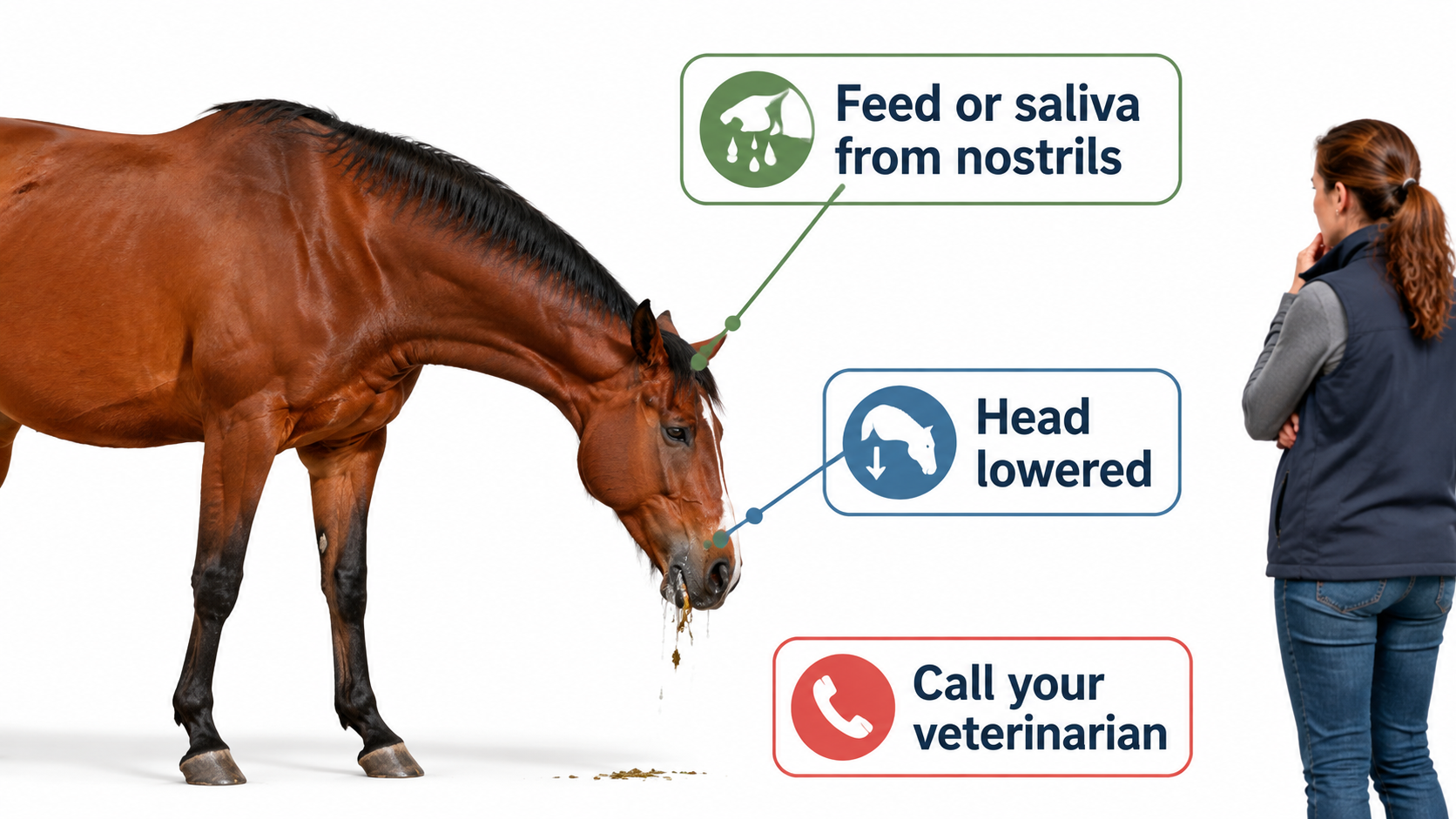
Signs of Choke in Horses
A horse with choke may show obvious signs, but symptoms can vary. Watch for:
- Food or saliva coming from the nostrils
- Excessive salivation
- Coughing or repeated swallowing
- Difficulty swallowing
- Repeated gulping or stretching the head and neck
- Restlessness or discomfort
- Nasal discharge containing food material
A horse may continue to breathe normally because the obstruction is in the esophagus rather than the airway. That does not mean the problem is minor.
Choke can sometimes be mistaken for colic or other digestive problems, especially when a horse appears to be trying to vomit. If you suspect an esophageal obstruction, contact your veterinarian promptly rather than waiting for it to resolve on its own.
What to Do If Your Horse Is Choking
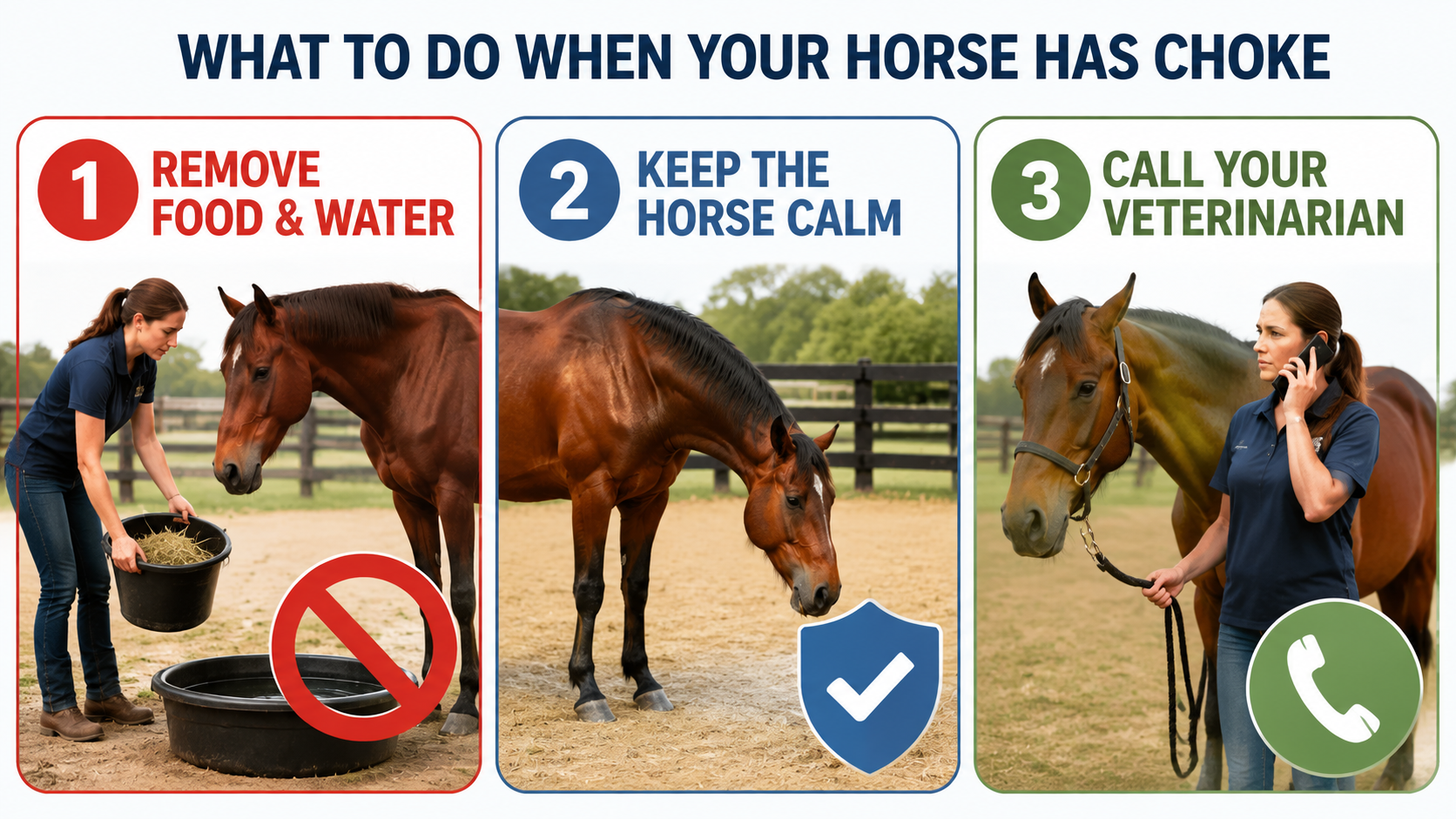
If you suspect your horse has choke, remove the source of food and contact your veterinarian promptly. The following steps are consistent with guidance from the Auburn University College of Veterinary Medicine on equine choke.
What to Do
- Remove all food from the horse’s reach.
- Keep the horse calm and quiet.
- Do not offer additional food or water.
- Contact your veterinarian for instructions and assessment.
What Not to Do
Do not try to push the obstruction through yourself. Avoid:
- Forcing water down the horse
- Offering food to try to push the blockage through
- Putting a hose into the horse’s mouth
- Attempting to manipulate or flush the obstruction yourself
These actions can increase the risk of aspiration or injury.
Even when a choke appears to clear on its own, veterinary assessment may still be appropriate because complications such as aspiration pneumonia can develop afterward.
Can Choke Be Prevented Completely?
No. Careful preparation can reduce the risk of choke, but it cannot eliminate it completely. The risk depends on more than the food itself. Important factors include:
- The food’s size, shape, and firmness
- How the food is prepared
- How quickly the horse eats
- The horse’s ability to chew properly
- Dental health
- Previous episodes of choke
- Underlying esophageal problems
The goal is not to make every treat completely risk-free. It is to reduce avoidable risks by preparing food appropriately and considering the individual horse.
FAQs
Can horses choke on apples?
Frequently Asked Questions Yes. Apples can be a choke hazard when offered as large pieces or whole, particularly for horses that eat quickly or have difficulty chewing. Cutting apples into manageable pieces can reduce the risk.
Should apples be cut before feeding horses?
Cutting apples into manageable pieces is a sensible precaution, especially for horses that bolt treats or have dental problems. There is no single piece size that is appropriate for every horse.
Can horses choke on carrots?
Yes. Large or hard carrot pieces can be difficult to chew. Cut carrots into smaller, manageable pieces, particularly for horses that eat rapidly.
How should carrots be cut for horses?
Avoid offering large whole carrots to horses that tend to bolt their food. Smaller pieces or lengthwise strips can make the carrot easier to manage and chew.
Can horses choke on watermelon?
Yes. Large, firm chunks of watermelon can be difficult to chew and swallow. Cut melon into manageable pieces rather than offering large chunks.
Should celery be cut before feeding a horse?
Yes. Long celery stalks can be awkward to manage. Cutting celery into short, manageable pieces is a better approach, particularly for horses that eat quickly.
Can horses choke on treats?
Yes. Any food can potentially become lodged in the esophagus if it is swallowed without adequate chewing. Large, hard, or poorly prepared treats can increase the risk.
What are the signs of choke in horses?
Common signs include food or saliva coming from the nostrils, excessive salivation, coughing, repeated swallowing, difficulty swallowing, and stretching the head and neck.
What should I do if my horse is choking?
Remove access to food and water, keep the horse calm, and contact your veterinarian promptly. Do not try to push the obstruction through with food or water.
Are older horses more likely to choke?
Older horses are not automatically more likely to choke because of age alone. However, dental problems become more common with age and can affect how well a horse chews food, which can increase the need for careful treat preparation.