
Horses are pregnant for about 340 days on average, or approximately 11 months, but a normal horse gestation period can range from 320 to 370 days depending on the individual mare, breed, season, reproductive history, and overall health. Because mares do not follow an exact calendar schedule, veterinarians consider this a foaling window rather than a fixed due date.
Every pregnancy is unique, and healthy mares do not always follow the same timeline. Understanding the normal course of pregnancy, the factors that influence gestation, and the signs of a healthy mare helps owners prepare for foaling with greater confidence. So, how long are horses pregnant? A mare is usually pregnant for about 340 days, or approximately 11 months, although normal pregnancies can range from 320 to 370 days depending on the individual mare and other factors.
Horse Gestation Period at a Glance
Although the average horse gestation period is well established, healthy pregnancies can vary considerably between mares. The following table summarizes the expected gestation range and key milestones veterinarians use when assessing a normal pregnancy.
| Average gestation period | About 340 days (approximately 11 months). |
|---|---|
| Normal gestation range | 320 to 370 days is considered normal for most healthy mares. |
| Typical pregnancy length | Around 11 months, although individual mares may consistently foal earlier or later within the normal range. |
| Premature foal | Foals born before 320 days have a higher risk of immaturity and health complications. |
| Post-term pregnancy | Some mares carry beyond 370 days and still deliver healthy foals, but prolonged pregnancies should be evaluated by a veterinarian. |
| Key takeaway | Gestation length varies between mares, so the expected foaling date should be treated as a foaling window rather than a fixed due date. |
How Long Are Horses Pregnant? Understanding the 340-Day Average
Many horse owners circle 340 days on the calendar and expect their mare to foal around that date. In reality, veterinarians use it only as a reference point, not a deadline.
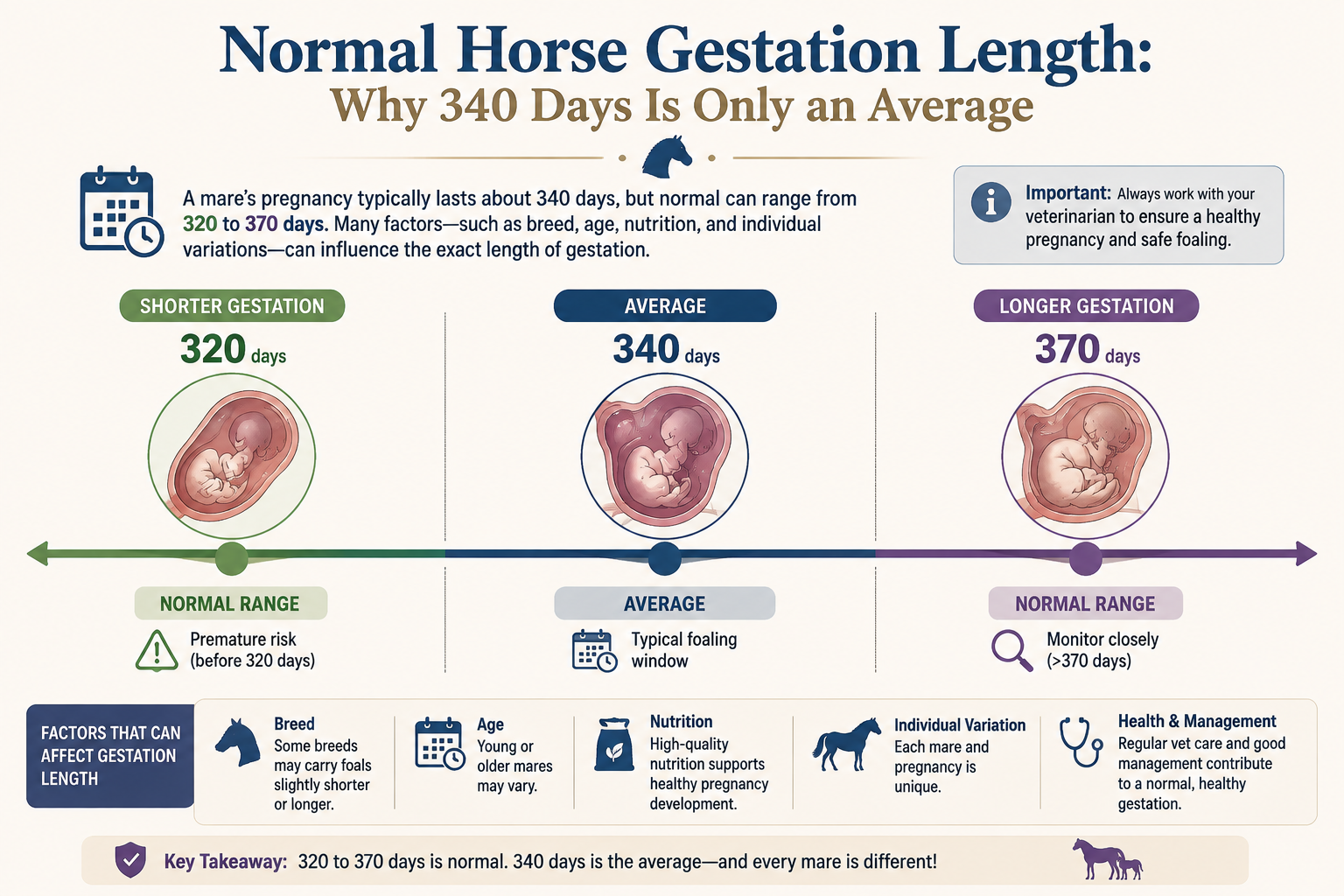
Normal Horse Gestation Length: A visual guide explaining why a mare’s pregnancy can range from 320 to 370 days, with 340 days representing the average foaling timeline.
A healthy mare may foal several weeks before or after day 340 and still have a completely normal pregnancy. For this reason, experienced breeders and veterinarians prepare for a foaling window rather than a single due date. Planning for a range of possible foaling dates is far more reliable than expecting birth on one specific day.
Research in equine reproduction has consistently shown that healthy mares commonly carry a pregnancy for 320 to 370 days. Studies also show that many mares tend to repeat a similar gestation length across successive pregnancies, making an individual mare’s previous foaling history one of the most useful predictors when estimating future foaling dates.
How Is a Horse’s Gestation Period Calculated?
The most accurate estimate of a mare’s gestation period is calculated from the day of ovulation, because fertilization occurs shortly afterward. However, the exact ovulation date is not always known. In practice, breeders and veterinarians often use the breeding date to estimate the expected foaling window. You can use our mare gestation calculator to estimate your mare’s expected foaling date based on her breeding date.
| Situation | How gestation is estimated |
|---|---|
| Known ovulation date | The most accurate estimate is based on the ovulation date because fertilization occurs shortly afterward. |
| Known breeding date | When ovulation is unknown, the breeding date is used to estimate the expected foaling window. |
| Multiple breeding dates | Ultrasound findings and reproductive records help identify the most likely conception window. |
| Unknown breeding date | Ultrasound examination and fetal development help estimate the stage of pregnancy and approximate foaling date. |
For mares bred by artificial insemination (AI), veterinarians often monitor ovulation closely, allowing the gestation period to be estimated more accurately than from the insemination date alone.
In embryo transfer programs, the pregnancy timeline is based on the donor mare’s ovulation and embryo age, rather than the embryo transfer date by itself.
What Actually Changes a Mare’s Gestation Length?
Although the average horse gestation period is about 340 days, no two mares follow exactly the same timeline. A healthy pregnant mare may foal anywhere between 320 and 370 days, and several biological factors help explain this normal variation. Understanding these factors gives a more accurate picture of horse pregnancy than relying on a single due date.
Breed Can Influence the Horse Gestation Period
Breed contributes to normal variation in horse gestation length, although the differences are usually measured in days rather than weeks. Research comparing thousands of pregnancies across multiple horse breeds has found statistically significant differences in average gestation length between breeds.
Some breeds tend to have slightly longer or shorter average gestation periods than others. However, breed alone is not accurate enough to predict when an individual mare will foal because variation between individual mares is often greater than the average difference between breeds.
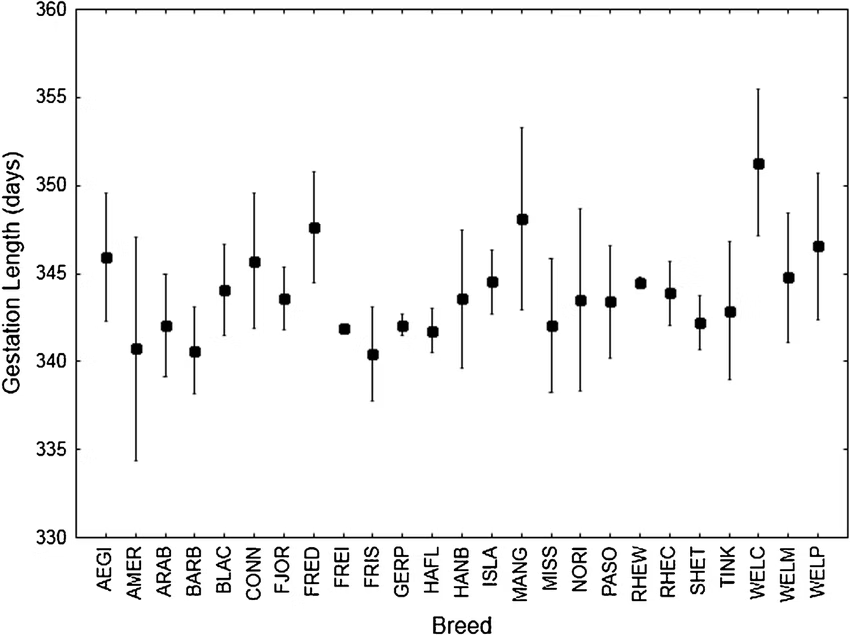
Average gestation length across different horse breeds, based on reproductive records. Research analysis found measurable differences in gestation length between breeds. (image: researchgate.net)
Foal Sex Has a Small Influence
Research has shown that mares carrying colt foals often have slightly longer gestation periods than mares carrying fillies. Although this difference is statistically significant, it is usually only a few days and has little practical value when estimating an individual foaling date.
For horse owners, this is an interesting biological finding rather than something that should influence breeding or foaling management.
Season and Day Length Influence Pregnancy
The breeding season can also influence the horse gestation period. Studies have shown that mares bred early in the breeding season often carry their pregnancies slightly longer than mares bred later in the year.
This difference is largely explained by photoperiod, the amount of daylight a mare is exposed to. Horses are seasonal breeders, and changes in daylight influence reproductive hormones that regulate equine pregnancy and the timing of foaling. As daylight hours increase during spring and early summer, hormonal changes help coordinate reproduction with environmental conditions that improve the survival of newborn foals.
Although the effect is usually modest, it explains why two healthy mares bred on different dates may not have identical pregnancy lengths.
The breeding date alone cannot accurately predict the foaling date. Veterinarians also consider the season, the mare’s reproductive history, and her overall health when estimating the expected foaling window.
Nutrition and the Mare’s Health
Good nutrition supports a healthy horse pregnancy, but it does not usually determine the exact length of gestation. Maintaining an appropriate body condition score and providing adequate nutrition help support fetal development, reproductive health, and preparation for foaling. Research has shown that mares in poor body condition may have reduced reproductive performance compared with mares maintained in better condition.
Certain health conditions, including placentitis, fescue toxicosis, and placental dysfunction, can affect pregnancy progression and may lead to premature foaling, prolonged pregnancy, or pregnancy loss. For this reason, veterinarians consider the mare’s overall health, fetal development, and pregnancy history rather than relying only on the number of gestation days.
Two mares bred on the same day may foal two weeks apart and both pregnancies can be completely normal. Veterinarians interpret the horse gestation period alongside the mare’s health, fetal development, previous foaling history, and pregnancy progression rather than relying on a single calendar date.
Horse Pregnancy Timeline
Understanding these key milestones helps horse owners follow how the foal develops throughout pregnancy, recognize important veterinary checkups, and prepare for the mare’s changing needs as foaling approaches.
| Stage | Key milestone | Owner action |
|---|---|---|
| Day 14–16 | Pregnancy ultrasound and twin check | Schedule veterinary examination |
| Day 25–30 | Fetal heartbeat confirmation | Continue routine care |
| Around Day 60 | Fetal and placental assessment | Follow your veterinarian’s recommendations |
| Second trimester | Steady fetal growth | Maintain nutrition and body condition |
| Last 90 days | Rapid fetal growth | Adjust nutrition gradually |
| 4–6 weeks before foaling | Vaccination and foaling preparation | Prepare the foaling area and care plan |
| Final days | Physical signs of labor develop | Monitor closely and contact your veterinarian if concerns arise |
Day 14 to 16: Pregnancy confirmation and twin check
The first important pregnancy milestone occurs about two weeks after ovulation. A veterinarian can use ultrasound to confirm whether the mare is pregnant and check whether more than one embryo is developing.
Twin pregnancies are a concern in horses because the mare’s uterus is generally not well suited to supporting two foals. Identifying twins early gives the veterinarian the best opportunity to manage the pregnancy and improve the chance of a healthy outcome.
Twin pregnancies have a higher risk of pregnancy loss and complications later in gestation. Early ultrasound examination allows veterinarians to identify twins at a stage when management options are still available, including reducing the pregnancy to a single embryo when appropriate.
Research has shown that early diagnosis and management of twin pregnancies improves the likelihood of a successful outcome compared with detecting twins later in pregnancy.
Day 25 to 30: Confirming fetal heartbeat
Around day 25 to 30, ultrasound can usually detect the developing embryo’s heartbeat. This confirms that the pregnancy is progressing and that the fetus is viable.
This examination is especially valuable because early pregnancy loss can occur even after an initial pregnancy has been confirmed. Regular veterinary monitoring helps identify problems before they become more difficult to manage.
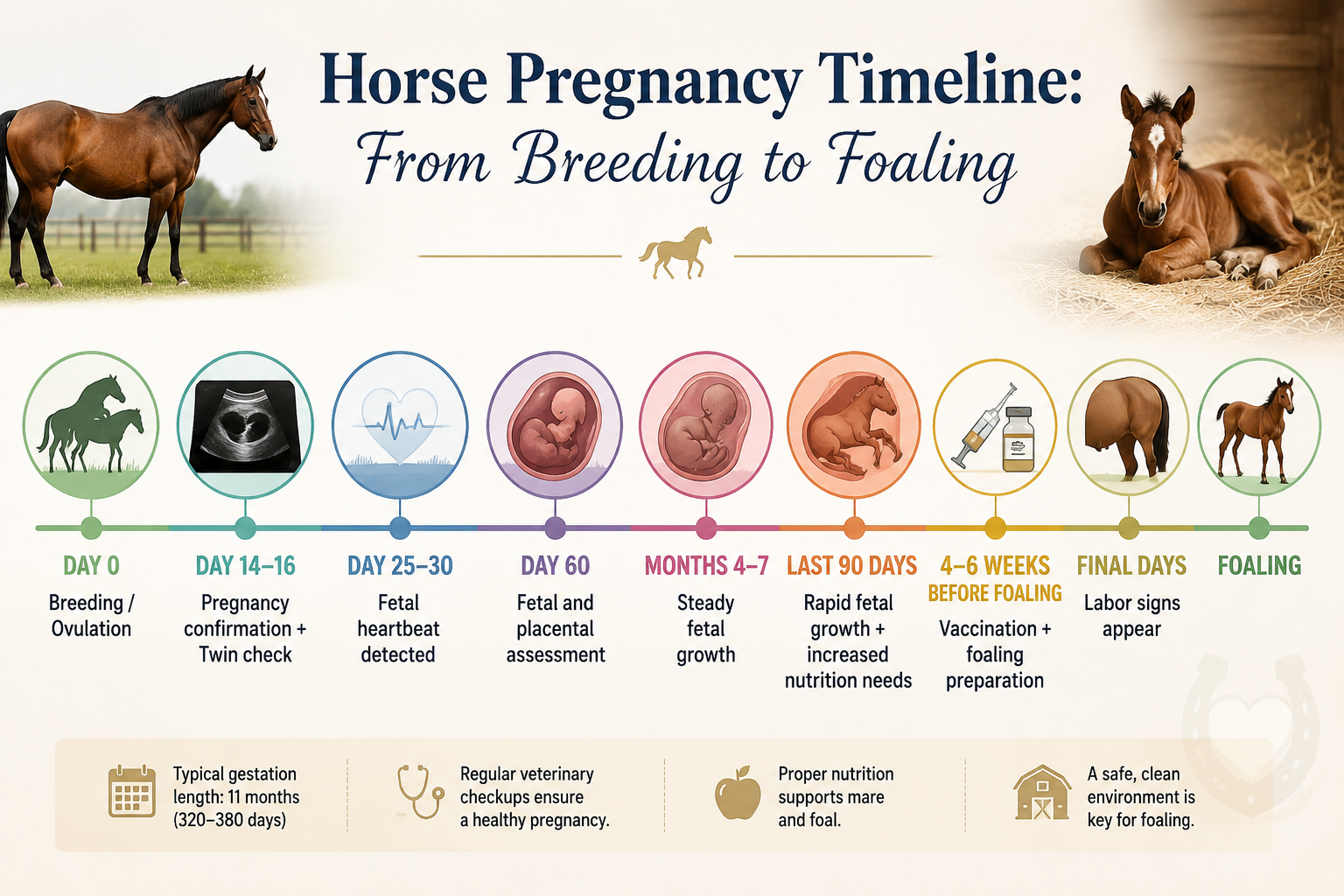
Horse Pregnancy Timeline: A visual guide showing key stages from breeding and ovulation through fetal development, foaling preparation, and the arrival of a healthy foal.
Around Day 60: Evaluating fetal development
Around 60 days of pregnancy, the fetus continues to develop and the veterinarian may perform another reproductive examination to assess the pregnancy.
At this stage, the focus is not only on the fetus but also on the structures supporting the pregnancy, including the uterus and placenta. A healthy placenta is essential because it provides the developing foal with oxygen and nutrients throughout gestation.
Second trimester: Maintaining the mare’s condition
During the second trimester, the foal continues growing, but the mare’s nutritional needs are usually not dramatically increased compared with late pregnancy.
The main goal during this period is maintaining good body condition through appropriate feeding, regular health care, and monitoring. A mare that becomes underweight or overweight may face more challenges as she approaches foaling; keeping a close eye on her daily intake and avoiding accidental toxins by reviewing foods horses should never eat is essential to keeping her safe throughout her term.
Last 90 days: Supporting rapid fetal growth
The final three months of pregnancy are when the foal undergoes significant growth. The nutritional demands on the mare increase during this period, particularly for energy, protein, vitamins, and minerals.
Feed changes should be introduced gradually rather than suddenly increasing calories. The right approach depends on the mare’s current body condition, forage quality, and overall health.
4 to 6 weeks before foaling: Preparing for birth
As foaling approaches, preparation becomes just as important as monitoring the pregnancy. Many veterinarians recommend giving specific vaccinations during this period so the mare can pass protective antibodies to the foal through colostrum.
Owners should also prepare a clean foaling environment, review normal labor signs, and have a plan for veterinary assistance if complications occur.
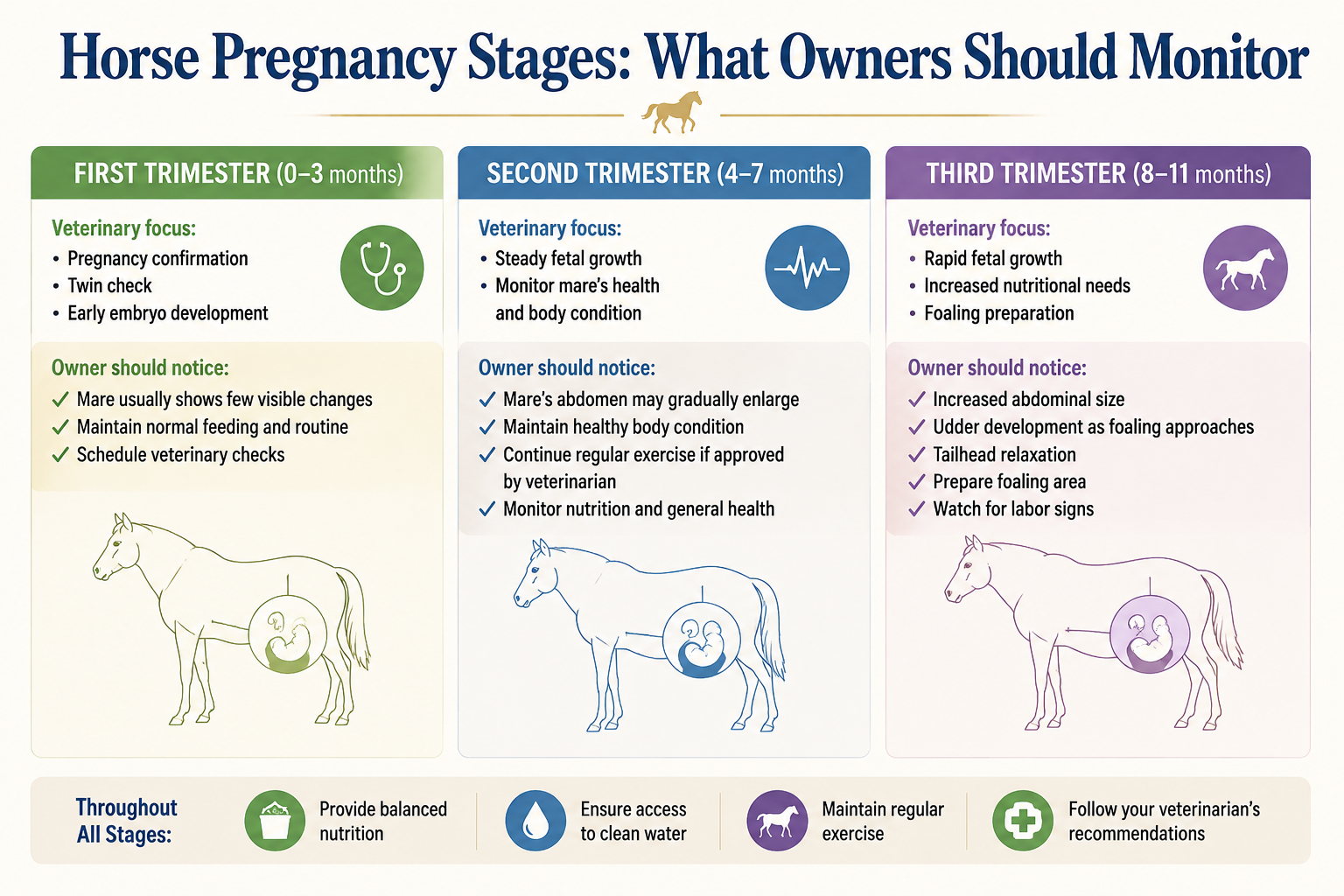
Horse Pregnancy Stages: A visual guide helping owners understand what happens during each trimester, from early pregnancy confirmation and fetal development to foaling preparation and labor signs.
Final days: Watching for labor signs
The final days before foaling can vary significantly between mares. Some show obvious physical changes, while others may give very subtle signs that birth is approaching.
Common changes include udder development, relaxation around the tailhead, restlessness, and behavioral changes. Close observation during this period helps owners recognize when normal foaling begins and when veterinary advice may be needed.
Signs Foaling Is Near
As a mare enters the final weeks of pregnancy, she may begin showing physical and behavioral signs that indicate foaling is approaching. These signs develop gradually and vary between mares, so no single sign can accurately predict when labor will begin. Instead, veterinarians assess the overall pattern of changes and the mare’s individual pregnancy history when estimating how close she is to foaling.
| Timing | What owners may notice |
|---|---|
| Several weeks before foaling | Udder development (“bagging up”) as the mammary glands prepare for milk and colostrum production. |
| Several days before foaling | Waxing of the teats, relaxation around the tailhead and pelvis, and softening of the vulva as the birth canal prepares for delivery. |
| Final days | Changes in milk composition, including increasing calcium levels, may provide additional clues that foaling is approaching, although these findings should be interpreted alongside other physical signs. |
| Hours before foaling | Behavioral changes such as restlessness, frequent lying down and standing, pawing, or repeatedly looking toward the abdomen may indicate that labor is near. |
Udder Development
Many mares begin developing their udders during the final weeks of pregnancy as the mammary glands prepare to produce colostrum. Some mares show obvious enlargement several weeks before foaling, while others may not “bag up” until only a few days beforehand. Because this timing varies considerably, udder development alone should not be used to predict the exact foaling date.
Waxing and Milk Changes
As foaling draws nearer, small dried droplets of colostrum may appear on the ends of the teats, a change commonly called waxing. Some owners also use milk calcium testing during the final days of pregnancy to help estimate when foaling is approaching. Research has shown that increasing calcium concentrations in mammary secretions are associated with foaling in the following days, although these results should always be interpreted alongside the mare’s physical signs because no single test can accurately predict the exact timing of labor.
Pelvic and Vulvar Relaxation
Hormonal changes during late pregnancy cause the ligaments around the tailhead to soften and the tissues of the vulva to relax. Owners may notice that the area beside the tailhead feels softer or appears slightly sunken as the birth canal prepares for delivery. These physical changes often become more noticeable during the final days before foaling but may develop gradually over time.
Behavioral Changes
Many mares show subtle behavioral changes as labor approaches. Some become restless, repeatedly lie down and stand up, paw at the ground, or spend more time looking toward their abdomen. Others may become unusually quiet or separate themselves from other horses. First-time mothers (maiden mares) may show less predictable physical changes than mares that have foaled previously, so behavior should always be interpreted alongside the mare’s physical signs.
As your mare enters her expected foaling window, begin checking her more frequently, especially overnight when many mares naturally foal. Keep the foaling area prepared, have your veterinarian’s contact information readily available, and avoid making unnecessary changes to the mare’s routine during the final days of pregnancy.
Stages of Labor in Horses
Foaling marks the end of the horse gestation period and normally occurs in three stages. Understanding these stages helps horse owners recognize what is expected during a normal delivery and when veterinary assistance may be needed. For a detailed guide on the birth process, see our article on Stages of Labor in Horses: What to Expect During Foaling.
| Stage | What happens |
|---|---|
| Stage 1 | The mare prepares for birth as uterine contractions begin and the foal moves into position. Owners may notice restlessness, sweating, or repeated lying down and standing. |
| Stage 2 | Active labor begins and the foal is delivered. Normal presentation is usually the front feet followed by the nose. |
| Stage 3 | The placenta is expelled after the foal is born and should be checked to ensure it is complete. |
Stage 1: Early Labor
During the first stage of labor, the uterus begins contracting as the foal moves into the correct position for birth. This stage typically lasts 1 to 4 hours, although the duration varies between mares. Owners may notice restlessness, sweating, pawing, repeatedly lying down and standing, or looking toward the abdomen. Because these signs can resemble mild colic, careful observation is important as the mare approaches foaling.
Stage 2: Delivery of the Foal
Stage 2 begins when active labor starts and ends with the birth of the foal. In a normal delivery, the foal is usually presented with both front feet followed closely by the nose. This stage progresses rapidly in most mares, and prolonged or difficult delivery increases the risk of complications for both the mare and foal. If labor does not appear to progress normally or the foal is not presented correctly, veterinary assistance should be sought immediately.
Stage 3: Passing the Placenta
After the foal is born, the mare enters the final stage of labor as the placenta is expelled, usually within 3 hours of delivery. The placenta should be examined to ensure it is complete because retained placenta can lead to infection and other serious complications that require prompt veterinary treatment.
While understanding the stages of labor can help you recognize normal foaling, every mare is different. If labor is prolonged, the foal appears to be in an abnormal position, or the placenta is not passed normally, contact your veterinarian without delay.
When Is a Mare Actually Overdue?
A mare’s estimated foaling date is a useful reference point, but it does not act as a strict deadline. As discussed earlier, normal gestation length can vary between mares, so reaching the expected date does not automatically mean a pregnancy is overdue.
Instead, veterinarians look at the mare’s overall condition, pregnancy history, and any changes that may suggest a problem rather than relying on the calendar alone.
| Situation | What it may mean |
|---|---|
| Expected foaling date reached | Normal variation may still be possible |
| Pregnancy extending beyond the expected timeframe | Monitor closely and discuss with your veterinarian |
| Extended pregnancy with abnormal signs | Veterinary assessment may be needed |
When to Contact Your Veterinarian
A longer pregnancy is more concerning when it is accompanied by other signs, such as:
- Illness or changes in the mare’s condition
- Abnormal vaginal discharge
- Concerns about placental function
- Reduced or unusual fetal movement
- Other signs that the pregnancy may not be progressing normally
FAQs About Horse Gestation Period
Can mares go past 365 days?
Yes, some mares can have an equine gestation period longer than 365 days. A mare reaching this point does not automatically mean she is overdue or that there is a problem with the pregnancy. The expected foaling date is only an estimate, and normal variation can occur between mares. Your veterinarian will consider factors such as the mare’s condition, fetal development, and overall pregnancy progress rather than the calendar alone.
Do maiden mares have longer pregnancies?
Not always. A maiden mare (a mare having her first foal) does not necessarily have a longer horse gestation period than an experienced broodmare. Factors such as the individual mare, breed, environment, and stage of pregnancy have a greater influence on the foaling timeline than whether it is her first pregnancy.
How long are horses pregnant in months?
Horses are pregnant for about 11 months on average, although the normal horse gestation period can range from approximately 320 to 370 days. Individual mares may carry their foals slightly shorter or longer depending on factors such as breed, reproductive history, and overall health.
Do colts stay longer than fillies?
Some research has found small differences in gestation length based on foal sex, with pregnancies carrying colts sometimes lasting slightly longer. However, the difference is usually small and cannot be used to predict an exact foaling date. A mare’s health, genetics, and individual pregnancy factors are much more important when estimating when a healthy foal will arrive.
Can stress delay foaling?
Major stress can affect a pregnant mare’s health and pregnancy, but stress alone is not usually considered a cause of prolonged gestation. Maintaining a calm environment, consistent routine, and appropriate veterinary care supports a healthy pregnancy throughout gestation.
Can nutrition change gestation?
Nutrition does not usually determine the exact length of a mare’s pregnancy, but it plays an important role in maintaining a healthy mare and supporting fetal growth. During late pregnancy, balanced nutrition helps support fetal development, colostrum production, and preparation for foaling. Feeding decisions should focus on maintaining appropriate body condition rather than trying to alter the foaling date.
Can you tell if a mare is pregnant by looking at her?
Not reliably. Some mares may show visible changes during pregnancy, such as gradual abdominal enlargement, udder development, or changes in body shape, especially during the later months. However, these signs can vary greatly between mares, and some pregnant mares may not show obvious external changes. The most accurate way to confirm pregnancy is through veterinary examination, including ultrasound during early pregnancy. Regular reproductive checks can also help monitor fetal development and identify potential problems during gestation.
How soon after breeding can you tell if a mare is pregnant?
Pregnancy can often be confirmed by ultrasound about 14 to 16 days after ovulation or breeding. Early examination allows veterinarians to confirm pregnancy, detect twin pregnancies, and assess early embryonic development. The exact timing may vary depending on the breeding method and the veterinarian’s examination protocol.
How is a horse’s pregnancy confirmed?
Pregnancy is usually confirmed through a veterinary reproductive examination and ultrasound. Early ultrasound can detect pregnancy, identify twins, and monitor early embryo development, while later examinations help assess fetal growth and placental health throughout gestation.
Can a mare have a healthy pregnancy without showing many signs?
Yes. Some mares show obvious changes such as abdominal enlargement, udder development, or behavioral changes, while others display very few outward signs until late pregnancy. Because physical signs vary considerably, routine veterinary examinations are the most reliable way to confirm and monitor a healthy pregnancy.
Can a mare be ridden while pregnant?
Many healthy mares can continue light to moderate exercise during much of pregnancy, provided they have no medical or reproductive complications. Exercise should be adjusted as pregnancy progresses, particularly during late gestation, and any concerns should be discussed with your veterinarian.
What if I don’t know the breeding date?
If the breeding date is unknown, a veterinarian can estimate the pregnancy stage using a reproductive examination and ultrasound findings. Monitoring the mare’s physical changes, combined with veterinary evaluation, can help determine where she is in the horse pregnancy timeline and when foaling may be approaching.
How many times can a mare give birth in a year?
A mare typically gives birth to one foal per year because the horse gestation period lasts around 11 months. After foaling, the mare needs time for recovery and to return to her normal reproductive cycle before being bred again. The exact timing depends on the mare’s health, reproductive condition, and breeding management. Veterinarians consider the mare’s recovery, body condition, and overall health when determining whether she is ready for another pregnancy.
Can a mare foal before 320 days?
Yes, a mare can foal before 320 days, but a foal born this early is considered premature and may have a higher risk of health complications. Premature foals may require specialized veterinary care because important development continues during the final stages of pregnancy. If a mare shows signs of early labor, veterinary evaluation is recommended to assess the health of both the mare and foal.
What is the longest a horse can stay pregnant?
Some mares can remain pregnant beyond 370 days and still deliver healthy foals, although this is less common. A prolonged pregnancy does not automatically mean there is a problem, but veterinarians may recommend evaluation to assess fetal development, placental health, and the mare’s overall condition. Veterinarians consider factors such as the mare’s health, fetal development, placental function, and previous pregnancy history rather than relying only on the number of gestation days.
Do horses usually give birth at night?
Many mares foal during the night or early morning hours, although foaling can happen at any time of the day. This natural behavior may help reduce disturbances and improve safety for the mare and newborn foal. Because many births occur overnight, owners often increase monitoring during the expected foaling window and prepare a safe foaling environment in advance.
How accurate is a horse foaling due date?
A horse foaling due date is only an estimate and should not be treated as a fixed deadline. Although the average horse gestation period is about 340 days, healthy mares can normally foal anywhere between 320 and 370 days. Veterinarians improve foaling estimates by considering the mare’s breeding history, previous pregnancies, reproductive examinations, fetal development, and physical signs that foaling is approaching.
How long after foaling can a mare become pregnant again?
Many mares can return to their reproductive cycle within a few weeks after foaling and may experience their first postpartum heat during this period. However, the timing varies depending on the mare’s health, recovery, and individual reproductive pattern. Before breeding again, the mare’s overall condition should be evaluated to ensure she is healthy and prepared for another pregnancy.