
No, horses should not eat chocolate. Chocolate contains methylxanthines, mainly theobromine and caffeine, which can affect a horse’s cardiovascular and nervous systems. The risk depends on the type and amount of chocolate consumed, with high-cocoa products such as dark chocolate, baking chocolate, and cocoa powder being the greatest concern. If a horse eats chocolate, contact your veterinarian for guidance.
Key Takeaways
- Chocolate is unsafe for horses because cocoa contains theobromine and caffeine.
- Dark chocolate, baking chocolate, and cocoa powder carry the highest risk.
- There is no confirmed safe amount of chocolate for horses.
- A horse may appear normal after eating chocolate but still require assessment.
- Contact your veterinarian after chocolate exposure, especially with high-cocoa products.
Why Horses Should Not Eat Chocolate
Chocolate is not a natural component of a horse’s diet, and it provides no nutritional benefit as a treat. Beyond the sugar and fat content, the main concern is the presence of methylxanthines, naturally occurring compounds found in cocoa.
The two methylxanthines of greatest concern are theobromine and caffeine. These compounds are responsible for chocolate toxicity in many animal species because they can stimulate the cardiovascular and nervous systems.
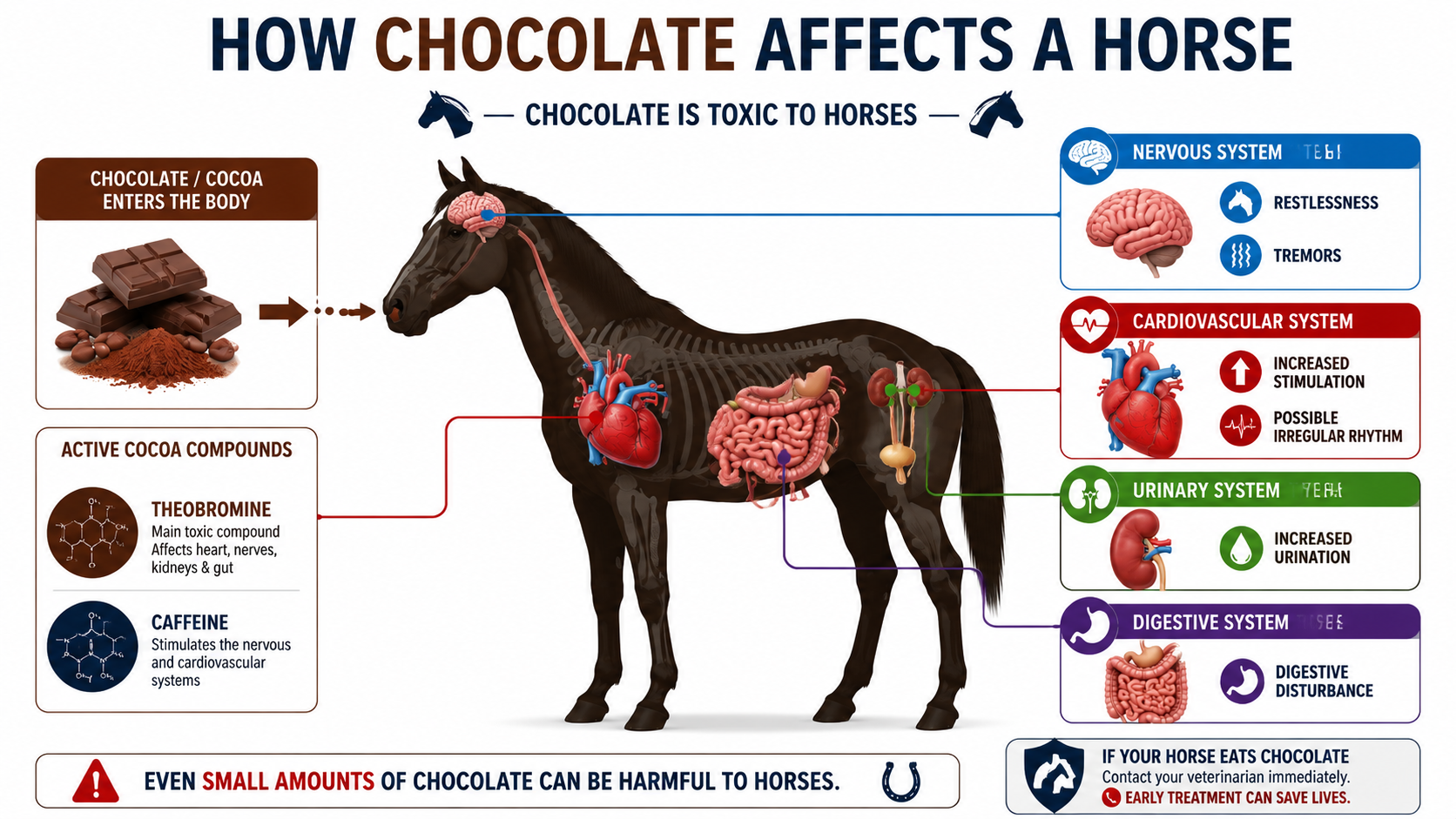
This veterinary infographic explains the main health risks of chocolate toxicity in horses.
How Theobromine Affects the Horse’s Body
Theobromine is the primary methylxanthine found in chocolate and is usually present at higher concentrations than caffeine. After ingestion, it is absorbed into the bloodstream and can influence several body systems.
Cardiovascular system: Theobromine can increase stimulation of the heart, which may contribute to a faster heart rate or abnormal heart rhythms in significant exposures.
Nervous system: Because methylxanthines stimulate the nervous system, affected horses may become restless, excitable, or develop muscle tremors. More severe exposures may lead to seizures.
Urinary system: Theobromine has mild diuretic effects, which can increase urine production.
Digestive system: Chocolate also contains high levels of fat and sugar, which are not appropriate for horses in large amounts and may contribute to digestive disturbance.
The concern with chocolate is not simply that it is a sweet human food. The important issue is that cocoa contains biologically active compounds capable of affecting the horse’s cardiovascular and nervous systems. A small amount of a high-cocoa product may represent a greater concern than a larger amount of low-cocoa chocolate.
Does the Type of Chocolate Matter?
Yes. The type of chocolate matters because cocoa concentration determines how much theobromine and caffeine a horse may consume. Products with higher cocoa content generally contain higher levels of methylxanthines and create greater concern.
| Chocolate Type | Relative Concern | Why |
|---|---|---|
| Cocoa powder | Highest | Highly concentrated cocoa source with high levels of theobromine and caffeine |
| Baking chocolate | Very High | Contains a high percentage of cocoa solids and concentrated methylxanthines |
| Dark chocolate | High | Higher cocoa content means more theobromine compared with milk chocolate |
| Milk chocolate | Moderate | Contains less cocoa but still contains theobromine and caffeine |
| White chocolate | Low methylxanthine risk | Contains little to no meaningful cocoa, but remains unsuitable because of sugar and fat content |
When a veterinarian assesses chocolate exposure, the product type is only one part of the picture. The amount consumed, the horse’s body weight, the time since ingestion, and any clinical signs help determine the level of concern.
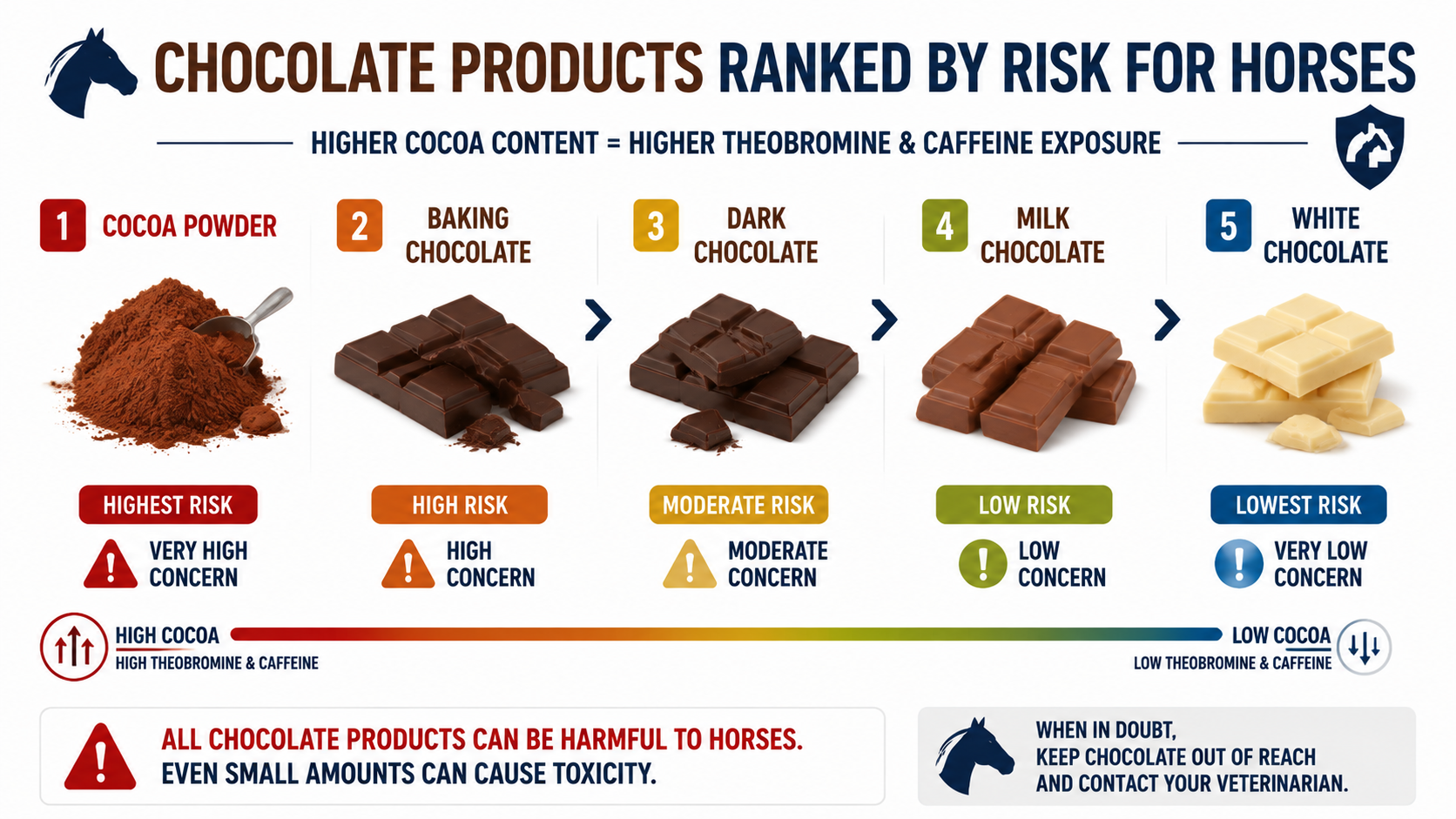
This infographic compares cocoa powder, baking chocolate, dark chocolate, milk chocolate, and white chocolate from highest to lowest concern for horses.
Why Veterinarians Cannot Give a “Safe Amount” of Chocolate for Horses
Unlike dogs, horses do not have a well-established toxic dose for chocolate exposure. Research on methylxanthine toxicity in horses is limited, so veterinarians cannot rely on a single number to determine whether an exposure is safe or dangerous.
Instead, risk is assessed based on the individual situation, including:
- The type of chocolate consumed: Higher cocoa products generally contain more theobromine and caffeine.
- The amount eaten: A larger intake increases the potential methylxanthine exposure.
- The horse’s body weight: The same amount of chocolate creates a different exposure depending on the size of the horse.
- The time since ingestion: Timing may influence monitoring and treatment decisions.
- Any clinical signs present: Symptoms can change how urgently the horse needs care.
Because there is no confirmed safe threshold, even a small amount of chocolate should be evaluated in context, especially if it involves dark chocolate, baking chocolate, or cocoa powder.
What Happens If a Horse Eats Chocolate?
The effects of chocolate exposure in horses depend on several factors, including the type of chocolate consumed, the amount eaten, the horse’s body size, and individual response. Some horses may show no obvious signs after a small exposure, while higher-risk exposures, especially those involving concentrated cocoa products, may affect the cardiovascular and nervous systems.
The absence of immediate clinical signs does not automatically mean a chocolate exposure is insignificant. Research in horses has shown that theobromine is absorbed after ingestion and can remain detectable in the body over time. Because the severity of effects depends on the amount consumed, cocoa concentration, and individual response, veterinarians assess the complete exposure rather than relying only on whether signs are present immediately.
Clinical signs can vary from mild behavioral changes to more serious cardiovascular and neurological complications. The table below outlines the possible signs that may occur with increasing levels of concern.
| Severity | Possible Clinical Signs |
|---|---|
| Early | Restlessness, excitability, increased heart rate, increased urination |
| Moderate | Sweating, muscle tremors, digestive upset, colic signs, diarrhea |
| Severe | Cardiac arrhythmias, seizures, collapse, death |
What Should You Do If Your Horse Eats Chocolate?
If your horse has eaten chocolate or you suspect an exposure, remove any remaining chocolate and contact your veterinarian for guidance. Do not wait for signs of illness to appear, as the level of concern depends on the type of chocolate, amount consumed, and time since ingestion.
When contacting your veterinarian, provide as much information as possible:
- Type of chocolate consumed
- Estimated amount eaten
- Time of exposure
- Horse’s approximate body weight
- Any signs currently present
If available, keep the packaging or ingredient label, as it can help estimate the cocoa content and potential methylxanthine exposure.
Because horses cannot throw up, do not attempt to induce vomiting or give home treatments unless specifically instructed by your veterinarian.
| Situation | Recommended Action |
|---|---|
| Small exposure and no signs | Monitor Closely |
| Dark chocolate, baking chocolate, or cocoa powder | Seek veterinary guidance |
| Tremors, collapse, or abnormal heart rhythm | Treat it as emergency |
How Veterinarians Diagnose and Treat Chocolate Toxicity
Veterinarians start by assessing the exposure details, including the type of chocolate, estimated amount consumed, time since ingestion, horse’s body weight, and any clinical signs.
A physical examination helps evaluate the horse’s condition, especially heart rate, heart rhythm, and neurological signs. Additional tests such as bloodwork or an ECG may be recommended if complications are suspected.
There is no specific antidote for chocolate toxicity. Treatment focuses on supportive care and managing complications while the horse clears the methylxanthines from its system.
Veterinary care may include:
- Supportive fluids when needed
- Decontamination in selected cases
- Monitoring for heart or neurological complications
- Treatment of abnormal rhythms or seizures if they occur
Horses That Need Extra Caution After Chocolate Exposure
Chocolate should never be intentionally fed to horses, but some horses may require additional caution after accidental exposure. The concern is not only the chocolate itself, but also how the horse’s age, health status, and intended use may affect the consequences of exposure.
Competition Horses
For performance horses, the concern extends beyond toxicity. Theobromine is considered a prohibited substance under FEI regulations because it has stimulant properties and may result in an adverse analytical finding.
After ingestion, theobromine is absorbed and eliminated over time, meaning it may remain detectable after exposure even when a horse shows no obvious clinical signs. Owners of competition horses should avoid feeds, supplements, and treats containing cocoa or chocolate-derived ingredients.
Foals
Foals deserve extra caution because body size plays an important role in exposure risk. The same amount of chocolate represents a much higher dose per kilogram in a foal compared with an adult horse.
If a foal consumes chocolate, especially a high-cocoa product or an unknown amount, veterinary advice should be sought.
Horses With Heart Conditions
Methylxanthines can stimulate the cardiovascular system, which may be more concerning in horses with known heart disease or previous arrhythmias.
These horses may have less tolerance for additional cardiovascular stimulation, making assessment after exposure particularly important.
Horses With EMS or PPID
For horses with Equine Metabolic Syndrome (EMS) or Pituitary Pars Intermedia Dysfunction (PPID), chocolate presents an additional dietary concern. While theobromine is the main toxicity issue, many chocolate products are also high in sugar and fat.
In metabolically sensitive horses, excess intake of simple sugars and non-structural carbohydrates (NSCs) can increase the risk of insulin dysregulation and associated complications, including laminitis. These horses require careful dietary management, making chocolate an inappropriate treat. For owners looking for lower-sugar treat options, vegetables such as celery may be a more suitable choice when offered in moderation as part of an appropriate feeding plan.
Safe Alternatives to Chocolate
Chocolate offers no nutritional benefit for horses and should not be used as a treat. If owners want to provide an occasional reward, there are many options that better fit a horse’s natural diet. Some fruits and vegetables can be offered safely in moderation, while others require more consideration. Owners can also learn more about whether horses can eat cabbage, cauliflower, and broccoli and how these vegetables fit into an equine diet.
The key is moderation. Treats should complement a balanced feeding program and should not replace forage or essential nutrients.
| Treat | Feeding Notes |
|---|---|
| Apples | Offer in moderation and remove seeds when possible |
| Watermelon | The flesh can be fed in moderation (avoid large amounts of rind) |
| Carrots | A common low-fat treat that can be fed in small pieces |
| Celery | Cut into manageable pieces before feeding |
| Bananas | Safe occasionally but higher in natural sugars |
| Oranges | Offer occasionally and remove seeds if present |
While choosing appropriate treats is important, knowing which foods horses should avoid is equally essential for maintaining a safe feeding program.
FAQs About Horse Eating Chocolate
Can Chocolate Cause a Positive Drug Test in Horses?
Yes. Theobromine, a methylxanthine found in cocoa, is a prohibited substance under FEI regulations and other equestrian sport rules. A horse may test positive after exposure even without showing signs of illness. Competition horses should avoid chocolate, cocoa-containing treats, feeds, and supplements. Any suspected exposure should be discussed with the horse’s veterinarian and competition support team.
Can Horses Eat Cocoa Powder?
Cocoa powder is one of the highest-risk chocolate products because it contains concentrated cocoa solids and higher levels of theobromine and caffeine. Even small amounts may represent a greater concern compared with lower-cocoa chocolate products. Therefore, Knowing what foods to avoid is just as important as choosing appropriate treats.
Can Horses Eat Chocolate-Flavored Feeds or Supplements?
Some feeds, supplements, and treats may contain cocoa or cocoa-derived ingredients. Owners should check ingredient labels carefully, especially for competition horses or horses with specific dietary restrictions.
How Long Does Theobromine Stay in a Horse’s System?
Theobromine is absorbed after ingestion and can remain present in the body after exposure. The exact duration can vary depending on factors such as the amount consumed and the individual horse.
Why Can’t Horses Vomit After Eating Chocolate?
Horses cannot vomit because of the structure of their digestive system, including the strong lower esophageal sphincter and stomach anatomy. This means they cannot remove stomach contents through vomiting like some other species.
Can Chocolate Wrappers or Packaging Harm a Horse?
Yes. If a horse consumes chocolate along with wrappers or packaging, there may be an additional risk from swallowing foreign material. Any significant packaging ingestion should be discussed with a veterinarian.
Can Chocolate Affect Horses With EMS or PPID Differently?
Yes. While theobromine is the main toxicity concern, chocolate also contains sugar and fat. In horses with EMS or PPID, inappropriate sugar intake may increase concerns related to insulin regulation and laminitis risk.