
Yes, horses can eat pears as an occasional treat. Pear flesh and skin are generally safe when the fruit is fresh and properly washed, but the stem, core, and seeds should be removed before feeding. Pears also contain natural sugar, so portion size matters, especially for horses with equine metabolic syndrome (EMS), insulin dysregulation, or a history of laminitis.
Key Takeaways
- Pears are generally safe for horses when fed in moderation.
- Remove the stem and core, then cut the pear into manageable pieces before feeding.
- Pears contain natural sugar, so they are best kept as an occasional treat rather than a regular part of the diet.
- Horses with EMS, insulin dysregulation, or laminitis risk may need stricter carbohydrate control, making pears less suitable.
- Introduce pears gradually if your horse has not eaten them before.
Are Pears Safe for Horses?
Yes. The flesh of a fresh, ripe pear is generally safe for horses and can be offered as an occasional treat. Penn State Extension lists pears among fruits that can be safely given to horses, while emphasizing that treats should remain a small part of the diet.
Pears are not a nutritional requirement for horses. They are mainly useful as an occasional treat or source of variety, so the practical concerns are how much you feed, how the pear is prepared, and whether the individual horse can have extra dietary sugar. Our What Can Horses Eat? guide covers a wider range of fruits, vegetables, and other foods.
Pear Nutrition: What It Means for Your Horse?
Pears are mostly water, but they also provide natural sugar and calories. Based on USDA FoodData Central data for raw pear, the edible portion contains approximately the following per 100 g.
- Calories: ~57 kcal per 100 g
- Sugar: ~9.75 g
- Fiber: ~3.1 g
- Water: ~84 g
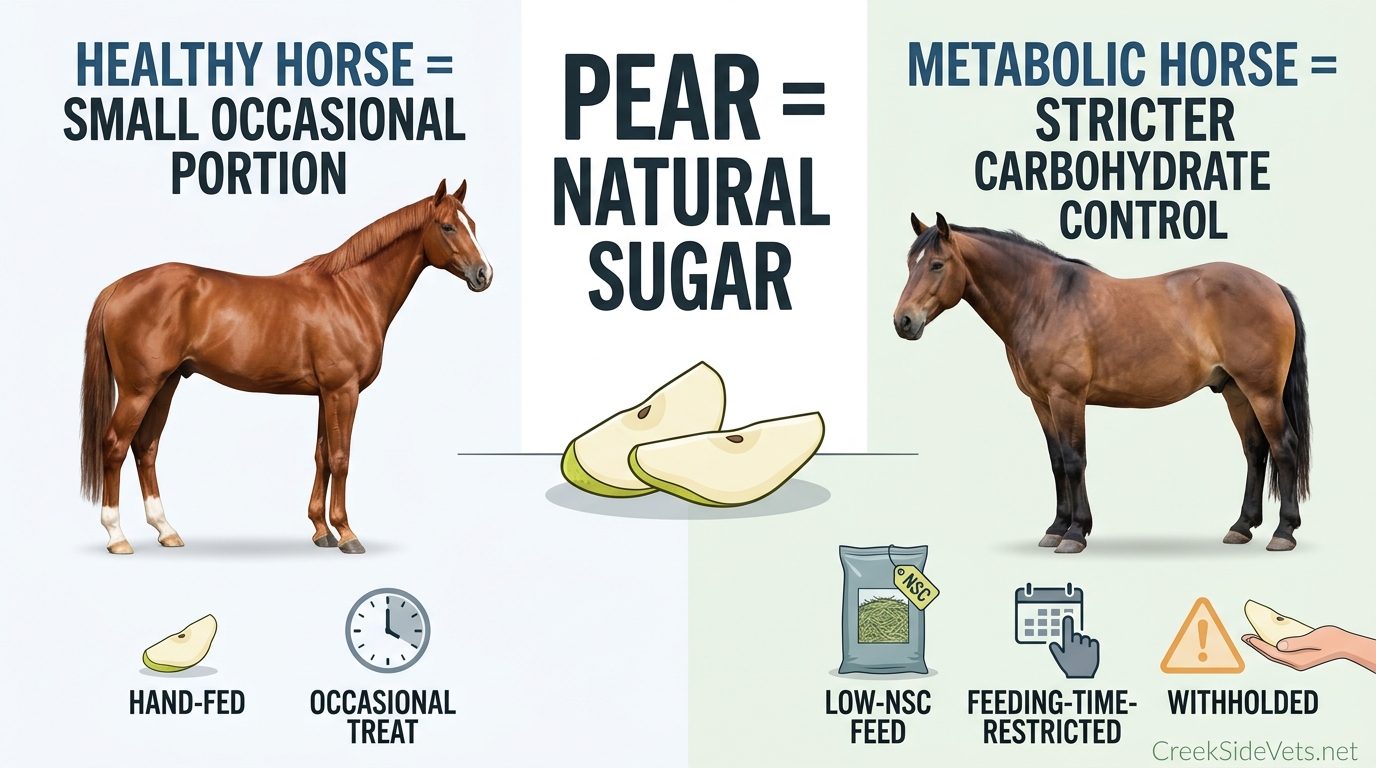
For a healthy horse, the natural sugar in a small, occasional portion is not usually a reason to avoid pears. For horses with metabolic concerns, pear should be considered as part of the complete diet rather than judged on its own. Understanding how much sugar a horse can eat can help put an occasional pear into context.
How Much and How Often Can Horses Eat Pears?
There is no single pear serving that is appropriate for every horse. The right amount depends on the horse’s size, body condition, overall diet, and how often other treats are being fed.
For healthy horses:
- Larger adult horses: A few small pieces can be used as an occasional treat.
- Ponies and smaller horses: Use a smaller portion because the same amount represents a larger share of their overall calorie and carbohydrate intake.
- Overweight horses: Keep portions particularly small and account for the pear alongside other treats and dietary calories.
- Frequency: Pears are best kept as an occasional treat rather than a daily feed.
There is no need to make one whole pear a standard serving. A smaller portion is easier to fit into the diet and lets you see how your horse tolerates the new food.
For Horses With Metabolic Concerns
Be more conservative. Horses with EMS, insulin dysregulation, or a history of endocrinopathic laminitis may need strict control of dietary sugar and NSC.
For horses undergoing dietary management for obesity or insulin dysregulation, the ECEIM consensus recommends excluding fruit and other treats while restricting dietary energy and carbohydrates. It also recommends low-NSC forage, with less than 10% NSC commonly used to help limit post-feeding insulin responses.
This does not mean pears are toxic to these horses. Rather, a pear that is reasonable for a healthy horse may not fit the diet of a metabolically affected horse, particularly when the horse is following a strict carbohydrate-restricted plan.
If your horse is on a prescribed low-NSC diet, follow that feeding plan rather than adding fruit based on a general treat guideline.
How to Prepare Pears for Horses
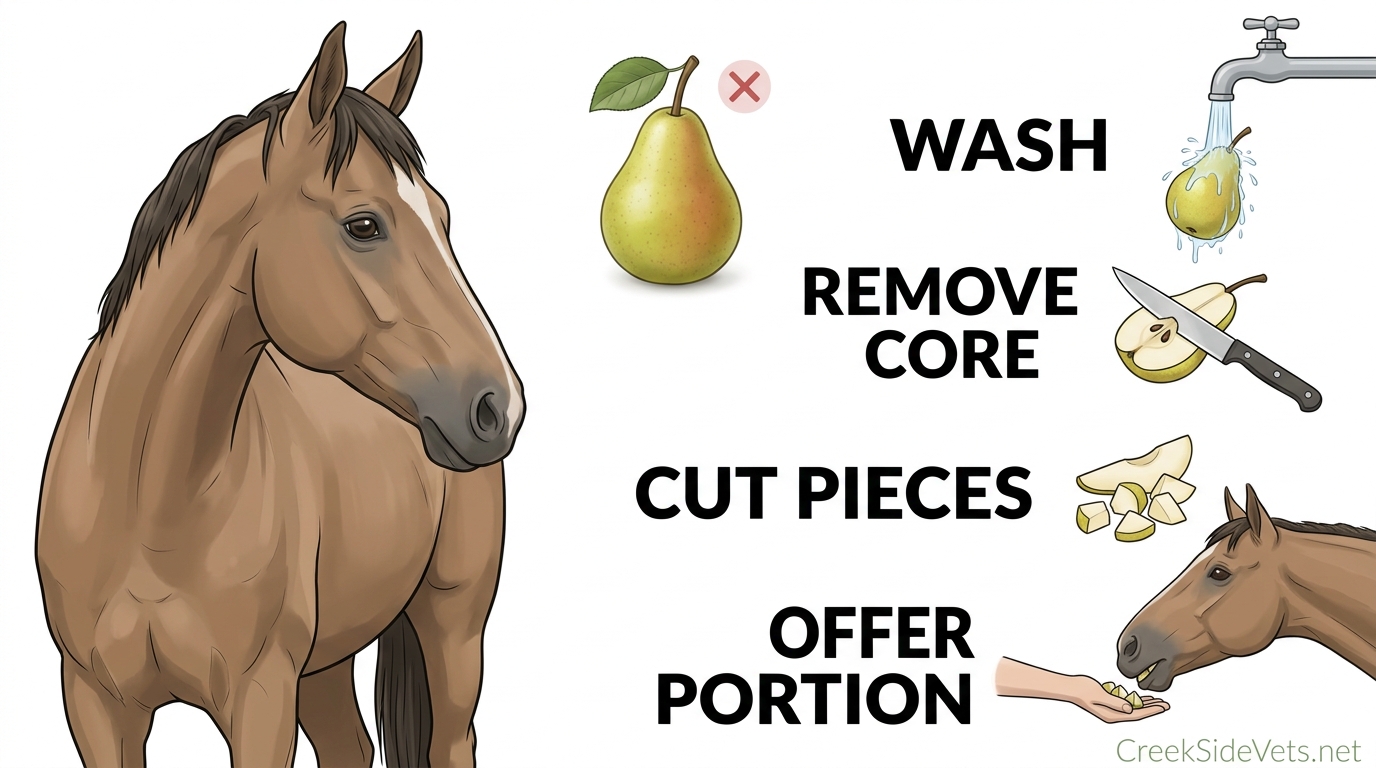
Proper preparation helps reduce the risk of choke, particularly in horses that eat quickly or have difficulty chewing. Before feeding:
- Wash the pear to remove dirt and surface contaminants.
- Remove the stem and core.
- Cut the pear into small, manageable pieces rather than feeding it whole.
- Use extra caution with horses that bolt their food, as larger pieces can be swallowed with inadequate chewing.
- Horses with dental problems or a previous history of choke may need smaller pieces or different treat options.
UC Davis recommends appropriately portioning fruits and vegetables to help reduce choke risk, as retrospective studies on equine choke have documented foods such as apples and carrots among the causes of esophageal obstruction.
Can Horses Eat Pear Skin?
Yes. Horses can generally eat pear skin when the pear is fresh, clean, and free from mold or damage. There is usually no need to peel the pear before feeding it.
Simply wash the pear first, remove any bruised or spoiled areas, and prepare it into manageable pieces. If the pear is damaged, moldy, or beginning to rot, discard it rather than feeding it to your horse.
Can Horses Eat Pear Seeds?
No. Horses shouldn’t eat pear seeds. Pear seeds contain cyanogenic compounds, which can release cyanide when the seeds are crushed or chewed. This is also true of the seeds of several other fruits.
A horse does not need pear seeds as part of its diet, so the simplest approach is to remove the core and seeds before feeding pear. This avoids unnecessary exposure without overstating the risk from the small number of seeds found in a typical pear.
Can Horses Eat Pear Cores and Stems?
It is best to remove the pear stem and core before feeding. The stem and core are tough and provide little nutritional value. The core also contains the seeds, so removing it eliminates the need to feed the seeds unnecessarily.
For larger portions, cut the pear into manageable pieces and remove the stem, core, and seeds before offering it. The main concern is practical preparation and safe swallowing, rather than treating the pear core itself as a major toxin.
Fresh Pears vs. Canned or Processed Pears
Fresh pear is the best choice when offering pear as a horse treat. It provides the whole fruit without added ingredients and allows you to control the portion.
- Fresh pear: The simplest option. Wash it, remove the stem and core, and cut it into manageable pieces.
- Canned pear: Not ideal as a routine treat. Pears packed in syrup can contain substantial added sugar, while other canned products may contain unnecessary ingredients.
- Pear juice: Skip it as a horse treat. Juice provides concentrated sugar without the fiber and physical structure of the whole fruit.
- Dried pear: Use caution. Removing the water concentrates the fruit’s calories and sugar into a much smaller portion, making it easier to feed more sugar than intended.
For horses that need strict carbohydrate control, fresh pear is not automatically appropriate simply because it has no added sugar. The natural sugar in the fruit still contributes to the horse’s overall dietary carbohydrate intake.
Where Pears Rank Among Occasional Horse Treats
Pears are a reasonable occasional treat, but they are not necessarily the most convenient choice for every horse. For a generally healthy horse, the options below can be ranked by practical factors such as sugar concentration, portion control, water content, and ease of preparation.
| Rank | Treat | Why |
|---|---|---|
| 1 | Celery | Lower-sugar option and easy to portion |
| 2 | Watermelon | High water content and relatively easy to portion |
| 3 | Berries | Small portions naturally limit the amount fed |
| 4 | Pear | Safe occasional treat, but contains more natural sugar |
| 5 | Apple | Safe in moderation but relatively more sugar per typical serving |
This ranking is for practical treat selection, not a universal safety ranking. A horse’s metabolic health, body condition, total diet, and individual tolerance can change which option is most appropriate.
What to Watch for After Feeding Pears
Most horses tolerate a small amount of pear without problems, but any new food can cause digestive upset in some horses. Watch for loose manure, diarrhea, unusual discomfort, or other changes in normal behavior after introducing pears.
Choke is different and requires immediate attention. If your horse shows signs of choke, stop offering food and water and contact your veterinarian promptly. Esophageal obstruction can lead to serious complications, including aspiration pneumonia.
FAQs about Can Horses Eat Pears?
Can horses eat unripe pears?
It is better to wait until the pear is ripe. Unripe pears are harder and firmer, which can make them more difficult to chew and swallow.
Can foals eat pears?
Pears are not necessary for a foal’s diet. Young horses should have their nutritional needs met through an appropriate feeding program, and new treats should not replace balanced forage and feed.
Is Pear Toxic to Horses?
No. Fresh pear flesh is not considered toxic to horses when fed appropriately. Pear seeds contain cyanogenic compounds, so they should not be intentionally fed; the simplest approach is to remove the core and seeds before offering pear. Foods containing known toxic compounds should be kept out of a horse’s diet. For a broader list, see our guide to foods horses should never eat.
Can horses eat cooked pears?
There is generally no need to cook pears before feeding them. Fresh pear is the simpler choice, provided it is clean and properly prepared.
Can horses eat frozen pears?
Small pieces of frozen pear can be offered occasionally, but thawing them first is preferable if the horse tends to swallow food quickly. The main concern is making sure the pieces are an appropriate size and texture for the individual horse.
Can horses eat pears every day?
A pear does not need to be fed daily. Treats are intended to provide occasional variety rather than become a regular part of the horse’s diet.