
Horses can enjoy many fruits, vegetables, and other treats, but a new food should not be offered in a large amount the first time. Sudden changes in the type or amount of feed can upset the digestive system, which is why veterinary feeding guidelines recommend making dietary changes gradually.
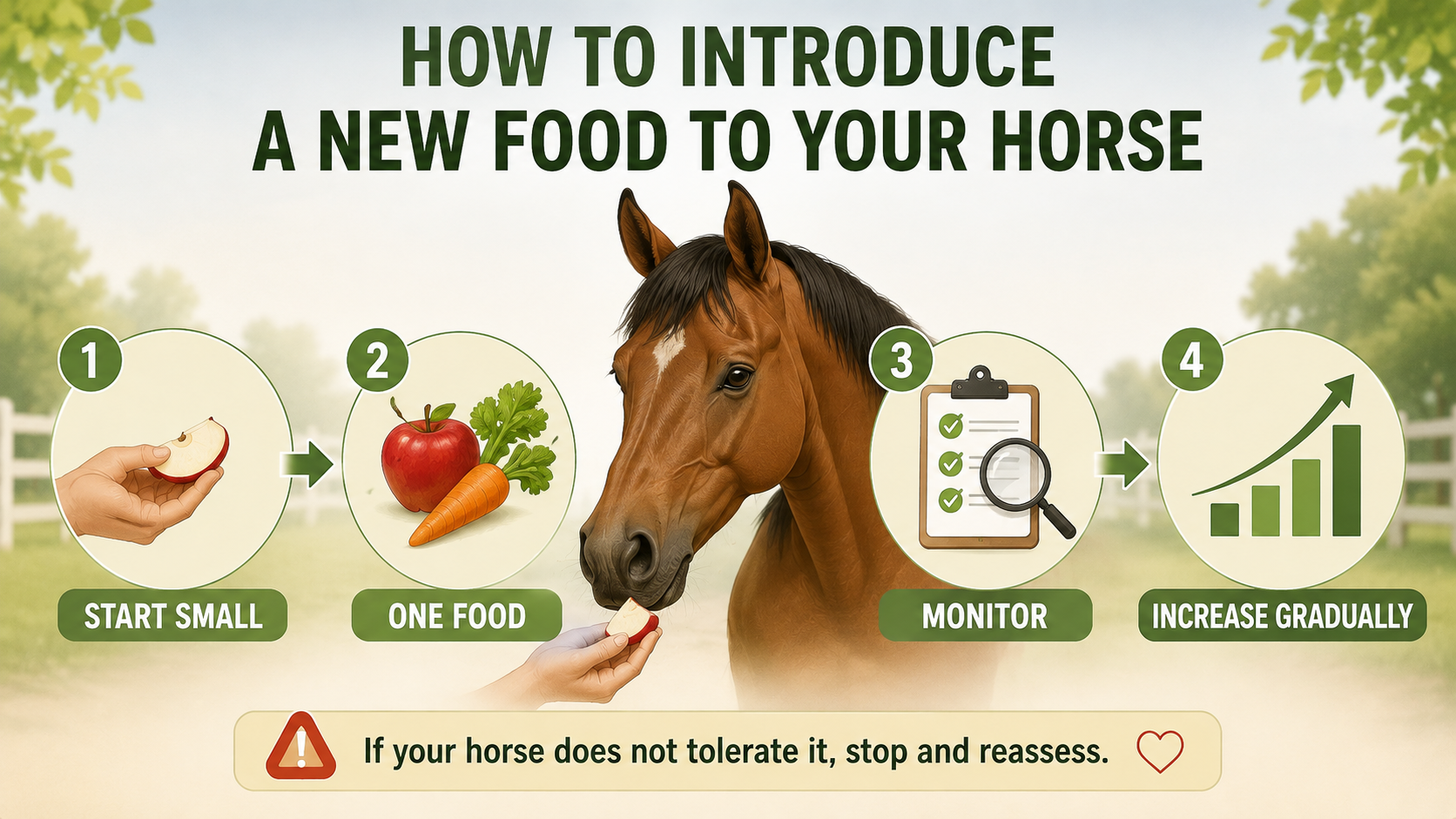
The goal is simple: introduce one new food at a time, start small, monitor your horse, and increase the amount gradually when appropriate.
Key Takeaways
- Make sure the food is safe for horses and suitable for your horse’s health needs.
- Prepare it correctly. Remove pits, spoiled portions, or other unsafe parts when necessary.
- Start with a small portion rather than offering a normal serving immediately.
- Introduce one new food at a time so you can tell what your horse tolerates.
- Watch for digestive changes such as loose manure, diarrhea, reduced appetite, or signs of abdominal discomfort.
- Increase the amount gradually if your horse tolerates the food well.
- Remember that tolerance does not mean unlimited feeding. The appropriate portion still depends on the food and the horse.
Why Should New Foods Be Introduced Gradually?
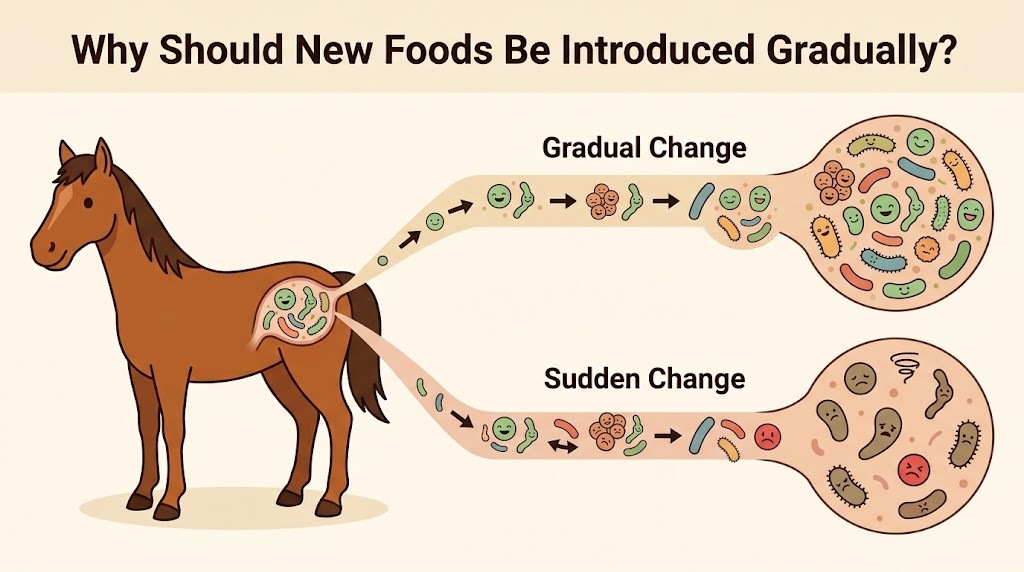
A horse’s hindgut contains a large community of microorganisms that help ferment fiber and other parts of the diet. These microbes adapt to the food a horse regularly eats, so sudden dietary changes can disrupt this balance.
Research shows that abrupt diet changes can alter the hindgut microbiome and reduce its ability to break down fiber normally.
The risk is greatest when making a meaningful change to the daily diet, such as:
- Switching to a different hay
- Introducing a concentrate
- Increasing grain
- Moving onto lush pasture
These changes should be made gradually to give the digestive system time to adapt. The AAEP recommends changing the type and quantity of feed gradually over several days.
Before Introducing a New Food, Make Sure It Is Appropriate
Before worrying about how much to feed, make sure the food itself belongs in your horse’s diet.
Check That the Food Is Safe
A food being safe for people does not automatically make it safe for horses. Some foods are toxic, some are only appropriate in small amounts, and some need to be prepared before feeding. Our guide to foods horses should never eat covers foods that can cause poisoning or other serious problems.
Prepare the Food Properly
Preparation depends on the food.Before feeding, consider whether you need to:
- Remove pits or stones
- Remove tough stems or other difficult parts
- Discard moldy, spoiled, or damaged portions
- Cut large or firm pieces into manageable portions
For example, if you are introducing mango, remove the large pit before feeding. For fruits with edible skin, there may be no need to peel them unless the specific food calls for it. With watermelon, the rind is edible, but cut it into small pieces to reduce choking risk.
Our individual What Can Horses Eat guides cover these food specific preparation details in more depth.
Consider Your Horse’s Health
A food that is reasonable for a healthy horse may not be appropriate for every horse. Take extra care if your horse has:
- Insulin dysregulation or Equine Metabolic Syndrome
- A history of laminitis
- Obesity or an ongoing weight management plan
- HYPP
- A veterinary prescribed diet
The American Association of Equine Practitioners recommends considering a horse’s health, medical history, exercise, and individual metabolism when formulating its diet.
If the new food will become a meaningful part of your horse’s daily ration rather than an occasional treat, it is better to treat it as a dietary change. Those changes should be introduced gradually rather than added all at once.
How to Introduce a New Food to Your Horse
Once you have confirmed that the food is safe and appropriate, introduce it in a way that lets you see how your horse responds.
The exact approach depends on whether you are offering a small occasional treat or making a meaningful change to the daily diet.
1. Introduce One New Food at a Time
If possible, avoid introducing several unfamiliar foods on the same day.
For example, if you give your horse a new fruit, a new vegetable, and a new commercial treat together and the horse develops loose manure afterward, it becomes difficult to know which change was responsible.
Introducing one food at a time gives you a much clearer picture of what your horse tolerates.
2. Start With a Small Portion
For a new fruit, vegetable, or other occasional treat, start with a small amount rather than giving a full serving immediately.
There is no single starting portion that works for every food. A piece of apple, a handful of berries, and a new concentrate are very different dietary exposures.
The starting amount should take into account the food itself and your horse’s size, diet, and health. Knowing your horse’s approximate weight can also help when planning portions and overall nutrition. See our guide to average horse weight.
3. Watch How Your Horse Responds
After introducing the food, pay attention to changes that could suggest your horse is not tolerating it well. Watch for:
| What to watch | What it may tell you |
|---|---|
| Loose or unusually soft manure | Possible digestive upset |
| Diarrhea | More significant digestive disturbance |
| Reduced appetite | The horse may not be tolerating the change or may be unwell |
| Abdominal discomfort | Needs closer attention, particularly if it progresses |
| Other unusual behavior | Consider stopping the new food and monitoring |
A single change does not necessarily prove that the new food caused a problem, but it is a good reason to stop increasing the amount while you assess what is happening.
4. Increase the Amount Gradually
If your horse continues to tolerate the food, you can increase the amount gradually when appropriate.
This is particularly important when the new food is going to make up a meaningful part of the diet. Veterinary guidance recommends making changes in the type and quantity of feed gradually over several days to reduce the risk of digestive problems.
For a small occasional treat, the process is much simpler. You do not need to create a formal feed transition for every new piece of fruit. The important point is to avoid going from a tiny first taste to a large amount at the next feeding.
How Much of a New Food Should You Feed?
There is no single portion that works for every new food. An occasional piece of fruit is very different from introducing a new concentrate or making a substantial change to the daily ration.
The right amount depends on the food, your horse, and the rest of the diet. There Is No Universal Portion. Consider:
| Factor | Why it matters |
|---|---|
| Type of food | Foods vary greatly in sugar, starch, calories, fiber, and other nutrients |
| Horse’s size | A portion suitable for a large horse may be excessive for a pony |
| Total diet | Treats add to everything else the horse is eating |
| Body condition | Extra calories may not be appropriate for an overweight horse |
| Health status | Some horses need specific dietary restrictions |
| How often it is fed | An occasional treat is different from a food given every day |
For a small treat such as a piece of fruit or vegetable, the goal is usually moderation rather than reaching a specific universal serving size.
Treats Are Not the Same as a Feed Change
Giving a horse a small amount of a new fruit is not the same as replacing part of its hay or introducing a new concentrate.
Occasional treat: Start small, monitor tolerance, and keep the overall amount modest.
New daily feed: Calculate the appropriate amount as part of the horse’s complete ration and make the transition gradually.
A horse tolerating a food does not mean that more is better. The question is not only “Can my horse eat this?” but also “How much makes sense within this horse’s overall diet?”
How Long Does It Take to Introduce a New Food?
There is no single number of days that applies to every new food. The answer depends on what you are introducing and how much of the horse’s diet it will replace.
A Small Occasional Treat
If you are introducing a small amount of fruit or a vegetable as an occasional treat, you generally do not need a formal multi day feeding schedule.
Start with a small portion and watch how your horse responds before offering more.
A New Feed or Major Diet Change
A new concentrate, forage, or other food that will make up a meaningful part of the daily ration needs more care.
Current veterinary nutrition guidance recommends making dietary changes slowly. Merck Veterinary Manual notes that changes in diet should take place slowly over approximately 10 to 14 days to allow the hindgut microbial population to adapt.
So rather than asking, “How many days should I take?”, ask:
How significant is this change to my horse’s overall diet?
A new treat is a small dietary exposure. Replacing hay or introducing a new concentrate is a genuine feed transition and deserves a slower approach.
Foods That May Require Extra Caution
Not every new food needs the same level of caution. A small piece of a suitable fruit is very different from introducing a high sugar feed or changing a substantial part of the daily ration.
High Sugar Fruits and Treats
Fruits such as oranges can contain considerable amounts of naturally occurring sugar. For a healthy horse, a small amount may be reasonable as an occasional treat, but larger portions add more sugar and calories to the diet.
Extra care is appropriate for horses with insulin dysregulation, Equine Metabolic Syndrome, obesity, or a history of laminitis. Their diets may need tighter control of nonstructural carbohydrates and overall calorie intake.
Foods With Pits, Stones, or Difficult Parts
Some foods need preparation before they are offered. Depending on the food, this may mean:
- Removing large pits or stones
- Removing tough stems or other difficult parts
- Cutting large pieces into manageable portions
- Discarding moldy or spoiled food
The preparation requirements are food specific, so check the relevant food guide before feeding something unfamiliar.
New Commercial Feeds
A new commercial feed deserves more caution than an occasional piece of fruit because it can become a significant part of the horse’s daily ration. This includes:
- Concentrates
- Pelleted feeds
- Senior feeds
- Bran or other supplements
- High calorie feeds
When changing these feeds, transition gradually rather than replacing the old feed with the full new ration at once. The AAEP recommends gradual changes in both the type and quantity of feed over several days.
Common Mistakes When Introducing New Foods
Most problems with a new food come from how it is introduced, not simply from the fact that the food is unfamiliar.
Giving Too Much the First Time
A horse that accepts a new food eagerly may still not need a large portion. Start small and increase the amount gradually when appropriate. This is especially important when the food is going to become part of the regular diet.
Introducing Several New Foods at Once
Adding several unfamiliar foods makes it difficult to know what caused a digestive change. If possible, introduce one new food at a time and keep the rest of the diet consistent.
Assuming Natural Means Safe
Fruits, vegetables, and other plant foods can still contain components that are unsuitable for horses, particularly in large amounts. Check the food’s safety before feeding it, and do not rely on the fact that people commonly eat it.
Ignoring Preparation
A food can be appropriate while certain parts are not. Remove pits, stones, moldy portions, or other unsuitable parts when required. Cut firm or large foods into manageable pieces when appropriate.
Ignoring the Horse’s Health
The same treat may not be appropriate for every horse. A horse with insulin dysregulation, a history of laminitis, obesity, HYPP, or another dietary restriction may need a more carefully controlled diet.
Continuing After a Negative Reaction
If a horse develops diarrhea, loses appetite, or shows other concerning changes after a new food is introduced, do not keep increasing the portion to see if the horse eventually adjusts. Stop the new food and assess the horse. If the signs are significant or do not resolve, contact your veterinarian.
Assuming Tolerance Means Unlimited Feeding
This is one of the easiest mistakes to make. A horse eating a new food without an obvious problem only tells you that the horse appears to tolerate that amount. It does not establish that larger portions are appropriate.
Think of introduction and portion control as two separate decisions. First ask, “Does my horse tolerate this food?” Then ask, “How much of it actually belongs in this horse’s diet?”
What If Your Horse Does Not Tolerate the New Food?
If your horse develops digestive changes after introducing a new food, stop increasing the amount. If the problem appears to be associated with the new food, remove it and return to the previous diet while you monitor your horse.
Mild Digestive Changes
A small change in manure does not always mean the new food is dangerous, but it is a reason to slow down.For example:
- Stop increasing the portion.
- Remove the new food if the change continues.
- Keep the rest of the diet consistent.
- Monitor manure, appetite, water intake, and behavior.
Avoid introducing another new food at the same time. Otherwise, you may not know which change caused the problem.
Feed changes are recognized as one factor that can disturb normal gastrointestinal function in horses, which is why veterinary guidance recommends making dietary changes gradually.
When to Call Your Veterinarian
Do not assume every digestive problem is simply a food intolerance. Horses cannot vomit, so digestive problems can present differently than they do in people. Contact your veterinarian promptly if your horse develops:
- Significant or persistent diarrhea
- Loss of appetite
- Repeated pawing, rolling, or other signs of colic
- Marked abdominal discomfort
- Severe lethargy
- Choke or difficulty swallowing
- Any rapidly worsening or concerning signs
Colic is a collection of signs associated with abdominal pain, not a diagnosis. Some causes can become serious quickly, so significant abdominal pain should not be watched at home simply because a new food was recently introduced.
FAQs about Introducing New Food to a Horse
Should I introduce only one new food at a time?
Yes, when practical. Introducing one unfamiliar food at a time makes it easier to tell what your horse tolerates if a digestive problem develops. This is especially useful when you are changing more than a small occasional treat.
How much of a new food should I give my horse initially?
Start with a small portion rather than a full serving. There is no universal starting amount because an appropriate portion depends on the food, your horse, and how much of the overall diet the food represents.
How quickly can I increase the amount?
For a small occasional treat, there is usually no need for a formal feeding schedule. Start small and avoid suddenly giving a large amount. For a new forage, concentrate, or other substantial dietary change, make the transition gradually over several days. AAEP recommends gradual changes in both the type and quantity of feed.
Can a new food cause diarrhea in horses?
Yes. A sudden dietary change can disturb normal digestive function and may be associated with loose manure or diarrhea. If diarrhea is significant, persistent, or accompanied by other signs of illness, contact your veterinarian rather than assuming the new food is the only cause.
Can I give my horse a new treat every day?
That depends on the food and the horse. An occasional treat may be reasonable for a healthy horse, but feeding something every day increases its contribution to the overall diet. Sugar, calories, and the horse’s individual health should all be considered.
Do horses with metabolic problems need a different approach to new foods?
Often, yes. Horses with insulin dysregulation, Equine Metabolic Syndrome, a history of laminitis, obesity, or other dietary restrictions may need tighter control over sugar, starch, calories, or total intake. If you are unsure whether a new food fits your horse’s diet, ask your veterinarian or an equine nutritionist. AAEP recommends considering the horse’s health, medical history, exercise, and individual metabolism when developing a feeding program