
Avoiding cabbage, cauliflower and broccoli is generally the better choice. Healthy horses can eat small amounts because these vegetables are not toxic, but veterinarians do not generally recommend them. They contain raffinose and other fermentable carbohydrates that can increase gas production in the hindgut, and large amounts or sudden introduction may contribute to digestive upset or increase the risk of colic in susceptible horses. Since they offer no advantages over safer treats, they are best fed only rarely, if at all.
Horses are naturally adapted to graze on forage, not vegetables. While many fruits and vegetables can be offered as occasional treats, not all are equally suitable for the equine digestive system. Broccoli, cabbage and cauliflower are examples of foods that are unlikely to be poisonous, unlike the items highlighted in Foods Horses Should Never Eat: A Vet-Approved Guide. However, they are generally not recommended because they offer little benefit and may create unnecessary digestive risks. Understanding why helps horse owners make more informed feeding decisions.
Why Broccoli, Cabbage and Cauliflower Are Not Ideal for Horses
Broccoli, cabbage and cauliflower are not toxic to horses, but they are generally not recommended as routine treats. Often, horse owners offer these vegetables simply out of a desire to reduce food waste by clearing out the refrigerator crisper rather than throwing scraps away. The concern is not a single harmful ingredient. Instead, veterinarians consider whether a food provides meaningful nutritional value while fitting the unique physiology of the equine digestive system.
Horses Are Designed to Eat Forage
Horses evolved to consume a consistent, forage-based diet. Unlike cattle and sheep, which ferment feed in the rumen, horses are hindgut fermenters, relying on microbes in the cecum and large colon to digest fiber. The National Research Council (NRC) identifies forage as the foundation of a healthy equine diet because it supports both nutritional needs and normal gastrointestinal function.
They Offer Little Nutritional Advantage
Although broccoli, cabbage and cauliflower contain vitamins, minerals, and antioxidants, healthy horses already obtain these nutrients from quality hay, pasture, and a balanced ration. There is no published evidence that feeding Brassica vegetables improves the health, digestion, or performance of healthy horses beyond a properly balanced forage-based diet.
Raffinose Can Increase Hindgut Fermentation
These Brassica vegetables contain raffinose, a fermentable carbohydrate that is poorly digested before reaching the hindgut. Instead, it is broken down by resident microbes, producing gases such as hydrogen, methane, and carbon dioxide. Research on raffinose metabolism shows this is a normal fermentation process, but feeding large amounts or introducing these vegetables suddenly may contribute to digestive discomfort and could increase the risk of colic in susceptible horses.
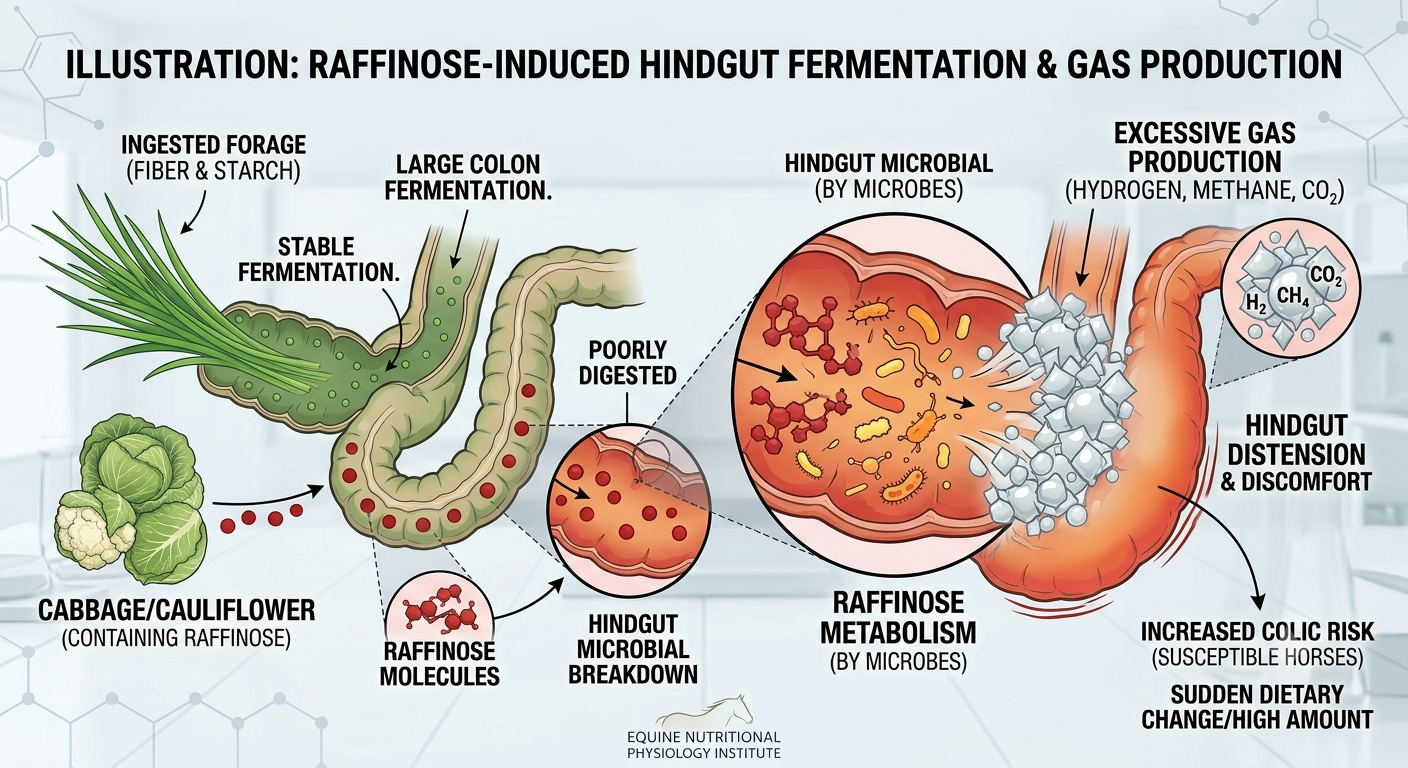
Illustration showing how raffinose in broccoli, cabbage and cauliflower is broken down by hindgut microbes, producing gas that may contribute to digestive upset and colic risk in horses.
A Stable Hindgut Microbiome Matters
Studies of the equine hindgut microbiome have shown that even dietary changes can alter the microbial populations responsible for fiber digestion. Because these microbes play a critical role in gut health, veterinarians recommend introducing any new feed gradually, even when it is considered safe.
Glucosinolates Are an Additional Consideration
Like other Brassica vegetables, broccoli, cabbage and cauliflower naturally contain glucosinolates. High dietary intake of these compounds has been associated with altered iodine metabolism and thyroid effects in several animal species. Although this has not been reported from occasional treats in horses, it provides another reason these vegetables are best offered sparingly, if at all.
A food does not have to be poisonous to be a poor choice. Veterinarians look at the overall risk-to-benefit ratio. When a treat offers little nutritional value but introduces avoidable digestive considerations, choosing a forage-friendly alternative is usually the better option.
Can Horses Eat Broccoli, Cabbage or Cauliflower as an Occasional Treat?
If you choose to offer these Brassica vegetables, they should be treated as occasional treats rather than regular feed. Healthy adult horses are unlikely to experience problems from a few small pieces, but these vegetables should never replace forage or become a routine part of the diet. The table below summarizes the key feeding recommendations.
| Recommendation | Guidance |
|---|---|
| Suitable for | Healthy adult horses with no history of digestive or metabolic disease. |
| Serving size | A few small bite-sized pieces only. |
| Frequency | Occasionally, not as a regular treat. |
| Preparation | Wash thoroughly, remove spoiled leaves, and cut into small pieces. |
| Introduce gradually | Offer only a small amount the first time and monitor for digestive changes over the next 24 hours. |
| Do not replace forage | Hay and pasture should remain the foundation of the diet. |
| Stop feeding if | Your horse develops gas, reduced appetite, diarrhea, signs of colic, or simply does not tolerate the vegetable well. |
It is also worth considering how treats are used in real-world handling. During clicker training, groundwork, stretching, or catching a horse in a pasture, owners frequently hand out multiple treats in a short window. Because high volumes of Brassica vegetables amplify gas production and hindgut fermentation, they make a poor choice for repetitive rewarding compared to a single, safer option like a carrot slice.
When deciding whether to feed a treat, ask yourself a simple question: Does this food provide a benefit that safer treats cannot? If the answer is no, choosing a carrot, a small piece of apple, or a commercial horse treat is usually the better option.
Which Horses Should Avoid Eating Broccoli, Cabbage or Cauliflower?
While healthy adult horses are unlikely to be harmed by a few small pieces, some horses should never eat cabbage and cauliflower altogether because the potential risks outweigh any nutritional benefit.
Horses With a History of Colic
Horses that have experienced recurrent colic or are prone to digestive upset should avoid these brassica vegetables.. These vegetables contain fermentable carbohydrates that may increase hindgut fermentation, making them an unnecessary dietary risk for horses with a sensitive gastrointestinal tract.
Horses With Equine Metabolic Syndrome or Insulin Dysregulation
Although broccoli and cauliflower are relatively low in sugar compared with many fruits, horses with Equine Metabolic Syndrome (EMS) or insulin dysregulation (ID) should only receive treats that are compatible with their dietary management plan. If you’re looking for lower-sugar treat options, celery may be another vegetable to consider, provided it’s fed in moderation and approved by your veterinarian. The ECEIM Consensus Statement identifies dietary management as a cornerstone of treatment, so owners should consult their veterinarian before introducing any new treats.
Horses Recovering From Gastrointestinal Disease or Colic Surgery
Horses recovering from colic surgery, enteritis, severe diarrhea, or other gastrointestinal disorders should remain on the feeding plan prescribed by their veterinarian. During recovery, the goal is to restore normal intestinal function using carefully selected, forage-based feeds rather than introducing unnecessary treats.
Recent reviews of postoperative colic management emphasize that nutritional support is a critical part of recovery, with forage-based diets and gradual feed reintroduction helping support intestinal motility and hindgut health. Because all of these vegetables provide little nutritional benefit while adding fermentable carbohydrates, they are best avoided until your veterinarian confirms that your horse has fully recovered.
Horses With Known Feed Sensitivities
Some horses have more sensitive digestive systems than others. If a horse develops gas, loose manure, reduced appetite, or signs of abdominal discomfort after eating broccoli, cabbage or cauliflower, these vegetables should not be offered again.
There is little to gain from feeding cabbage or cauliflower, but certain horses have more to lose. When a horse has an underlying digestive or metabolic condition, choosing a proven, forage-friendly treat is the safer option.
Foals
Foals have an immature digestive system that is still adapting from milk to forage. Their diet should focus on mare’s milk, quality forage, and an appropriate creep feed when needed. Cabbage, cauliflower, and other unnecessary treats are generally best avoided during this stage unless specifically recommended by a veterinarian.
Young foals may also be more prone to choking because they are still learning how to chew and handle different types of feed. Offering firm vegetables or large pieces of unfamiliar foods can create an avoidable risk, especially if the foal eats too quickly. Introducing new feeds should always be done gradually and with attention to both digestive tolerance and safe feeding practices.
You may hear owners say, “My horse has eaten cabbage for years without any problems.” That can be true, but it does not mean every horse will respond the same way.
Research has shown that every horse has a unique hindgut microbiome, with differences in the types and abundance of bacteria responsible for fermenting plant material. These microbial communities are influenced by factors such as the horse’s diet, age, environment, previous antibiotic use, and overall health. As a result, one horse may tolerate a new food without noticeable changes, while another develops excess gas or digestive upset after eating the same amount.
This individual variation is one reason veterinarians avoid assuming that a food is safe simply because one horse appears to tolerate it. Instead, feeding recommendations are based on what is safest for the average horse and on evidence from equine nutrition and gastrointestinal research.
What Are Better Treat Alternatives for Horses?
If you want to offer your horse an occasional treat, choose options that have a longer history of safe use in horses and provide a better fit with their forage-based digestive system. Small amounts of carrots, apples, berries or commercial horse treats designed for equine nutrition are commonly used choices.
However, treats should remain a small addition to the diet and should never replace quality hay, pasture, or a balanced feed program. When introducing any new food, offer a small amount first and monitor your horse for signs of digestive upset, especially if they have a history of colic or a sensitive digestive system.
What If Your Horse Eats Too Much Cabbage or Cauliflower or Broccoli?
Most healthy horses that eat a moderate amount of cabbage or cauliflower or even broccoli are unlikely to develop serious problems. However, eating a large quantity or consuming these vegetables suddenly may increase hindgut fermentation, leading to digestive upset in susceptible horses. Unlike many other animals, horses cannot vomit to relieve stomach discomfort. This is one reason digestive symptoms in horses, including signs of colic, should always be taken seriously.
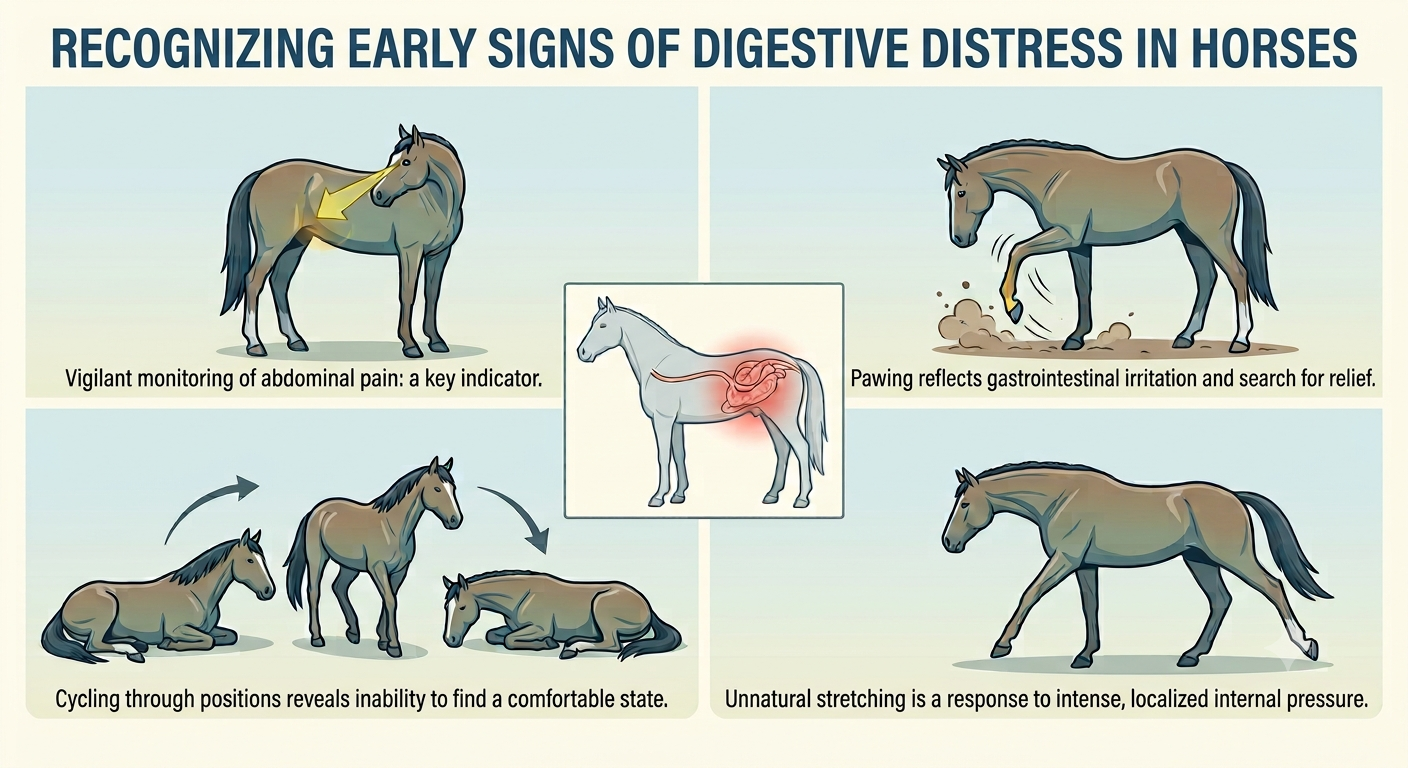
Early signs of digestive distress that may occur after a horse eats large amounts of broccoli or cabbage or cauliflower.
Monitor Your Horse Closely
Watch your horse for the next 24 to 48 hours for signs of digestive discomfort, including:
- Reduced appetite
- Mild abdominal discomfort or flank watching
- Pawing or repeatedly lying down
- Loose manure or diarrhea
- Reduced manure production
- Signs of colic, such as rolling or persistent restlessness
- Do Not Offer More
Avoid feeding additional cabbage, cauliflower, or other unfamiliar treats. Continue providing access to fresh water and the horse’s normal forage unless your veterinarian advises otherwise.
Contact Your Veterinarian If Signs Develop
Seek veterinary advice immediately if your horse develops persistent abdominal pain, repeated rolling, severe depression, refusal to eat, or any other signs of colic. Early treatment improves the outcome for many causes of colic, making it important not to wait if clinical signs worsen. Horse owners should also be familiar with other conditions that can present with noticeable physical changes, such as pigeon fever in horses, which may cause abscesses and swelling.
Eating too much cabbage or cauliflower does not automatically mean a horse will develop colic. The most important step is to monitor your horse closely and respond promptly if signs of digestive discomfort appear rather than waiting for them to resolve on their own.
FAQs
Can horses eat raw Cabbage or Cauliflower or Broccoli?
Yes, healthy adult horses can eat a few small pieces of raw Cabbage or Cauliflower or Broccoli as an occasional treat. However, these vegetables contain fermentable carbohydrates and provide little nutritional benefit compared with a horse’s regular forage-based diet. They are not recommended as routine treats or a significant part of the diet.
Can horses eat cooked cabbage or cauliflower or broccoli?
Plain cooked cabbage or cauliflower is not considered toxic to horses, but cooking does not make these vegetables a better feeding choice. Avoid cabbage or cauliflower prepared with butter, oils, salt, onions, garlic, or other seasonings, as these ingredients may be harmful to horses.
Can horses eat cabbage leaves, broccoli stalks, or cauliflower leaves?
Small amounts of cabbage leaves or cauliflower leaves are not considered toxic to healthy horses, but they still contain fermentable plant compounds that may contribute to gas or digestive upset in some horses. Cabbage stalks and cauliflower stems are tougher and more fibrous, which can make them harder to chew properly. Feeding large pieces may increase the risk of choke (esophageal obstruction), especially in horses that eat quickly or do not thoroughly chew their feed. If offered, cut them into small, manageable pieces and feed only occasionally.
Can cabbage or cauliflower or broccoli cause gas or colic in horses?
Cabbage and cauliflower can contribute to gas or digestive discomfort in some horses because they contain fermentable carbohydrates and certain plant compounds that are broken down by the hindgut microbiome. While a small amount may not cause problems in a healthy adult horse, large portions or sudden introduction of new foods can increase the risk of digestive upset.
What Can I Feed My Horse Instead of Cabbage, Cauliflower, or Broccoli?
If you’re looking for a simpler treat option, celery, carrots, apples, cucumber, and small amounts of orange can be considered depending on your horse’s health and overall diet. Celery is particularly useful when you’re looking for a lower-sugar treat, while fruits such as apples and oranges contain more natural sugar and are better kept as occasional treats. For horses with metabolic concerns, the best choice depends on the rest of the feeding program rather than the treat alone.