
Yes, horses can eat celery as an occasional treat. Celery is non-toxic, mostly water, and naturally low in sugar, making it a suitable option for many horses when fed in moderation. However, it should be prepared properly because the fibrous stalk can be harder for some horses to chew, especially seniors or horses with dental problems. Horses with conditions such as EMS, PPID, or HYPP may need extra consideration before adding celery to their diet.
Key Takeaways
- Celery contains about 1.34 g sugar per 100 g, making it a lower-sugar treat option for horses with Cushing’s disease (PPID) or EMS compared with sweeter treats like carrots and apples.
- Celery stalks contain long fibrous strands, so cutting them into smaller pieces helps reduce the risk of swallowing large, stringy pieces that are harder to chew.
- Horses with HYPP may need potassium intake monitored, while horses with pink, unpigmented skin may require extra care with larger amounts of celery plant material due to natural furocoumarin compounds.
Low Sugar Advantage: Celery for Horses with Cushing’s and EMS
Celery is mostly water and provides very few calories compared with many traditional horse treats. Its crunchy texture makes it appealing to horses, while its low sugar content makes it a practical option for owners looking for lighter treat choices.
This can be especially useful for horses with Cushing’s disease (PPID) or Equine Metabolic Syndrome (EMS), where controlling dietary sugar and starch is an important part of management. These horses may have insulin dysregulation and a higher risk of laminitis, so lower sugar treats are often preferred.
| Treat | Sugar | Calories | Sugar Level |
|---|---|---|---|
| Celery | 1.34 | 14 | Very Low |
| Cucumber | 1.7 | 15 | Very Low |
| Carrot | 4.7 | 41 | Moderate |
| Apple | 10.4 | 52 | Higher |
Source: USDA FoodData Central. Values are in g based on raw foods per 100 g.
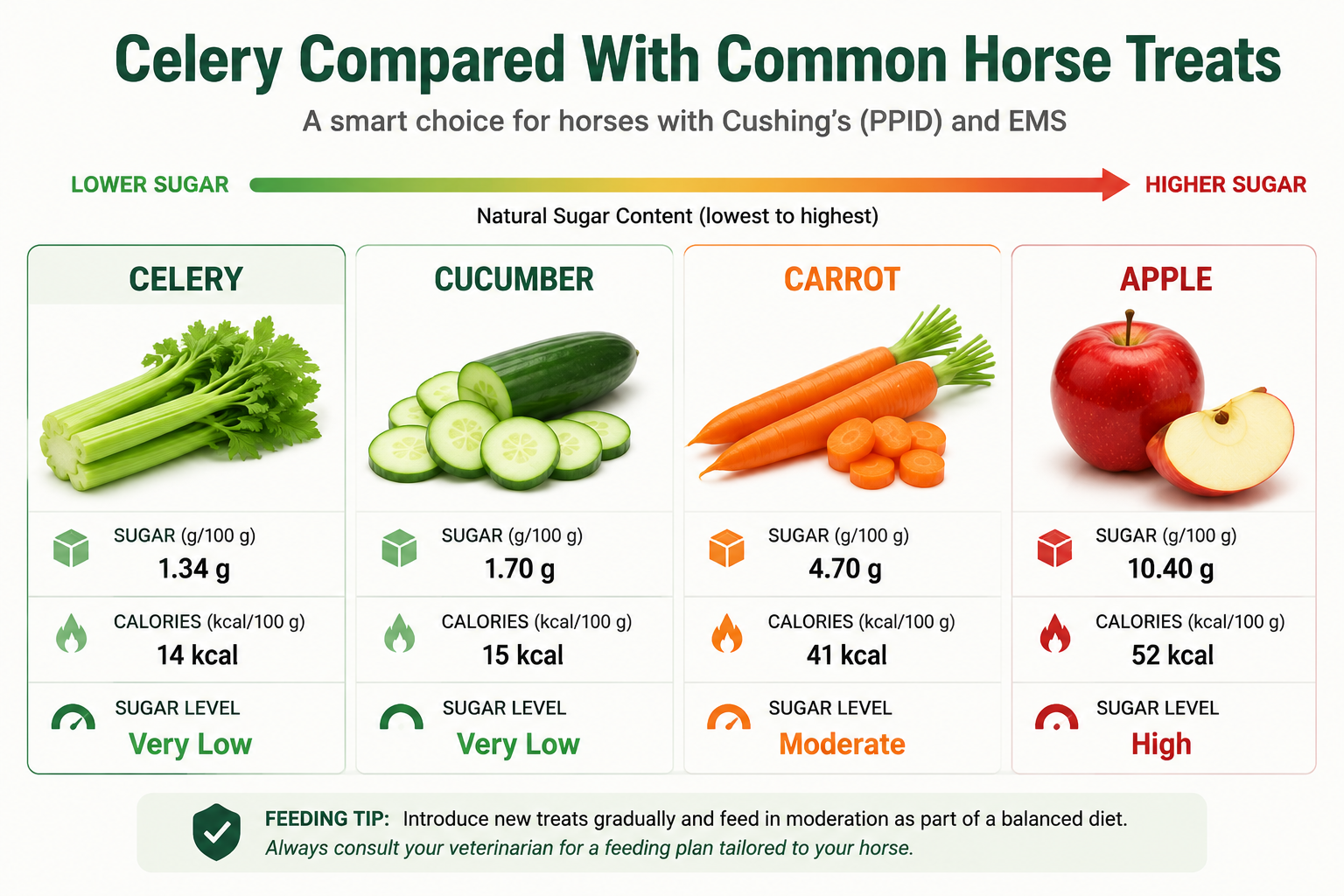
Celery contains less natural sugar and fewer calories than common horse treats like carrots and apples, making it a suitable low-sugar treat option for horses when fed in moderation.
Managing Choke and Impaction Risk When Feeding Celery
Horses are anatomically adapted to process fibrous forage. Their continuously erupting molars use a side-to-side grinding motion to reduce plant material into smaller particles before it is swallowed.
Celery differs from pasture grasses and hay because its stalk contains long, string-like vascular fibers that run the length of the stem. When offered whole, an eager horse may bite off a larger section before it has been fully reduced by the molars.
Why Whole Celery Stalks Can Be a Problem
The concern with celery is not toxicity. It is a mechanical feeding issue.
| Risk | Why It Matters |
|---|---|
| Choke (esophageal obstruction) | Larger, inadequately chewed pieces may be more difficult to swallow. |
| Impaction risk | Incomplete chewing produces larger feed particles, which may contribute to impaction in susceptible horses |
Horses with reduced chewing ability may be more vulnerable. Older horses, horses with missing teeth, or those with dental problems may not process fibrous treats as effectively as healthy adult horses.
Research on equine mastication shows that chewing efficiency affects feed particle size, which is an important part of normal digestion and fiber processing. This is why dental function is an important consideration when feeding fibrous treats to horses with reduced chewing ability.
Veterinary Red Flags: Horses That Need Extra Caution
Most healthy horses can eat celery as an occasional treat without difficulty. Extra caution is mainly warranted when an underlying medical condition changes how a horse responds to specific nutrients or naturally occurring plant compounds.
Horses with HYPP
Horses with Hyperkalemic Periodic Paralysis (HYPP) require careful management of dietary potassium because sudden increases can trigger episodes of muscle weakness, trembling, or collapse. Celery naturally contains potassium, so even treats should be considered as part of the horse’s total daily intake. A small amount of celery is unlikely to be problematic for most horses, but feeding decisions for horses with HYPP should follow the veterinarian’s dietary recommendations.
| Condition | Why Celery Needs Extra Consideration |
|---|---|
| HYPP | Potassium intake may need closer monitoring |
| Healthy horses | Small amounts of celery are generally well tolerated |
The key point is that celery is not automatically unsafe for HYPP horses, but treats containing potassium should be considered as part of the horse’s overall diet.
Horses Prone to Photosensitivity
Celery contains naturally occurring furocoumarins, including psoralen and bergapten. Although healthy celery contains these compounds at relatively low concentrations, they are capable of causing photosensitization. Horses with a history of photosensitivity or liver disease deserve additional caution when introducing plant-based treats, as these conditions increase susceptibility to ultraviolet (UV) light following exposure to photodynamic compounds.
How to Feed Celery Safely
Feeding celery safely depends on preparation, portion size, and the individual horse. The same factors that make celery useful for some horses, such as its low sugar content, do not remove the need for proper portion control and careful introduction.
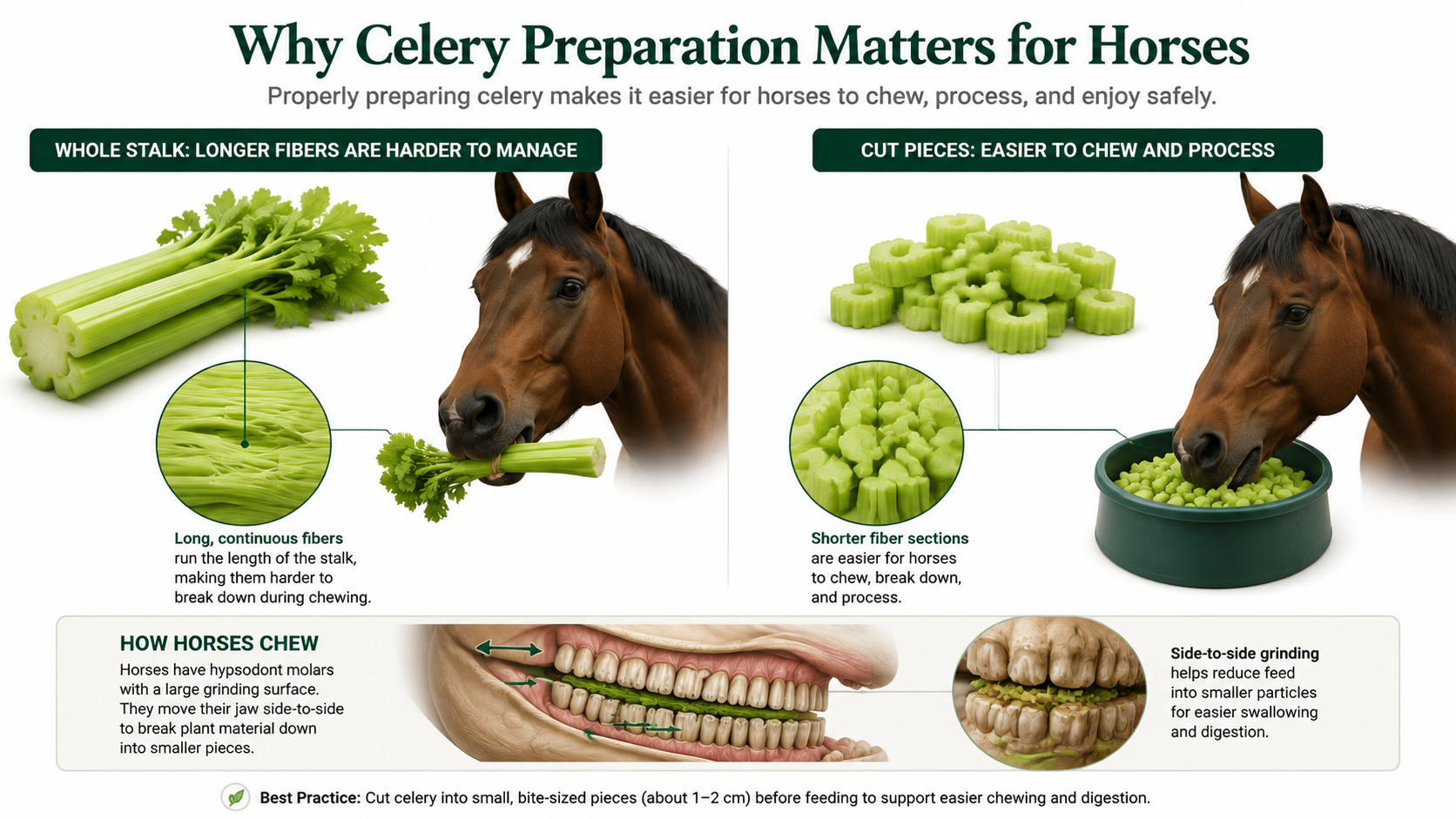
Cutting celery into smaller pieces shortens long fiber structures, making it easier for horses to chew and process compared with feeding whole celery stalks.
Preparing Celery Before Feeding
Because celery has a fibrous stalk, proper preparation helps reduce the feeding risks discussed earlier.
Before feeding:
- Choose fresh, firm celery stalks without mold or spoilage.
- Wash celery thoroughly to remove dirt and surface residues.
- Cut the stalk into small pieces across the fibers to make chewing easier.
This is especially important for senior horses or horses with dental limitations because reduced chewing ability can make long fibrous pieces harder to manage.
How Much Celery Can Horses Eat?
Celery should remain an occasional treat rather than a regular feed source. As a general feeding guideline, treats should make up only a small portion of the daily diet, ideally less than 1% of the horse’s total daily intake. This helps ensure that forage remains the foundation of the diet and that treats do not disrupt balanced nutrition. Although celery is generally less likely to cause digestive concerns than cruciferous vegetables such as cauliflower, cabbage, and broccoli, it should still be introduced gradually and fed in moderation.
| Horse Type | Feeding Approach |
|---|---|
| Healthy adult horse | Small amounts as an occasional treat |
| Horse new to celery | Introduce gradually with a few pieces first |
| Senior horse or dental problems | Offer smaller pieces and monitor chewing |
| EMS or PPID horse | Include within the overall feeding plan |
| HYPP horse | Consider potassium intake with veterinary guidance |
Celery Compared With Other Horse Treats
Not all horse treats provide the same nutritional value. Celery is popular because it offers a crunchy texture with very little sugar, but other fruits and vegetables may still have a place depending on the horse’s health needs and dietary goals.
| Treat | Main Advantage | Consideration |
|---|---|---|
| Celery | Very low sugar and high water content | Requires proper preparation due to fibrous stalks |
| Carrots | Palatable and rich in nutrients | Contains more natural sugar than celery |
| Apples | Highly accepted by many horses | Higher sugar content, so portions matter |
| Oranges | High water content and naturally palatable | Higher sugar, feed in moderation |
| Cucumber | Hydrating and low calorie | Less crunchy than celery for some horses |
Looking for other fruit treats? See our guide to blueberries, strawberries, and raspberries for horses for safe portions and considerations for healthy and metabolically sensitive horses.
Choosing the Right Treat for Your Horse
For normal horses, treat choice often comes down to portion size and overall diet. A horse with no metabolic concerns may tolerate sweeter options occasionally, while horses with specific dietary needs may benefit from choosing treats that better fit their feeding plan.
Celery is not necessarily a “better” treat for every horse, but its nutritional profile makes it a useful option when owners want a crunchy reward with minimal sugar.
Just as important as choosing healthy treats is knowing which foods should never be offered to horses. Some common household foods can be harmful or even toxic, regardless of portion size.
The best treat is the one that fits the horse in front of you. A low sugar option like celery can be helpful for some horses, but overall diet balance, body condition, and individual health history matter more than any single treat.
FAQs About Horses Eating Celery
Can horses eat celery every day?
Celery is low in sugar, but it is still a treat and should not replace a horse’s forage-based diet. Small amounts occasionally are a better approach than feeding celery every day, especially for horses with metabolic conditions such as Equine Metabolic Syndrome (EMS) or PPID.
Can horses eat celery in the winter?
Yes, horses can eat celery in winter. The season does not change celery’s safety, but celery should still be fresh, properly washed, and introduced gradually if it is a new food. During colder months, the priority should remain on adequate forage intake to support normal digestion and body temperature regulation.
Can horses eat celery sticks or stalks?
Yes, horses can eat celery sticks or stalks. The stalk is the part most commonly offered because it is low in sugar and mostly water. Smaller pieces may be easier for some horses to manage, especially those with dental limitations.
Do horses like celery?
Many horses enjoy celery because of its crunchy texture and high water content, but taste preferences vary between individual horses. Some horses accept celery immediately, while others may prefer sweeter treats such as apples or carrots.
Can horses eat celery leaves?
Celery leaves can contain natural plant compounds such as furocoumarins. While small amounts are unlikely to be a concern for most healthy horses, owners should avoid feeding large amounts of celery leaves, especially to horses with a history of sun sensitivity or photosensitization.
Can horses eat cooked celery or celery soup?
No. Cooked celery dishes or celery soup are not recommended for horses because they may contain ingredients such as salt, seasonings, oils, or other additives that are not suitable for equine diets. Horses are best suited to simple, unprocessed plant foods.
Can horses eat celery seeds?
Celery seeds are not the same as fresh celery stalks. They contain more concentrated plant compounds and are not a typical horse treat. There is no nutritional reason to add celery seeds to a horse’s diet unless specifically advised by a veterinarian.
Can celery help horses with arthritis?
Research has investigated celery seed extract, not fresh celery stalks, as a supplement for horses with osteoarthritis. In one veterinary study, horses receiving a high therapeutic dose of celery seed extract showed improvements in joint flexibility, range of motion, and pain scores. However, these findings do not apply to fresh celery fed as a treat. The amount of active compounds in a few celery stalks is far too low to provide the therapeutic effects seen in the study. If your horse has arthritis, talk to your veterinarian about proven joint supplements and treatment options.
What should I do if my horse eats a whole celery stalk?
Monitor your horse for signs of choke, including coughing, difficulty swallowing, nasal discharge, or repeated stretching of the neck. Because horses cannot vomit, food that becomes lodged in the esophagus will not be expelled the way it might be in people. Contact your veterinarian promptly if you suspect choke.