
Almost every horse owner ends up asking some version of this question, usually while standing at the fence line with an apple core in hand or a bag of carrots in the tack room. Most healthy horses can safely enjoy a wide range of fruits and vegetables in small amounts.
A handful of everyday foods are genuinely dangerous, and a few common treats need extra thought if your horse has a metabolic issue like insulin dysregulation or a history of laminitis.
Quick Reference: What Can Horses Eat?
| Generally Safe | Feed With Caution | Never Feed |
|---|---|---|
| Apples | Peaches | Chocolate |
| Bananas | Plums | Avocado |
| Oranges | Pineapple | Onions & garlic |
| Watermelon | Broccoli | Potatoes |
| Mango | Cauliflower | Tomatoes |
| Strawberries | Bread (plain, small amounts) | Raw bread dough |
| Pears | Spinach | Alcohol |
| Celery | Cabbage | Moldy or spoiled feed |
“Generally safe” is not the same as unlimited. Portion size, how the food is prepared, and your horse’s own health all matter. A treat that is perfectly fine for a healthy horse in light work may need to be limited or skipped entirely for a horse with insulin dysregulation, laminitis, or another diet sensitive condition.
What Should Actually Make Up a Horse’s Diet
Before getting into treats, remember that forage is the foundation of a horse’s diet. Treats and other extras should sit on top of that base.
- Grass and pasture: Fresh pasture can provide much of a horse’s nutrition, but sugar and starch levels change with season, time of day, and pasture conditions. Lush spring grass deserves extra caution in horses with insulin dysregulation or a history of laminitis.
- Hay: When pasture is limited, good quality hay provides most of the nutritional load. The right hay depends on the horse’s body condition, workload, and energy needs.
- Concentrates and commercial feeds: Grain, pellets, complete feeds, and ration balancers can fill nutritional gaps, but they are not automatically needed. More feed is not always better.
- Water and salt: Fresh water should always be available. Horses eating mostly dry hay depend on adequate water to keep gut contents moving normally, and a drop in how much a horse is drinking is often one of the first signs something is off. Horses also need salt every day, especially with heat, exercise, or sweating.
- Vitamins and minerals: These should address an actual nutritional gap rather than being added blindly. A hay analysis can help determine what the diet is missing.
Forage is the foundation. Concentrates, supplements, and treats should each have a specific reason for being in the diet. A horse does not need variety to be healthy. It needs consistency and the right amount of the right forage.
How to Decide If a Food Is Safe for Your Horse
A food being edible does not necessarily make it suitable for every horse. When choosing a new food or treat, consider its sugar and starch content, choking risk, toxicity, portion, preparation, and the needs of the individual horse.
Sugar & Starch
Sugar and starch are important considerations when selecting treats. Fruits and other sweet foods can add to a horse’s daily carbohydrate intake, which may matter considerably for horses that need tighter dietary control. Understanding how much sugar a horse can have and what NSC means in horse feed helps put individual foods into perspective.
Choking
Choking is another risk when selecting food for horses. If a horse is a rush eater, feeding him a whole apple can increase the risk of choke, so cutting it into smaller pieces is a safer approach.
Because horses cannot vomit, signs of digestive distress or an obstruction after eating something inappropriate should be taken seriously. The same concern applies to other firm or awkwardly shaped foods.
Toxicity
Some foods should simply never make it into a horse’s feed bucket. Chocolate contains theobromine and caffeine, which are toxic to horses, while moldy bread can introduce harmful substances as it spoils. These are not foods to solve with smaller portions—they belong on the never-feed list.
Portion & Frequency
Even a food considered safe can become a concern when fed in excess. A few pieces of melon as an occasional treat is one thing; feeding a 1,000-pound horse large amounts of melon every day is another. The amount and frequency matter, especially when the food adds extra sugar and calories to the diet.
Preparation
Preparation can make the difference between a reasonable treat and an avoidable problem. Apple seeds and peach or plum pits should be removed, tough rinds or stems may need to be discarded, and moldy or spoiled produce should never be fed. A horse does not need a questionable piece of food simply because the rest of it is safe.
Special Dietary Needs
A food that is perfectly reasonable for a healthy horse may be a poor choice for one with a specific dietary restriction. For example, a horse with HYPP needs particular attention to potassium intake, while a horse with insulin dysregulation may need much tighter control of sugar and starch. The food therefore has to be considered in the context of the horse’s entire diet, not judged as “safe” in isolation.
The Individual Horse
Finally, consider the horse itself. Body weight, metabolic health, age, workload, and the existing diet can all change how an otherwise safe food should be offered.
Dental function is a prime example: a senior horse with worn, smooth molars may struggle to grind a hard carrot, turning a safe treat into a choke risk.
Fruits Horses Can Eat
Horses can safely eat many common fruits. These fruits can make suitable occasional treats when served in appropriate portions and prepared safely.
However, fruit is naturally higher in sugar than most forage, so portion size matters
| Fruit | Status / Main Concern | Practical Feeding Rule |
|---|---|---|
| Watermelon | Safe, high water content but still contains natural sugar | Wash the outside before cutting, feed manageable pieces, rind is not considered toxic but should be offered only in appropriately sized pieces |
| Oranges | Safe, preparation and portion matter | Peel, separate segments, and remove seeds where practical – feed small amounts |
| Strawberries | Safe, natural sugar | Wash thoroughly, remove spoiled fruit, and feed small amounts |
Apples:
Yes, horses can eat apples. They can be offered fresh as an occasional treat. Wash the apple and cut it into manageable pieces, especially for horses that tend to bolt their food.
Remove the core and seeds where practical. Avoid large chunks or small round slices that can be difficult to chew and may increase the risk of choke.
Apples contain natural sugar, so keep portions modest, particularly for horses with insulin dysregulation, obesity, or a history of laminitis.
Bananas:
Yes, horses can eat bananas. The fruit can be offered as an occasional treat, with or without the peel if the horse accepts it. Wash the banana before feeding and cut it into manageable pieces for horses that tend to bolt their food.
Bananas contain natural sugar, so keep portions modest rather than feeding several at once. Skip bananas or keep portions tiny if your horse is overweight, metabolic, or laminitis-prone.
Pears:
Yes, horses can eat pears. Fresh pear can be offered as an occasional treat in small amounts. Wash the fruit before feeding and cut it into manageable pieces.
Remove the core and seeds where practical. The hard core can be difficult to chew, while the seeds are best avoided rather than intentionally fed.
Pears contain natural sugar, so keep portions modest, particularly for horses with insulin dysregulation, obesity, or a history of laminitis.
Grapes :
Yes, horses can eat grapes. They can be offered fresh as an occasional treat in modest amounts. Wash them before feeding and avoid giving large handfuls at once.
Grapes are naturally high in sugar, so frequent or large portions can add unnecessary sugar and calories to the diet. Horses with insulin dysregulation, obesity, or a history of laminitis may need stricter limits.
Peaches:
Yes, horses can eat peaches. The flesh can be offered fresh as an occasional treat in small amounts.
Remove the pit completely before feeding. The seed inside the pit contains cyanogenic compounds that can release cyanide if chewed, while the hard pit itself can create a choking or gastrointestinal obstruction risk.
Wash the fruit and cut the flesh into manageable pieces. Keep portions modest because peaches contain natural sugar.
Plums:
Yes, horses can eat the flesh of plums in small amounts. Offer it as an occasional treat rather than a regular part of the diet.
Remove the pit completely before feeding. The hard pit can be a choking hazard and may cause a gastrointestinal obstruction if swallowed.
Wash the fruit and cut the flesh into manageable pieces. Never allow a horse to chew or swallow a whole plum with the pit still inside.
Mango:
Yes, horses can have mango. The flesh can be offered as an occasional treat, but keep portions small because mango is relatively high in natural sugar.
Remove the large pit completely before feeding. The pit is hard and can create a choking or gastrointestinal obstruction risk if swallowed.
Peel the mango if the skin is tough, wash the fruit, and cut the flesh into manageable pieces. Horses with insulin dysregulation, obesity, or a history of laminitis may need stricter limits on sugary fruit.
Pineapple:
Yes, horses can eat pineapple, but only the soft, ripe inner flesh as a rare treat (low-acid alternatives like watermelon or apples are always preferred).
Always remove the spiky skin, outer eyes, and hard core. The tough rind and rigid center are major choke hazards that can cause mouth sores or intestinal blockages.
The main alarm factors are high acidity and natural sugars. Its high sugar also spikes insulin, so skip it entirely for horses with EMS, insulin issues, ulcers, or a history of laminitis.
Can Horses Eat Cantaloupe?
Yes, horses can eat cantaloupe, but feed the soft flesh only. The rind isn’t toxic, but its tough, rubbery texture makes it hard to grind down, creating a real choke risk for greedy gulpers and seniors with worn teeth.
A few stray seeds won’t hurt, but scooping out the main seed pocket prevents potential digestive blockages.
The biggest alarm factor is potassium, which makes cantaloupe a poor choice for horses with HYPP. It also packs enough natural sugar to be a problem for horses with EMS, insulin issues, or laminitis. For a healthy horse, stick to 1 or 2 small bite-sized pieces as an occasional treat.
Vegetables Horses Can Eat
Many vegetables make suitable occasional treats and are often less sugar dense than fruit. They are still extras rather than a replacement for forage, and preparation matters when a vegetable is firm, fibrous, or likely to be swallowed quickly.
| Vegetable | Status / Main Concern | Practical Feeding Rule |
|---|---|---|
| Carrots | Safe, choking risk if eaten too quickly | Wash and cut large carrots lengthwise into manageable pieces, avoid small round coins, keep portions modest |
| Celery | Safe, fibrous stalks can be difficult for some horses to manage | Wash and cut stalks lengthwise into manageable pieces, especially for horses that bolt food |
| Cucumber | Safe, mostly water and relatively low in calories | Wash and cut larger cucumbers into manageable pieces, discard spoiled portions and tough stem ends |
| Broccoli & Cauliflower | Caution, larger amounts can increase intestinal gas | Feed small portions and introduce gradually, particularly in horses with digestive sensitivity |
Pumpkin:
Yes, horses can eat plain pumpkin. Fresh pumpkin can be offered as an occasional treat, provided it is free from mold or spoilage.
Remove the seeds, stringy interior, and stem before feeding, and cut the flesh into manageable pieces. Avoid pumpkin pie filling or canned pumpkin containing added sugar, spices, or other ingredients.
Lettuce:
Yes, horses can eat lettuce. Common varieties can be offered fresh as a low calorie, occasional treat. Wash the leaves before feeding and discard any wilted, spoiled, or moldy portions.
Lettuce should remain an addition to the diet rather than a replacement for forage. Keep portions modest, particularly when feeding a horse that is on a calorie restricted diet.
Sweet Potato:
Yes, horses can eat sweet potato in small amounts when it is fresh and properly prepared. Wash it, remove any spoiled portions, and cut it into manageable pieces before feeding.
Sweet potato adds calories and carbohydrates to the diet, so keep portions modest and consider the horse’s overall ration, particularly for easy keepers or horses that need tighter calorie control.
Peas:
Yes, horses can eat fresh peas. Offer them in small amounts as an occasional treat rather than a regular part of the diet. Fresh peas can be fed on their own, but avoid canned, salted, seasoned, or otherwise processed pea products intended for human consumption.
Zucchini:
Yes, horses can eat zucchini. Fresh zucchini can be offered as an occasional treat and is generally easy for horses to chew when cut into manageable pieces. Wash it before feeding, and avoid zucchini that is spoiled, moldy, heavily seasoned, or prepared with added salt or sauces.
Bell Peppers:
Yes, horses can eat bell peppers. They can be offered fresh and plain in small amounts. Wash the pepper first and remove the stem and seeds before cutting it into manageable pieces, particularly for horses that tend to bolt their food. Avoid peppers prepared with salt, oil, sauces, or other seasonings.
Spinach:
Yes, horses can eat small amounts of spinach, but it is better kept as an occasional treat. Spinach contains oxalates, so large or frequent amounts are not a good choice when safer vegetables are readily available. If offered, keep the portion small rather than making spinach a regular part of the horse’s diet.
Foods Horses Should Never Eat
Some foods can cause serious poisoning or digestive injury in horses. The table below summarizes the major foods to avoid, their risks, and what to do if they are eaten. If your horse eats something potentially toxic, contact your veterinarian.
| Food | Why It Is Unsafe | What To Do |
|---|---|---|
| Chocolate | Theobromine and caffeine can affect the nervous and cardiovascular systems, dark chocolate and cocoa products generally contain more | Never feed, significant ingestion warrants prompt veterinary advice based on the type and amount eaten |
| Avocado | Persin has been associated with myocardial injury, the pit also creates a choking and gastrointestinal foreign-body risk | Keep the entire avocado away, including fruit, pit, skin, leaves, other plant material, and avocado oil |
| Onions | Compounds can cause oxidative damage to red blood cells, potentially leading to Heinz body formation and hemolytic anemia | Never feed onions, including cooked onions, table scraps, or foods containing onion seasoning |
| Garlic | Excessive exposure can cause oxidative red blood cell damage and potentially Heinz body anemia, concentrated products make intake difficult to judge | Avoid garlic supplements and concentrated garlic products unless specifically recommended by your veterinarian |
| Potatoes | Raw and cooked potatoes contain glycoalkaloids such as solanine, green or sprouted potatoes and plant parts contain higher concentrations | Never feed, take accidental access to potatoes or potato plants seriously |
| Tomatoes | Fruit and green plant parts contain glycoalkaloid compounds, with higher concentrations in leaves, stems, and unripe green tomatoes | Best left out of the diet, never feed leaves, stems, or unripe green tomatoes |
| Bread Dough | Unbaked yeast dough can expand and ferment after ingestion, producing gas and alcohol | Never feed, accidental ingestion can create gastrointestinal and systemic risk |
| Alcohol | Alcohol can depress the central nervous system and has no appropriate place in a horse’s diet | Never intentionally offer alcoholic drinks or foods containing alcohol |
| Moldy or Spoiled Feed | Mold may indicate mycotoxins, while spoiled feed can cause digestive problems, contamination may extend beyond visibly affected areas | Never feed, discard questionable feed rather than removing only the visibly moldy or spoiled portion |
If your horse eats something on this list, remove access to the food immediately and call your veterinarian. Do not wait for symptoms to show up before reaching out, particularly if the amount consumed is unknown or looks significant. Report any weakness, sweating, tremors, unusual behavior, colic signs, or difficulty breathing right away.
Foods to Feed With Caution
Some foods are not inherently toxic to horses but can cause problems when fed in large amounts or to the wrong horse. The main concerns are sugar, starch, calories, digestive tolerance, and the way the food is prepared.
Bread:
Plain bread is not considered poisonous to horses, but it provides concentrated calories and starch without replacing the nutritional value of forage. Avoid large quantities and never feed bread dough.
Grain and high starch feeds:
Corn, barley, oats, and other cereal grains can provide useful energy, but excessive starch intake can overwhelm normal digestive processes and increase the risk of digestive disturbance. Horses that do not need additional calories generally do not benefit from adding grain simply as a treat.
Sugary fruits:
Fruits such as bananas, grapes, mangoes, and watermelon can contain substantial amounts of sugar. Healthy horses can usually have small portions, but horses with insulin dysregulation, obesity, or a history of laminitis may need a much more restricted treat selection.
Alfalfa:
Alfalfa is a nutritious forage with relatively high protein and energy content. It can be an excellent part of the diet for horses with higher nutritional requirements, but the total ration matters when feeding easy keepers or horses that need calorie restriction.
Commercial horse treats:
Always check the ingredient list before buying or feeding commercial treats. Some can be higher in sugar, starch, calories, or added ingredients than expected, so choose a treat that fits your horse’s overall diet and keep portions small.
Feeding Horses With Special Dietary Needs
A food that is fine for a healthy horse in light work is not automatically fine for a horse managing a metabolic or genetic condition. For these horses, the real question is not whether a food is technically safe. It is what that food does to sugar intake, starch load, potassium levels, or total calories, and how that fits the horse’s overall management plan.
| Condition | Main Dietary Concern | Practical Treat Rule |
|---|---|---|
| EMS / Insulin Dysregulation | Sugar and starch | Favor low-sugar treats and keep portions small |
| Previous Laminitis | Sugar and starch | Avoid sugary treats and unnecessary carbohydrate intake |
| HYPP | Potassium | Consider potassium content when choosing treats |
| Obesity | Total calories | Keep treats small and choose lower-calorie options |
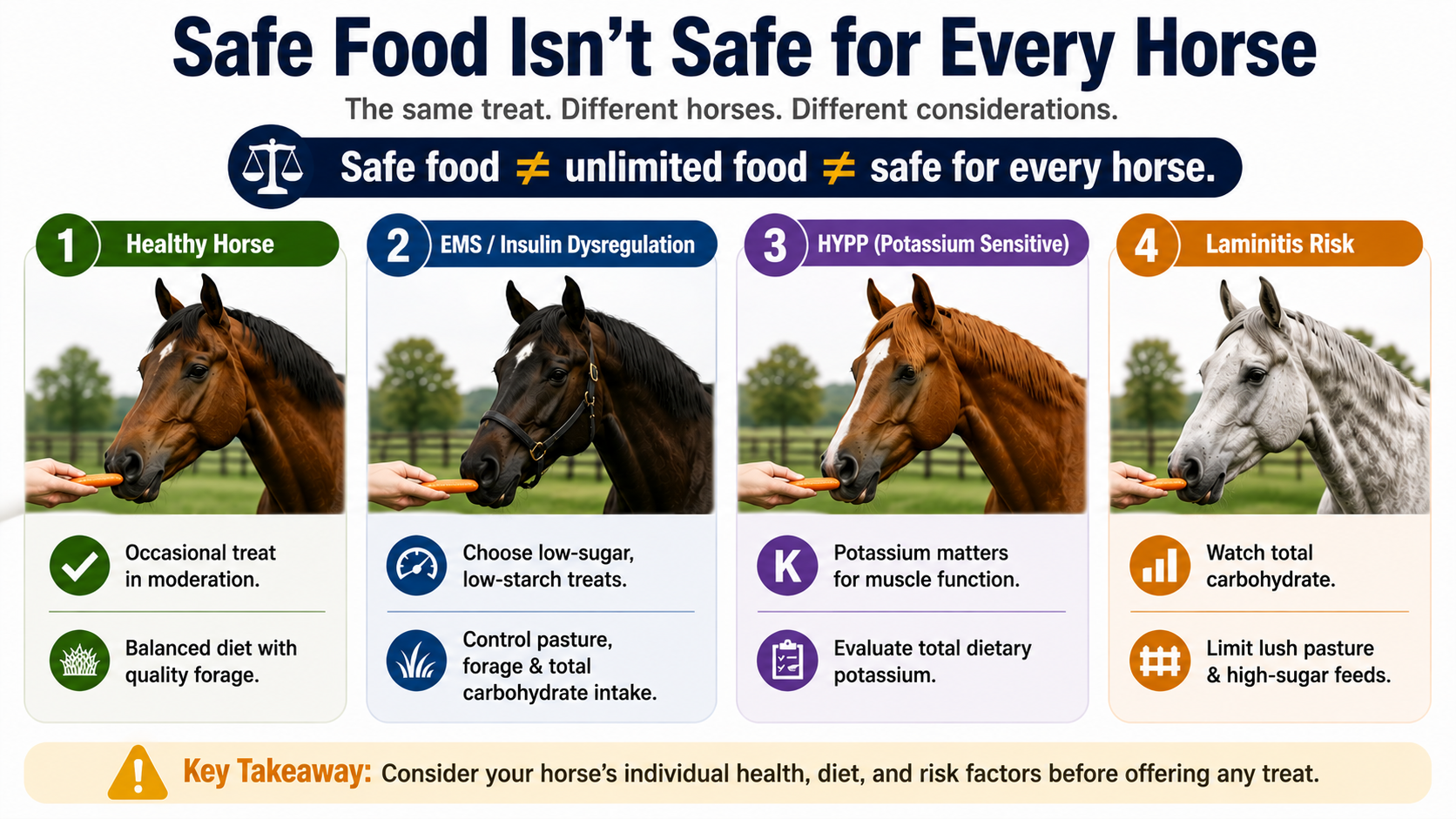
If your horse has EMS, insulin dysregulation, previous laminitis, HYPP, or obesity, treat selection should be based on the overall diet rather than the food alone.
How to Prepare and Portion Treats
A safe food can still cause problems if it is poorly prepared or offered in excess. Prepare treats according to the horse’s eating habits, dental condition, and dietary needs.
Wash fresh produce
Wash fruits and vegetables thoroughly under running water before feeding to remove dirt and reduce surface pesticide residues. Check for mold, rot, fermentation, or other spoilage, and discard anything that has clearly gone bad.
Cut firm foods for fast eaters
If a horse bolts its food, cut apples, carrots, celery, and other firm produce into manageable pieces. Avoid small round carrot coins, which can be easier to swallow whole; lengthwise strips are a better option.
Remove pits, tough parts, and spoiled portions
Preparation depends on the food. Remove the pits from peaches, plums, and nectarines; trim tough stems or damaged portions from produce; and discard moldy or spoiled food entirely. For example, do not cut mold off bread and feed the rest – discard moldy bread.
Keep human foods and table scraps occasional
Human foods can contain ingredients, seasonings, sugar, or salt that horses don’t need. If you offer a plain food that is known to be safe, keep it as a small treat rather than making table scraps a routine part of the diet.
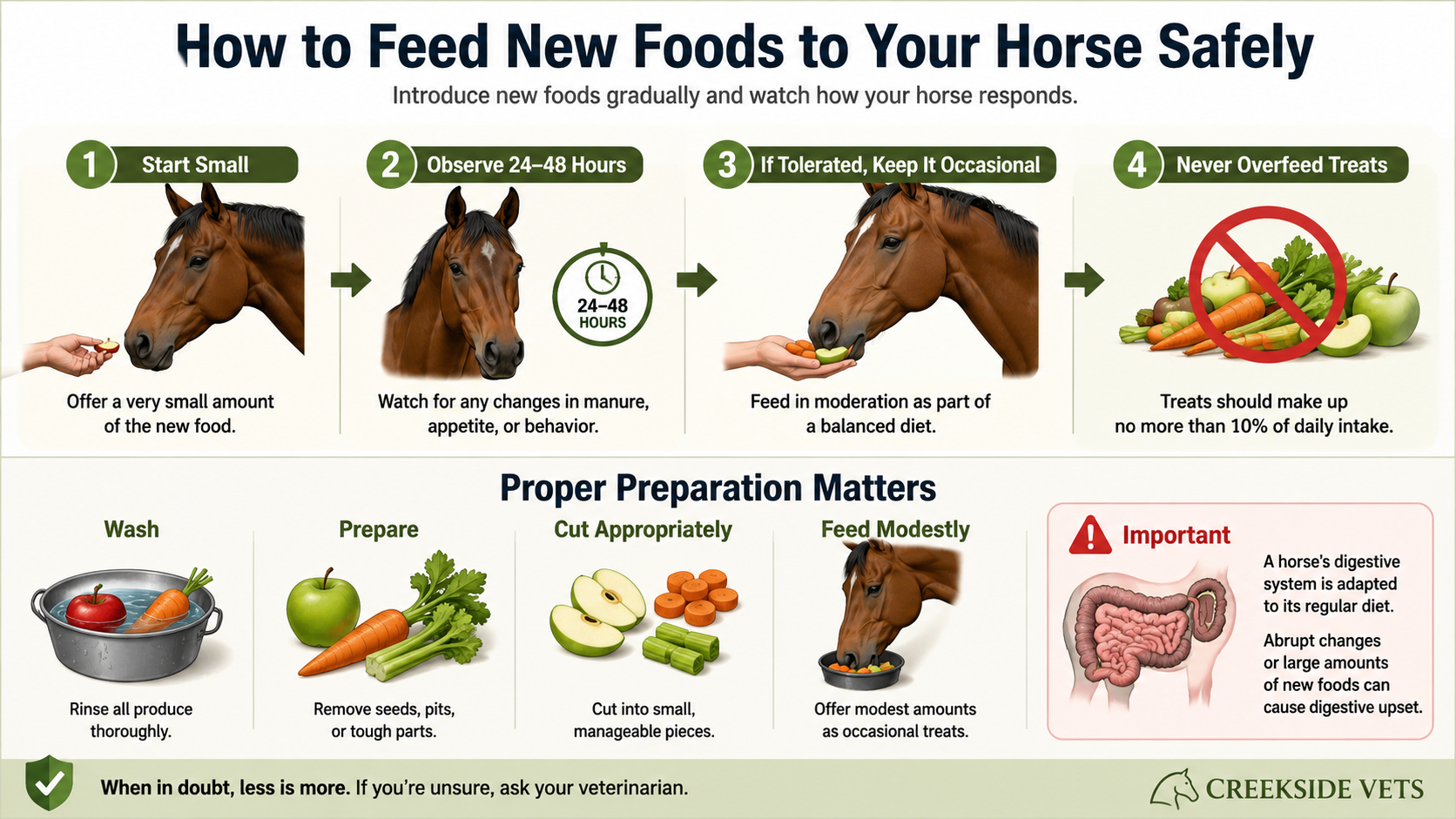
Introduce new foods gradually
Sudden diet changes can disrupt the hindgut’s microbial balance and cause digestive upset. Always start a new fruit, vegetable, or other food with a small amount.
If your horse tolerates it well, increase the amount gradually rather than offering a full serving at once. See our guide on how to introduce new foods to your horse for the step-by-step approach.
Keep portions small
Treats should stay a small part of the overall diet. The appropriate amount depends on the horse’s size, body condition, total diet, and metabolic health. Horses with obesity, EMS, insulin dysregulation, or previous laminitis generally need stricter control of sugary treats.
Key Takeaway
There is no single list of foods that is right for every horse. What works as an occasional treat for one horse may not suit another because of differences in age, body condition, dental health, metabolism, or the rest of the diet.