
Key Takeaways
For a horse with EMS or insulin dysregulation, “low sugar” is a useful starting point, not the entire nutritional plan. A practical approach is to:
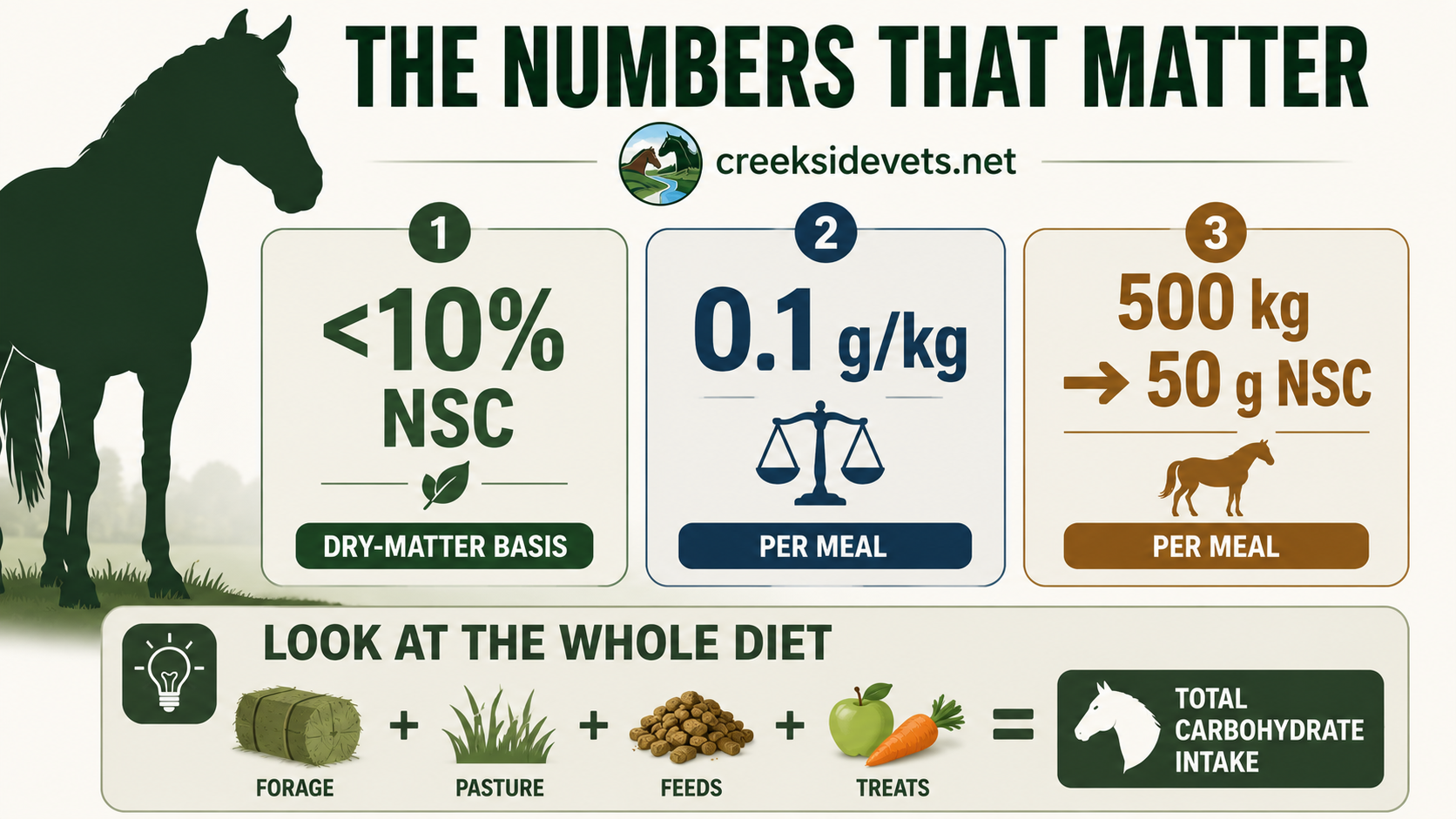
- Aim for appropriately low-NSC forage and feeds, commonly around <10% NSC on a dry-matter basis when strict carbohydrate control is required.
- Remember that severely insulin-dysregulated horses may require tighter control, with approximately 0.1 g NSC/kg body weight per meal used as a practical reference.
- Keep treats small and infrequent rather than treating them as a separate carbohydrate allowance.
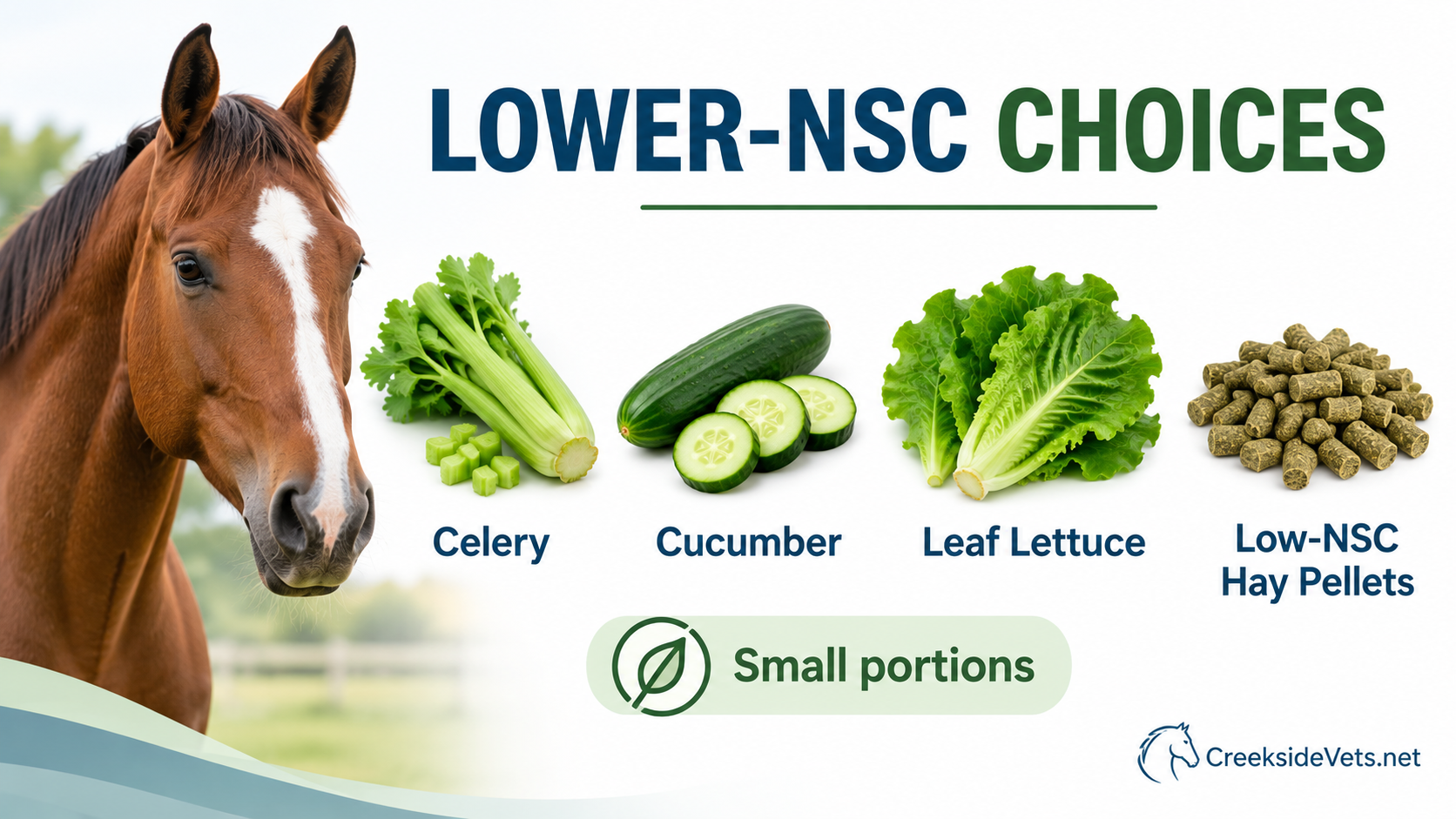
- Favor low-calorie, high-moisture foods such as small portions of celery, cucumber or leafy vegetables.
- Look at hay and pasture first because they usually contribute much more carbohydrate than an occasional treat.
- During active laminitis or poorly controlled insulin dysregulation, follow the individual feeding plan established by the horse’s veterinarian or equine nutrition professional.
Horses with equine metabolic syndrome (EMS), insulin dysregulation (ID), or a history of endocrinopathic laminitis do not necessarily need every fruit or vegetable removed from their diet. The bigger issue is how much carbohydrate the treat contributes to the horse’s total diet.
1. Why Treats Matter in a Metabolic Horse
In a healthy horse, insulin helps move glucose from the bloodstream into tissues after a meal.
In a horse with insulin dysregulation, that response can become abnormal. Some horses produce an exaggerated insulin response after consuming feeds containing readily available carbohydrates.
That matters because marked or prolonged hyperinsulinemia is strongly associated with endocrinopathic laminitis.
So when a metabolic horse receives a treat, the question is not simply: “Is this food safe for horses?” The more useful question is:
“How much carbohydrate does this food add to this particular horse’s diet?”
That distinction is important.
A small piece of a higher-carbohydrate food may represent a very different exposure from feeding several whole fruits throughout the day. For a broader overview of horse foods and how to approach them, see our what can horses eat? guide.
2. The Number to Know: NSC
NSC = water-soluble carbohydrates (WSC) + starch
These carbohydrates are important when managing horses that need restricted sugar and starch intake.
For forage and feeds used in carbohydrate-restricted diets, a commonly used practical target is: <10% NSC on a dry-matter basis.For practical guidance on sugar intake, see How Much Sugar Can a Horse Eat?.
This is a management target, not a biological switch.
A feed containing 9.9% NSC is not automatically “safe,” while one containing 10.1% is not automatically dangerous. The horse’s total intake, metabolic status, body condition and individual response still matter.
For a horse with significant insulin dysregulation or previous laminitis, the diet should therefore be considered as a whole rather than judged from one food item.
3. A Second Number: NSC Per Meal
For severely insulin-dysregulated horses, approximately: 0.1 g NSC/kg body weight per meal can be used as a practical reference when calculating carbohydrate exposure.
For example: 500-kg horse
500 kg × 0.1 g/kg = 50 g NSC per meal
If you are unsure of your horse’s approximate body weight, our guide to Average Horse Weight explains typical weights and how body size varies between horses and types.
But there is an important catch: Those 50 g are not a “treat allowance.”
The NSC in that meal comes from everything the horse eats, including hay, pasture, concentrates, supplements containing carbohydrates and treats.
If the horse has already consumed most of its allowable carbohydrate from forage and feed, adding a sugary treat can push the meal beyond the intended target. This is why portion size matters just as much as the food itself.
4. What Makes a Good Treat for a Metabolic Horse?
When choosing a reward, look for several characteristics rather than one magic ingredient.
Prefer treats that are:
- Low in sugar and starch, especially when the horse requires strict carbohydrate restriction.
- High in moisture, fresh vegetables such as cucumber and celery provide bulk without concentrating calories.
- Easy to portion, a food that can be given as one or two small pieces is easier to control than a highly palatable treat that encourages repeated feeding.
- Low in calories, this matters particularly for overweight horses, because improving body condition is an important part of metabolic management.
- Consistent, if you are relying on a commercial feed or pellet as a reward, knowing its nutritional analysis is more useful than assuming it is low in sugar because it “looks healthy.”
5. Lower-Carbohydrate Treat Options
These are generally more practical choices when a horse needs a small, low-calorie reward.
| Treat | Practical starting portion | Why it can work |
|---|---|---|
| Celery | 1–2 small pieces | High moisture and easy to portion |
| Cucumber | 2–4 thin slices | High water content and relatively low calorie density |
| Leaf lettuce | 1–2 leaves | Low calorie and easy to divide into small rewards |
| Low-NSC hay pellets | 2–5 small pellets | Turns part of the horse’s forage ration into a training reward |
| Low-NSC chaff | Small pinch | Useful when the product’s analysis is known |
These are starting portions, not universal maximums. If you’re considering celery for a metabolic horse, see can horses eat celery? for practical portion guidance
A 450-kg horse with controlled insulin levels and a 650-kg obese horse with previous laminitis should not automatically receive the same dietary plan simply because both are called “metabolic horses.”
6. What About Carrots?
Carrots are often placed into an overly simple category: “Carrots are safe.” or “Carrots are forbidden.” Neither statement tells the whole story.
Carrots contain naturally occurring sugars, so they are not carbohydrate-free. However, a small piece is very different from feeding multiple whole carrots every day.
For a horse requiring strict carbohydrate control, a practical approach would be:
Use a small piece as an occasional reward, rather than treating carrots as an unlimited snack.
If the horse’s veterinarian has prescribed a particularly restrictive diet because of active or poorly controlled laminitis, follow that plan instead.
The important point is: portion size and total dietary carbohydrate matter.
7. What About Apples, Pears and Other Fruit?
Fruit such as apples or pears generally contain more sugar than very low-carbohydrate vegetables such as leafy greens or cucumber.
That does not mean that every metabolic horse automatically requires a permanent fruit ban. Instead, consider:
- The horse’s degree of insulin dysregulation
- Whether laminitis is active or historical
- Body condition
- The size of the fruit portion
- How frequently it is being offered
- What the horse has already eaten that day
If you’re considering pears for a metabolic horse, see Can Horses Eat Pears? for specific guidance on portions and feeding pears to horses with insulin dysregulation.
For a horse under strict carbohydrate restriction, lower-carbohydrate vegetables are usually easier choices because they provide a reward with less sugar and fewer calories.
For individual fruits, use the specific food’s nutritional information and portion rather than judging the entire category as simply “safe” or “unsafe.”
Berries can also be used as occasional treats, but portion size still matters. See Can Horses Eat Blueberries, Strawberries & Raspberries? for a closer look at these fruits.
8. Treats to Limit or Avoid
Some rewards make carbohydrate control unnecessarily difficult. This is different from foods that are genuinely toxic or unsafe for horses; for those foods, see Foods Horses Should Never Eat.
Molasses-based commercial treats
Many commercial horse treats contain combinations of:
- Molasses
- Grains
- Wheat products
- Oats
- Added sugars
Check the manufacturer’s nutritional analysis rather than relying on the product name or marketing.
Sugar cubes and candy
These provide concentrated simple sugars with very little nutritional value.
For a horse requiring strict carbohydrate control, there is little reason to use them when lower-carbohydrate rewards are available.
Bread, crackers and grain-based human snacks
These can contain substantial starch and are unnecessary additions to the diet.
Large portions of fruit
Even a food that can be used occasionally becomes a different nutritional exposure when fed in large quantities.
Unknown treats
If you cannot determine what a commercial reward contains, it is difficult to know how it fits into a tightly controlled diet.
9. Don’t Forget the Hay
This is one of the most important points in metabolic-horse management: the treat may not be the biggest source of carbohydrate. A horse may receive only a few small treats but consume many kilograms of hay or pasture each day.
That means a low-sugar treat cannot compensate for forage that is substantially higher in NSC.
Forage carbohydrate can vary with:
- Plant species
- Maturity
- Season
- Weather
- Growing conditions
- Time of day
- Storage
- Harvest conditions
When carbohydrate restriction is important, forage analysis is often more useful than trying to calculate the sugar content of every individual treat.
10. Pasture Deserves Special Attention
Pasture can be a major carbohydrate source for horses with insulin dysregulation.
Grass carbohydrate content is not constant throughout the day or throughout the year. Weather, plant growth, temperature, sunlight and plant maturity can all influence WSC and other carbohydrates.
This is why: “He only gets a few treats” does not necessarily mean the horse’s carbohydrate intake is low.
A horse spending several hours consuming carbohydrate-rich pasture can receive substantially more dietary carbohydrate than it would from a few small vegetable treats.
For horses at high risk of endocrinopathic laminitis, pasture access should therefore be considered as part of the overall management plan.
11. A Simple Veterinary Decision Framework
Before giving a treat to a metabolic horse, work through five questions.
1. Is insulin dysregulation currently well controlled?
If not, carbohydrate restriction may need to be particularly strict.
2. Is the horse actively laminitic?
If the horse is currently experiencing laminitis, follow the attending veterinarian’s dietary plan rather than adding treats independently.
3. What does the forage contribute?
Know the NSC of the hay or other forage whenever analysis is appropriate.
4. How much treat is actually being fed?
One small piece is not equivalent to a handful. Repeated rewards can add up quickly.
5. What else has the horse eaten?
Consider the entire meal and the entire day, not the treat in isolation.
12. Use the Treat as Part of the Diet
One of the easiest mistakes is thinking about treats separately from feeding. Instead, think:
Forage + pasture + concentrates + supplements + treats = total dietary exposure
If the horse is on a tightly controlled diet, even seemingly insignificant extras should be considered when they are being offered frequently.
For example, a horse receiving several training sessions, multiple handfuls of treats, fruit at medication time, commercial cookies after exercise may consume substantially more carbohydrate than the owner realizes.
The solution isn’t necessarily to eliminate every reward. It is to make the reward predictable, measurable and appropriate for the diet. As with any dietary change, introduce new foods gradually rather than suddenly increasing the amount.
13. Non-Food Rewards Can Be Even Better
Food is not the only way to reinforce desirable behavior. For some horses, especially those requiring very strict dietary control, non-food rewards are an excellent alternative. Try:
- Scratching
Many horses have preferred scratching areas and will actively seek this interaction. - Grooming
A short grooming session can become part of a predictable reward routine. - Verbal praise
Use the same calm verbal cue consistently after the desired behavior. - Target training
A horse can learn to follow a target without receiving a food reward after every repetition. - Forage-based rewards
If food is needed for training, use a portion of the horse’s existing low-NSC forage rather than adding another food to the daily ration.
This approach allows you to maintain positive reinforcement without continually increasing carbohydrate intake.
14. When Treats Should Be Put on Hold
There are situations where the priority should be dietary control rather than finding a better snack. Speak with your veterinarian before adding treats if the horse has:
- Active laminitis
- Recently developed or poorly controlled insulin dysregulation
- Significant obesity
- A history of severe endocrinopathic laminitis
- A veterinarian-directed weight-loss or carbohydrate-restricted diet
- A complicated feeding program involving multiple feeds or medications
In these situations, the safest “treat” may simply be part of the horse’s existing ration.