
The average horse lifespan is 25 to 30 years, although it varies with breed, genetics, health, and management. Ponies often live into their 30s, while some draft breeds have shorter average lifespans because of their larger body size. With good nutrition, preventive veterinary care, and appropriate management, many horses live beyond the average horse lifespan, with some reaching 35 years or more.
It is also useful to understand the difference between lifespan and life expectancy. Lifespan is the total number of years an individual horse lives, while life expectancy refers to the average age horses typically reach.
Average Horse Lifespan by Breed
Breed can influence how long a horse may live, but it is only one part of the picture. A horse’s daily care, nutrition, veterinary support, and workload often have a greater impact on longevity than breed alone.
| Breed | Average Lifespan |
|---|---|
| Arabian | 25–30 years |
| Morgan | 25–30 years |
| Quarter Horse | 25–30 years |
| Mustang | 20–30 years |
| Miniature Horse | 25–35 years |
| Shetland Pony | 25–30 years |
| Warmblood | 20–30 years |
| Thoroughbred | 20–30 years |
| Clydesdale | 20–25 years |
| Percheron | 20–25 years |
| Belgian Draft | 18–25 years |
Table compiled by Creekside Vets Editorial Team using veterinary reference materials and breed association data.
These ranges are general estimates, and individual horses can live shorter or longer lives depending on their health and management.
One horse may live to 31 years but spend its final decade managing chronic laminitis, arthritis, or PPID. Another may live to 28 years while maintaining a healthy weight, moving comfortably, and enjoying light riding or turnout well into its senior years.
From a veterinary perspective, longevity is only part of the picture. The goal is to maximize a horse’s healthspan, which is the years it remains comfortable, active, and able to maintain a good quality of life.
The Four Chapters of a Horse’s Life
A horse’s needs change throughout its life. A young horse requires support for growth and development, while an older horse needs management focused on comfort and maintaining health.
Veterinarians often look at a horse’s life in stages because each period brings different priorities.
Chapter 1: Foundation Years (0 to 5 Years)
The early years build the foundation for a horse’s future health and performance.
During this stage, bones, joints, muscles, and overall body systems are still developing. Nutrition, training, and management choices can have a lasting impact.
Veterinary priorities include:
• Balanced nutrition for healthy growth
• Avoiding excessive training before the body is ready
• Regular parasite control
• Vaccinations and preventive care
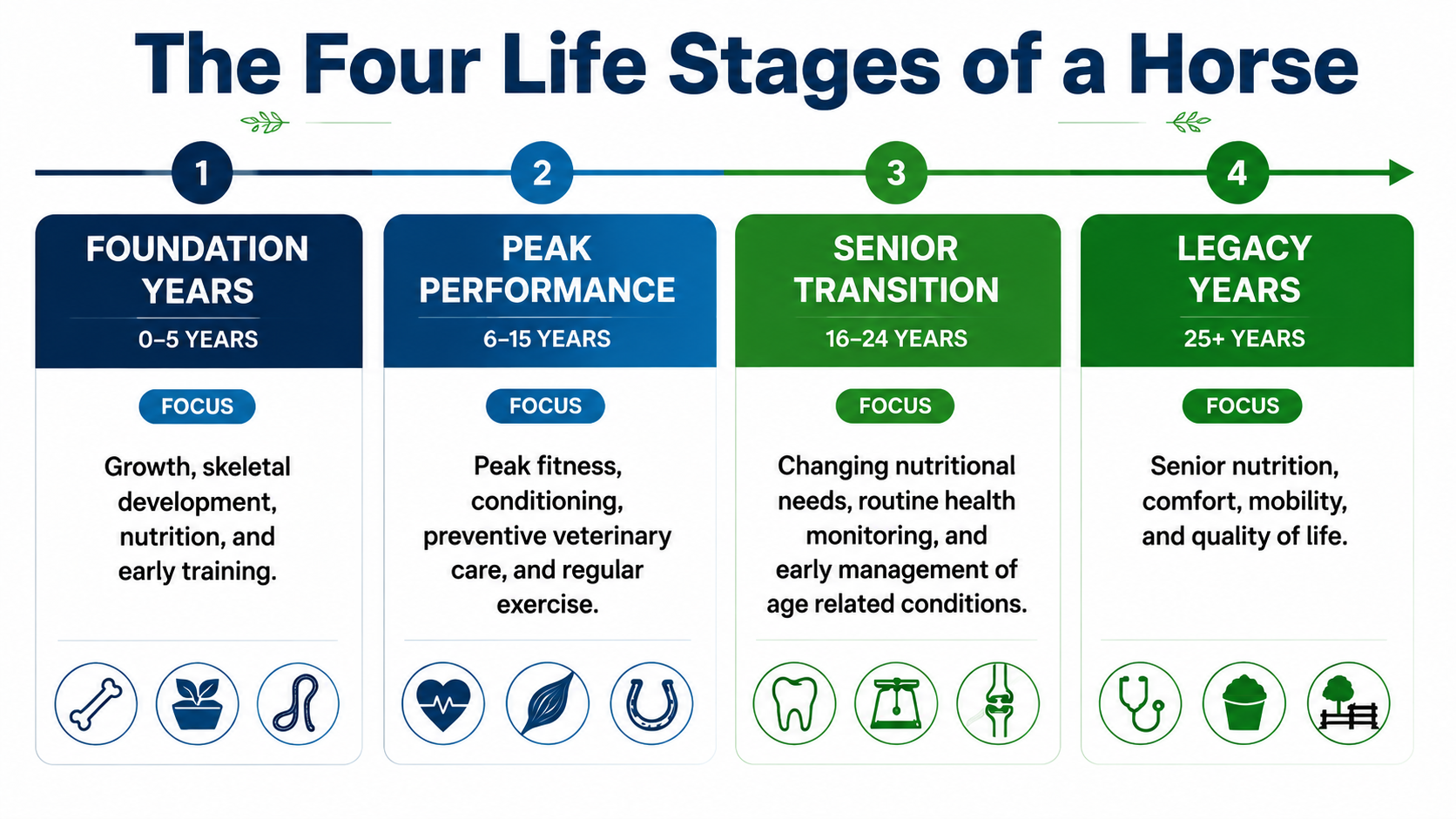
Understanding the four life stages of a horse helps owners provide the right nutrition, exercise, preventive veterinary care, and senior support at every age.
Chapter 2: Peak Performance Years (6 to 15 Years)
For many horses, these are the years when they reach their physical and athletic peak.
Maintaining soundness during this period depends on appropriate conditioning and consistent care.
Key areas of focus include:
- Proper exercise and fitness programs
- Injury prevention
- Regular dental care
- Routine hoof maintenance
Chapter 3: Senior Transition (16 to 24 Years)
As horses enter their senior years, gradual changes become more common. Recovery may take longer, muscle mass may decrease, and metabolic changes may appear.
Veterinary care during this stage focuses on identifying problems early.
Important areas include:
- Dental examinations
- Weight monitoring
- Joint health assessment
- Blood work when needed
- Screening for conditions such as PPID
Chapter 4: Legacy Years (25+ Years)
Older horses should not simply be viewed as declining. With appropriate care, many senior horses can continue to live comfortable and meaningful lives.
The focus shifts toward maintaining quality of life and supporting daily comfort.
Common considerations include:
- Managing arthritis and stiffness
- Supporting horses with PPID
- Adjusting feed for dental changes
- Providing appropriate shelter and comfort
- Maintaining suitable activity levels
Every horse ages differently. Some horses need senior management earlier, while others remain healthy well into their twenties. The goal is to adjust care based on the individual horse rather than age alone.
Horse Age in Human Years
Many owners wonder how their horse’s age compares with human years. However, horses do not age at a fixed rate, so there is no exact conversion.
Horses mature quickly during their early years and then the aging process becomes slower as they reach adulthood. The comparison below provides a general estimate rather than an exact calculation.
| Horse Age | Approximate Human Equivalent |
|---|---|
| 1 year | Around 6–8 human years |
| 5 years | Around 25 human years |
| 10 years | Around 35–40 human years |
| 15 years | Around 45–50 human years |
| 20 years | Around 60 human years |
| 25 years | Around 70 human years |
| 30 years | Around 80+ human years |
Looking for a more detailed comparison? Try our Horse Years to Human Years Calculator to estimate your horse’s approximate human-age equivalent and life stage.
These comparisons are only estimates. Individual horses can age differently depending on genetics, care, and overall health.
Factors That Influence Horse Lifespan
A horse’s lifespan is influenced by many factors, but longevity usually comes down to consistent care rather than one single factor. Genetics can play a role, but daily management often has the biggest impact on how well a horse ages.
Genetics and Breed
Breed can influence certain health risks and average lifespan, but it does not determine the future of an individual horse.
A well managed horse from a breed with a shorter average lifespan may outlive a poorly managed horse from a longer lived breed. Genetics provide a starting point, while care influences the outcome.
Nutrition
Good nutrition is one of the foundations of a long, healthy life. Horses are designed to eat forage, and a balanced diet helps maintain healthy weight, digestion, and muscle condition. Owners should also be aware of foods horses should never eat to avoid harmful feeding mistakes.
More supplements do not always mean better health. The right nutrition plan depends on the horse’s weight, age, workload, health status, and individual needs.
Preventive Veterinary Care
Regular veterinary care helps identify problems before they become serious.
Routine care includes:
- Wellness examinations
- Vaccinations
- Dental checks
- Parasite control
Early detection often allows conditions to be managed before they affect a horse’s comfort and long term health.
Hoof Care
Healthy feet are essential for a horse’s mobility and quality of life. Poor hoof care can lead to chronic pain, reduced movement, and secondary health problems.
Regular trimming, proper hoof balance, and early attention to hoof issues help support long term soundness.
Exercise and Movement
Regular movement helps horses maintain muscle, joint health, and a healthy body condition. Horses that remain active throughout life often age better than those with limited movement.
The goal is not intense exercise at every age, but appropriate activity that matches the horse’s condition and ability.
Environment and Daily Management
A horse’s living environment can affect both physical and mental health. Access to movement, shelter, clean water, appropriate social interaction, and low stress management all contribute to longevity.
Workload and Use
A horse’s workload can influence how its body ages. A racehorse, a pleasure horse, and a companion horse may experience different physical demands.
The type of work itself is not always the issue. The bigger concern is cumulative wear, appropriate training, recovery time, and whether the horse’s workload matches its physical condition. The weight a horse carries also matters, particularly as workload, fitness, conformation, and age change. See how much weight a horse can carry for the factors that affect safe carrying capacity.
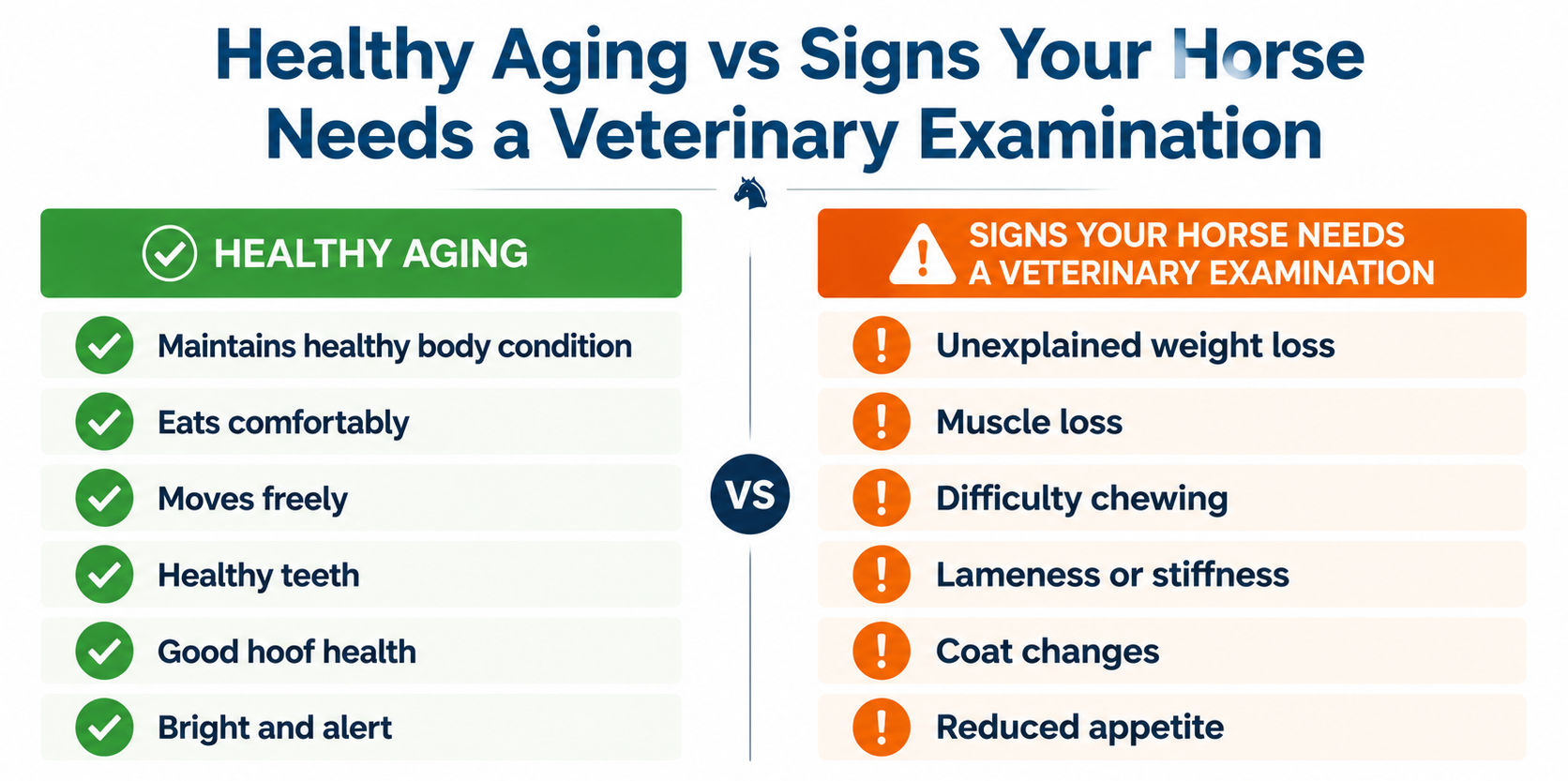
Learn the difference between healthy aging and warning signs that may require a veterinary examination for your senior horse.
How Veterinarians Tell If a Horse Is Aging Well
Veterinarians do not judge a horse’s health only by its age. A 20 year old horse can be healthier than a younger horse if it maintains good body condition, mobility, and overall comfort.
During a wellness examination, veterinarians look at several signs to understand how a horse is aging and whether any changes need attention.
Body Condition and Weight
Maintaining a healthy weight is one of the first priorities during a wellness examination, but body weight alone does not tell the whole story. Body condition and muscle mass are assessed together, often using the Henneke Body Condition Score (BCS) to monitor changes over time. Unexplained weight loss, difficulty maintaining condition, or declining muscle mass may indicate underlying dental, metabolic, or systemic disease.
Muscle and Mobility
Some slowing with age is expected, but horses should still move comfortably and willingly. During an examination, gait, posture, and muscle condition are evaluated to identify subtle changes that may indicate joint disease, pain, or reduced mobility before obvious lameness develops.
Teeth and Eating Ability
Dental health becomes increasingly important as horses age because many problems develop gradually and are not visible during a routine visual check. A thorough dental examination helps identify abnormal tooth wear, loose teeth, or other conditions that can affect chewing, digestion, and body condition.
Hoof Quality and Soundness
Healthy hooves are essential for lifelong mobility and comfort. Hoof balance, hoof quality, and signs of pain or inflammation are assessed because even subtle changes can affect the way a horse moves and may indicate developing hoof disease.
Coat, Appetite, and General Condition
Changes in coat quality, appetite, drinking habits, or energy levels often provide early clues about a horse’s overall health. These changes should not be dismissed as a normal part of aging, as they may indicate underlying conditions such as pituitary pars intermedia dysfunction (PPID) or other medical disorders.
Aging well is about maintaining function, comfort, and quality of life. Regular veterinary examinations allow problems to be identified early and help owners make adjustments before small issues become bigger concerns.
Common Health Problems That Can Shorten a Horse’s Lifespan
Horses rarely die simply because they reach a certain age. More often, chronic health conditions gradually affect their comfort, mobility, and overall quality of life. A study of geriatric horses in the United Kingdom found that lameness, dental disease, endocrine disorders such as pituitary pars intermedia dysfunction (PPID), cancer, laminitis, and weight-related problems were among the most commonly reported health conditions in older horses.
With regular veterinary care, many age related conditions can be identified early and managed to help horses remain comfortable.
Colic
Colic refers to abdominal pain and can range from mild digestive discomfort to serious conditions requiring emergency care. Digestive problems in horses can sometimes become serious quickly because horses cannot vomit to relieve stomach pressure or discomfort.
Some cases resolve with treatment, while others may require intensive management or surgery depending on the cause and severity.
Laminitis
Laminitis is a painful condition affecting the structures that support the hoof. Severe or repeated episodes can have a major impact on a horse’s mobility and quality of life.
Early recognition and management of risk factors, such as metabolic disease and diet changes, are important for prevention.
PPID (Cushing’s Disease)
PPID is a common condition in older horses that can affect hormones, coat changes, immune function, and overall health.
Many horses with PPID can continue to live comfortably when diagnosed early and managed appropriately.
Arthritis and Joint Problems
Joint changes become more common as horses age. Arthritis can cause stiffness, reduced movement, and difficulty performing normal activities.
Management may include exercise adjustments, veterinary treatments, and changes to daily care to maintain comfort.
Dental Disease
Dental problems can make it difficult for horses to chew properly and maintain weight. Regular dental examinations are especially important for senior horses.
Chronic Weight Loss and Organ Disease
Difficulty maintaining weight can be caused by several factors, including dental issues, metabolic changes, or organ problems.
Unexplained weight loss should not be dismissed as a normal part of aging and should be evaluated by a veterinarian.
Quality of Life Matters
The goal of senior horse care is not only to extend lifespan but to maintain comfort and wellbeing. Regular monitoring helps owners recognize changes early and make decisions that support their horse’s quality of life.
When Should You Start Senior Horse Care?
Senior care should not begin only when a horse reaches a specific age. Some horses may need adjustments in their care during their mid teens, while others may remain healthy and active well into their twenties.
The right time to make changes depends on the individual horse and the signs they show.
Signs Your Horse May Need Senior Care
Owners should consider adjusting their horse’s management if they notice:
- Weight loss or difficulty maintaining condition
- Loss of muscle over the topline
- Difficulty chewing or dropping feed
- Longer recovery after exercise
- Increased stiffness or reduced movement
- Changes in drinking or eating habits
Veterinary Approach to Senior Care
Veterinarians focus on the horse’s overall condition rather than age alone. A 15 year old horse with health changes may need senior management earlier than a healthy 22 year old horse.
The American Association of Equine Practitioners (AAEP) also provides practical tips for caring for older horses, including regular veterinary examinations, dental care, appropriate nutrition, exercise, and close monitoring for age-related health changes.
Starting these adjustments early can help owners address small changes before they become bigger health concerns.
Veterinary Checklist to Increase Average Horse Lifespan
Helping a horse live a longer life comes down to consistent care and noticing small changes early. A simple routine can make a major difference in a horse’s comfort and long term health.
Use this checklist as a guide:
✔ Routine wellness examinations
Regular veterinary visits help identify health concerns before they become serious.
✔ Dental care
Regular dental checks help horses chew properly and maintain healthy weight.
✔ Hoof maintenance
Consistent trimming and early attention to hoof problems support mobility and soundness.
✔ Vaccinations
Keeping vaccinations up to date helps protect horses from preventable diseases.
✔ Parasite control
A suitable parasite management plan supports digestive health and overall condition.
✔ Quality forage and balanced nutrition
A diet based on the horse’s individual needs helps maintain weight, muscle, and energy.
✔ Healthy body condition
Avoiding both obesity and excessive weight loss reduces health risks.
✔ Daily movement
Regular movement supports joint health, muscle strength, and mental wellbeing.
✔ Early treatment of health changes
Small changes in appetite, weight, behaviour, or movement should not be ignored.
✔ Mental stimulation and social needs
Companionship, routine, and appropriate activity help support a horse’s overall wellbeing.
Every horse ages differently, and understanding common health changes can help owners provide better care throughout their horse’s life.
FAQs About Horse Lifespan
What horse breed lives the longest?
Smaller breeds and ponies, such as Arabians, Morgans, and Miniature Horses, are often known for longer lifespans. However, individual care, nutrition, and veterinary management usually have a greater impact than breed alone.
Is 20 considered old for a horse?
A 20 year old horse is generally considered a senior, but many horses remain healthy, active, and comfortable at this age. Some horses continue light riding and normal activities well into their twenties with proper care.
Can a horse live to 40 years old?
Yes, but it is extremely uncommon. A small number of horses have reached their forties, usually with exceptional genetics, excellent management, and ongoing veterinary care.
Why do draft horses have shorter lifespans?
Draft horses are not automatically short lived, but their larger body size can place additional stress on joints, metabolism, and overall body systems. Good management can help reduce these challenges.
Can Horses Live Longer Than 30 Years?
Yes, some horses can live longer than 30 years, but reaching this age is considered exceptional rather than typical. With good genetics, proper care, and regular veterinary attention, some horses remain healthy well into their thirties. The oldest recorded horses are often individual cases rather than representatives of the average horse population. Their longevity usually reflects a combination of good management, favorable genetics, and the absence of serious health conditions.
At what age should a horse retire?
There is no fixed retirement age for horses. Retirement decisions depend on the individual horse’s soundness, health, workload, and comfort. Some horses may retire in their teens, while others remain comfortable with light activity much longer.
What is the average Quarter Horse lifespan?
The average Quarter Horse lifespan is around 25 to 30 years, although some horses may live longer with proper care and management. Factors such as genetics, nutrition, preventive veterinary care, hoof health, and workload can influence how well a Quarter Horse ages. Performance Quarter Horses may experience greater physical demands, so appropriate conditioning, recovery, and routine care are important for maintaining long-term health and soundness.
Can good care increase a horse’s lifespan?
Good care cannot guarantee a specific lifespan, but proper nutrition, preventive veterinary care, dental care, hoof maintenance, and early treatment of health problems can help horses live longer and healthier lives.
What is the oldest horse ever recorded?
Some horses have reportedly lived into their forties, although verified records of exceptional longevity are limited. These cases are rare and should not be considered the normal lifespan for most horses.